
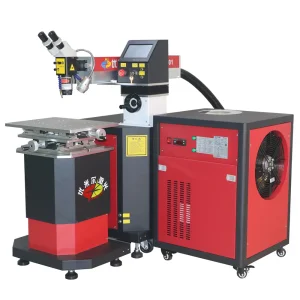
Custom Mould Laser Welding Machine Manufacturers, Quotes
View SpecificationsDirect from factory floor: High-precision manual, boom-arm, and compact fiber laser welders engineered for zero-distortion thermal repair and clean fabrication.
Custom Mould Laser Welding Machine Manufacturers, Quotes
View Specifications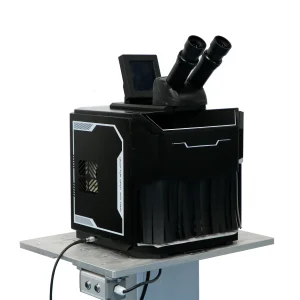
Custom Compact 60W Jewelry Laser Welder for Gold & Silver Crafting Manufacturers, Quotes
View Specifications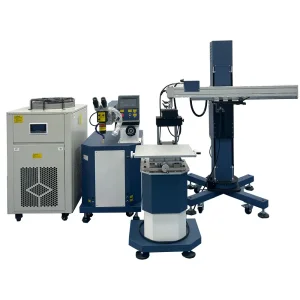
Custom Boom Mold Laser Welding Machine Manufacturers, Factory
View Specifications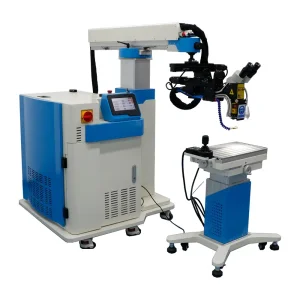
Custom Integrated Boom Mold Welding Machine Manufacturer, Quotes
View Specifications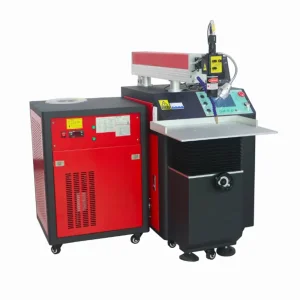
High-Quality Open Laser Welding Machine Pricelist, Factories
View Specifications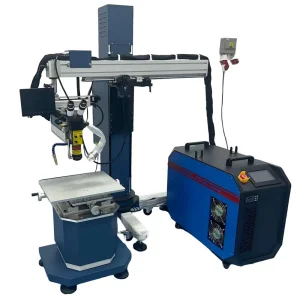
Custom QCW Mold Laser Welding Machine Pricelist, Factory
View Specifications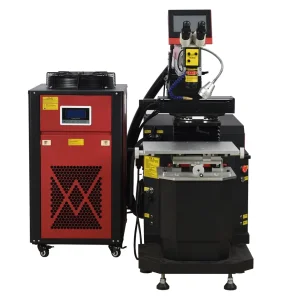
High-Quality Integrated Boom Laser Welding Machine Factory, Quotes
View Specifications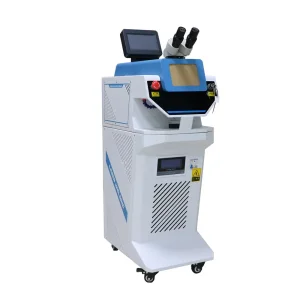
High-Quality YAG-Jewelry Laser Welding Machine Pricelist, Factories
View SpecificationsAnalyzing the structural transition from legacy arc and TIG methodologies to fiber-optic manual laser welding systems across modern tier-1 manufacturing clusters.
Manual laser welding systems lower thermal operator certification barriers from 6 months down to 48 hours. By achieving travel speeds 4 to 10 times faster than manual TIG welding, global fabrication facilities drastically suppress direct labor costs and eliminate secondary grinding operations.
The micro-spot energy concentration of 1064nm near-infrared fiber engines reduces the Heat-Affected Zone (HAZ) by up to 88% compared to traditional shielded metal arc welding. This preserves the substrate grain structure and prevents deformation in thin-gauge alloys.
Integrating real-time back-reflection isolators and beam-wobble galvanometric collimators enables consistent, crack-free metallurgical bonds in 6000-series aluminum, oxygen-free copper, and brass alloys without spatter or porosity.
Quantitative empirical data collected from Shenzhen Youmir Laser Technology testing facilities on 304 Stainless Steel (2.0mm thickness).
| Evaluation Parameter | Manual Fiber Laser (1.5kW) | TIG (Tungsten Inert Gas) | MIG (Metal Inert Gas) |
|---|---|---|---|
| Welding Velocity | 15 - 35 mm/s | 2 - 5 mm/s | 6 - 12 mm/s |
| Heat-Affected Zone (HAZ) | 0.2 - 0.5 mm | 2.5 - 5.0 mm | 3.0 - 6.0 mm |
| Thermal Distortion | Negligible (No post-straightening) | Severe (Requires fixture cooling) | Moderate to High |
| Secondary Post-Grinding | None (Directly Paintable / Polish-free) | Extensive (Labor-intensive) | Heavy (Slag and spatter cleanup) |
| Electrical Conversion Efficiency | > 35% (Photoelectric) | 10 - 15% | 15 - 20% |
| Operator Training Time | 1 to 3 Days | 3 to 6 Months | 2 to 4 Weeks |
Shenzhen Youmir Laser's persistent focus on core photonic components, embedded dual-axis oscillation systems, and adaptive power architectures.
Traditional manual laser torches yield a fixed 0.2mm focal point, requiring tight joint fit-up. Youmir's dual-axis oscillation tech broadens seam gap tolerance up to 2.5mm via programmable circular, triangular, and figure-eight oscillation modes.
Our software architecture allows rapid switching between dynamic deep-penetration welding, clean surface descaling, thin-plate shearing, and post-weld passivating—all through one multi-functional optical head.
Next-generation systems integrate in-line infrared pyrometry to calculate the molten pool temperature at 10kHz frequency. Laser power automatically scales in real time to prevent burn-through on delicate corners and thin contours.
Custom-engineered beam deliveries tailored to specific production challenges across critical global industrial sectors.
Manual and automated welding setups for aluminum-alloy battery enclosures, exhaust manifold structural points, and interior high-tensile brackets without burn-through on galvanized coatings.
Specialized boom-arm and cantilever delivery systems allow repair of multi-ton injection and die-casting molds in-situ, eliminating costly teardown, annealing, and re-machining cycles.
Sealing sheet metal assemblies without discoloration. Thin sanitary stainless steel joints (0.5mm to 1.5mm) pass hygienic standards without surface pitting or pinhole leaks.
Engineered to satisfy stringent Class 4 laser safety, electrical compliance, and operational workplace regulations across North America and Europe.
Integrated dual-channel interlock systems with optical ground loops ensure laser emission fires only when the copper nozzle makes physical electrical contact with grounded conductive workpieces.
Full conformance to European CE Machinery Directive (2006/42/EC), Low Voltage Directive (2014/35/EU), and laser-specific EN 60825-1 requirements. Meets North American FDA/CDRH standards for industrial imports.
Full support for international brand owners and machine tool distributors: custom cabinetry, localized interface languages, private labelling, and specialized automation line handshakes via standard industrial fieldbuses.
Direct technical answers from Shenzhen Youmir Laser's lead systems engineers to facilitate smooth procurement decisions.
Power selection depends on target material and penetration depth. 1000W welds stainless steel up to 3mm; 1500W provides optimal throughput on mixed fabrications up to 4mm; 2000W to 3000W is recommended for heavy structural fabrication up to 8mm in steel and 5mm in reflective aluminum alloys.
We provide a complimentary verification program. Send sample materials and technical drawings to our Shenzhen facility; our application engineers execute cross-section metallographic weld tests, record high-speed video logs, and return a comprehensive parameter window report.
Industrial Argon (99.99%) is ideal for titanium and aluminum. For standard stainless and carbon steel, high-purity Nitrogen yields clean, bright weld seams with lower consumable gas costs. Carbon dioxide is not recommended due to high-temperature optic contamination.
Machines include a comprehensive 2-year warranty on core fiber engines and optics. We provide 24/7 remote diagnostics, rapid dispatch of replacement components from regional hubs, and on-site engineering training through certified international distributor networks.
Explore our continuous fiber welders, automated CNC enclosures, pulse cleaning machinery, and sheet metal cutters.
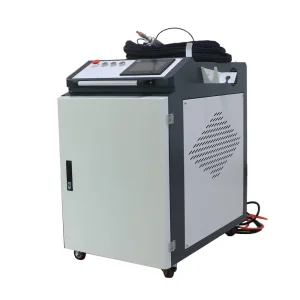
High-Quality Laser Cleaning Machine Manufacturer, Quotes
View Specifications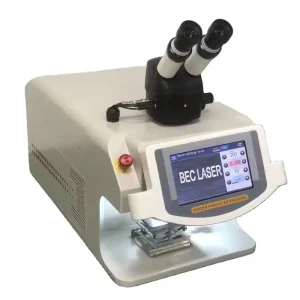
Custom QCW-Jewelry Laser Welding Machine Manufacturer, Factories
View Specifications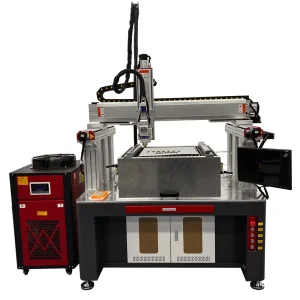
High-Quality Fiber Laser Cutting Machines Factories, Quotes
View Specifications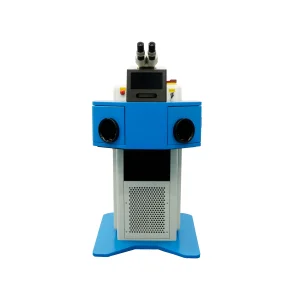
Custom Vertical jewelry welding machine Manufacturer, Manufacturers
View Specifications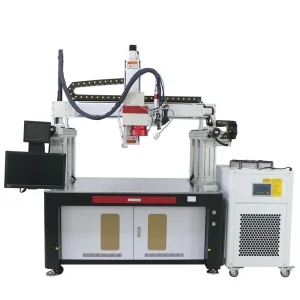
Custom Galvanometer Continuous Laser Welding Machine Manufacturer, Factories
View Specifications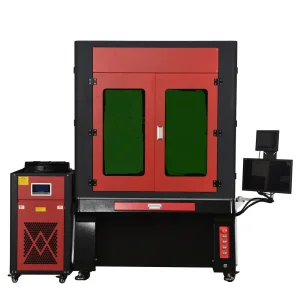
Custom Cnc Enclosed Automatic Fiber Laser Welding Machine Factories, Quotes
View Specifications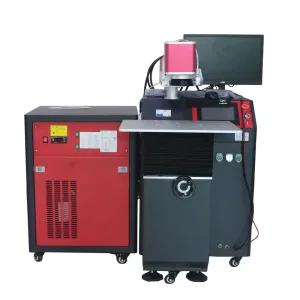
Custom Galvanometer Laser Welding Machine Manufacturers, Factories
View Specifications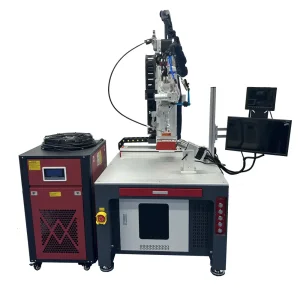
High-Quality Fiber Continuous Laser Welding Machine Manufacturers, Factories
View Specifications