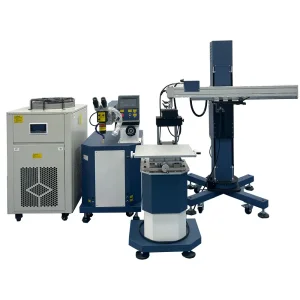
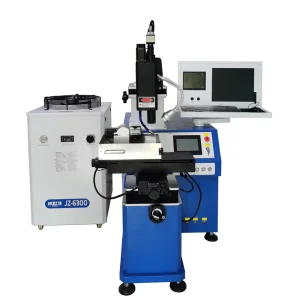
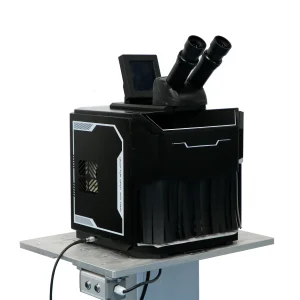
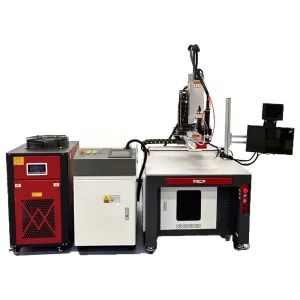
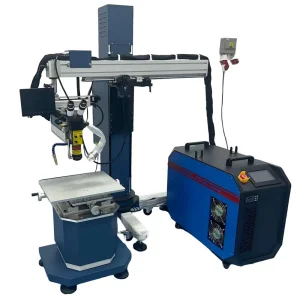
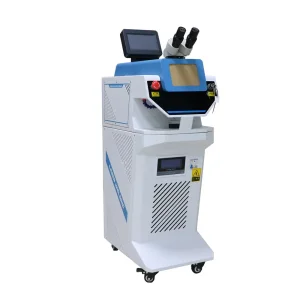
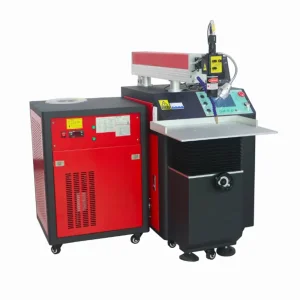
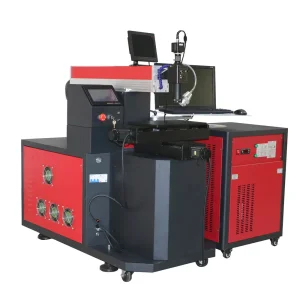
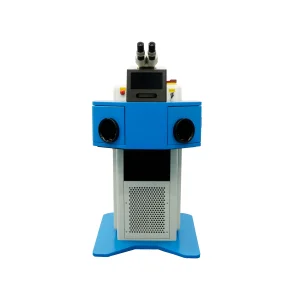
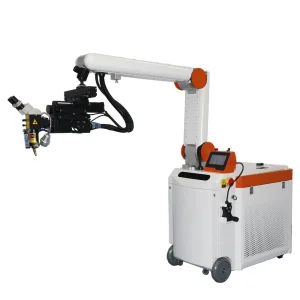
Explore tier-one engineering systems manufactured directly at our Shenzhen production headquarters, configured for precision micro-machining and heavy-duty structural joining.
Across global manufacturing—from automotive gigafactories to regional architectural workshops—metal laser welding is systematically replacing traditional TIG and MIG methodologies due to critical speed advantages, low heat distortion, and declining energy overheads.
While upfront capital expenditure for high-power fiber laser equipment is higher than conventional arc systems, operating costs drop by over 60%. The elimination of secondary grinding processes, reduced filler rod dependency, and a 400% increase in welding throughput yield an average factory ROI period of under 7.5 months.
Laser joining concentrates optical energy into sub-millimeter spot sizes, generating deep keyhole penetration with minimal thermal transference. This eliminates micro-structural metallurgical warping in thin-gauge alloys (0.5mm - 3.0mm), significantly reducing the scrap rate in precision enclosures and battery pack fabrication.
The industrialized world faces an unprecedented deficit of certified TIG welders. Modern ergonomic handheld wobble heads and intuitive CNC touch software allow apprentice fabricators to achieve uniform, hermetic weld beads with only 2–4 hours of operational training, drastically mitigating skilled-labor shortages.
Transparency in optical component integration, laser power capacity, and direct manufacturer pricing tiers is critical for enterprise capital budgeting. Below is an authoritative technical configuration index.
| System Category & Configuration | Optical Architecture | Penetration Capacity (Single-Pass) | Ideal Industrial Applications | Factory Direct Price (USD FOB) |
|---|---|---|---|---|
| 1000W Handheld Fiber Welder Air/Water Cooled Portable System |
Continuous Wave (CW) 1080nm Fiber, Single-Channel Wobble Gun | Stainless: 3.0mm Carbon Steel: 2.5mm Aluminum: 1.5mm |
Architectural hardware, HVAC ducting, thin kitchenware, sheet enclosures. | $2,600 – $4,200 |
| 1500W Handheld Fiber Welder Dual-Wobble Auto Wire Feeder |
CW Fiber Resonator, Dual-Axis Beam Oscillation System | Stainless: 4.0mm Carbon Steel: 3.5mm Aluminum: 2.5mm |
General metal fabrication, food-grade equipment, aerospace ducting. | $3,500 – $5,400 |
| 2000W Handheld / Integrated Welder Heavy Fabrication Configuration |
High-Duty Continuous Fiber Module, Dual-Temp Industrial Chiller | Stainless: 5.5mm Carbon Steel: 5.0mm Aluminum: 4.0mm |
Pressure vessels, structural framing, heavy cabinet manufacturing, ship repairs. | $4,800 – $7,200 |
| 3000W Ultra-Power Laser System High-Penetration Industrial Unit |
Multi-Module Optical Array, Reinforced Optic Collimation Gun | Stainless: 8.0mm Carbon Steel: 6.5mm Aluminum: 5.5mm |
Heavy commercial automotive, petrochemical flanges, railway container joining. | $7,500 – $11,500 |
| Precision 3-Axis CNC Laser System Gantry / Cantilever Automated Station |
CNC Motion Interface, Coaxial CCD Positioning, Galvo/Wobble Focus | Precision Micro-Seams Depth: 0.1mm – 4.0mm |
Lithium battery busbars, medical sensors, electronic relays, mass batch production. | $12,000 – $28,000 |
| Micro QCW / YAG Mold & Jewelry Welder Pulse Precision Micro-Deposition |
Quasi-Continuous Wave (QCW) / Nd:YAG 1064nm, Stereo Microscope | Spot Diameter: 0.1 – 2.5mm Peak Pulse: 60W – 400W |
Tool & die maintenance, gold/silver crafting, dental implants, precision electronics. | $3,200 – $8,900 |
* Note: Factory FOB valuations reflect base engineering configurations without localized import duties or regional VAT. Custom automation jigs, automated wire feeders, and tailored multi-axis robotic integrations will alter final quotations.
From extreme precision in luxury alloys to continuous automated lines in high-stress structural environments, laser welding adapts across multiple manufacturing disciplines.
Injection molding and metal stamping dies degrade through thermal cycling, chipping, and abrasive wear. Boom-arm and cantilever QCW systems permit high-peak-power micro-deposition of matching tool steels (H13, P20, S50C) directly on-site inside the press shop, avoiding costly machine teardowns and preserving parent metallurgy without thermal cracking.
High-frequency pulse Nd:YAG and desktop laser welders yield focused 0.1mm micro-spots required for delicate stone-set gold, silver, and platinum settings. Welders can add metal and repair claws without removing heat-sensitive stones. Similarly, dental laboratories use our focused beam systems to join cobalt-chrome and titanium skeletal frameworks without porosity.
Joining highly reflective, conductive metals—such as copper to aluminum in lithium-ion battery tab busbars—presents major challenges to traditional welding. By implementing customized beam-wobble oscillation patterns and specialized fiber laser wavelengths, Youmir machines disperse surface oxide films and suppress brittle intermetallic compounds, securing optimal conductivity.
The Greater Bay Area of Southern China represents the world's most concentrated optoelectronics ecosystem. Shenzhen Youmir Laser harnesses this industrial clustering to deliver precision-machined, vertically integrated equipment with unmatched speed-to-market.
Unlike trading intermediaries and low-tier assemblers, Youmir engineers proprietary optical paths, CNC interpolation controllers, and industrial structural chassis completely in-house. This direct R&D ownership guarantees low-level hardware-software synchronization, modular field-swapping, and long-term spare parts availability.
Every machine shipped from our Guangming District facility undergoes non-destructive metallurgical test-firing, continuous 72-hour thermal stress screening under high ambient load, and laser power meter calorimeter calibration across all duty cycles. We provide full inspection and test-run data with every dispatch.
Shenzhen's direct logistical linkages to raw alloy extrusions, specialized optical quartz mirrors, industrial refrigeration chillers, and CNC electronics allow us to maintain a stable 7-to-15-day factory build cycle for customized OEM/ODM industrial machines, insulating overseas importers from supply bottlenecks.
Laser materials processing is evolving rapidly. We are investing in R&D across artificial intelligence, advanced optical wavelengths, and real-time sensor loops to redefine shop-floor productivity.
Real-time optical seam tracking systems with embedded neural vision chips are being integrated into our multi-axis CNC systems. These modules calculate workpiece joint variations in under 5 milliseconds and dynamically adjust wire feed rate, beam oscillation frequency, and focal height to deliver defect-free welds on uneven seams.
Infrared (1080nm) lasers face physical reflectivity barriers when joining pure copper and gold at ambient room temperature. Youmir is integrating blue (450nm) and green (532nm) wavelength direct diode laser hybrids, which achieve over 65% optical absorption on copper, eliminating spatter and enabling true zero-porosity EV electronics assembly.
Optical Coherence Tomography (OCT) allows interferometric measurement of vapor keyhole depth during active welding. By integrating coaxial OCT sensors directly into the optical delivery path, Youmir systems can verify single-pass penetration depth in real time, creating an auditable quality record for critical aerospace and medical certifications.
Deploying high-power Class 4 industrial laser machinery demands strict adherence to international electrical safety regulations, optical radiation shielding, and regional technical support.
Our systems comply with European Machinery Directive 2006/42/EC and EN 60825-1 laser safety standards, carrying valid CE marks and US FDA Accession numbers for frictionless customs clearance across North American and European borders.
We engineer factory-customized power transformers and dual-frequency input stages (110V/220V/380V/480V ±10% at 50/60Hz) to ensure smooth integration with industrial power grids across North America, continental Europe, Southeast Asia, and Latin America.
Every equipment deployment is backed by direct English-language technical support from our factory engineering team. Remote video diagnostics, parameter recipe libraries, and rapid optical component delivery ensure minimal operational downtime.
To safeguard high-duty cycle production lines, we support overseas stock hubs with essential consumable packs—including protective quartz quartz cover slides, copper wire-feed nozzles, collimator focus lenses, and silicone seal rings—shipped within 24 hours.
Clear, definitive answers to the key operational, metallurgical, and import questions raised by purchasing managers and plant engineers.
Continuous Wave (CW) fiber lasers emit a continuous, uninterrupted optical beam ideal for deep, hermetic penetration seams on structural sheet metals, ducting, and tanks at high travel speeds. In contrast, Quasi-Continuous Wave (QCW) and flashlamp YAG lasers emit micro-pulses with high peak powers and zero heat-buildup between pulses, making them ideal for tool-steel mold restoration, jewelry claw repair, and fine electronic leads where adjacent heat spread must be avoided.
For stainless steel and titanium, high-purity Argon (≥ 99.99%) is mandatory to shield the molten pool from oxidation and preserve corrosion resistance. For regular carbon and mild structural steels, pure Nitrogen or an Argon mix provides an economical, clean joint with minimal discoloration. Pure Helium delivers maximum thermal transfer and penetration depth, though its higher cost typically restricts it to critical aerospace applications.
The focused spot of a fiber laser is typically around 0.2mm in diameter. Without wire feeding, the joint gap must be held under 0.1mm to avoid burn-through or lack of fusion. By using an oscillating wobble gun head (which sweeps the beam horizontally from 0.5mm to 5.0mm) combined with an integrated dual-drive wire feeder (0.8mm to 1.6mm filler rod), our systems bridge gaps up to 1.5mm–2.0mm effortlessly, forgiving imperfect upstream stamping or sheared edges.
The core solid-state semiconductor fiber pump diodes have an MTBF of 100,000 operational hours (equivalent to over a decade of continuous double-shift production). Periodic routine maintenance is straightforward: replacing the sacrificial quartz protective window ($3–$6 each) when dirty or damaged, refreshing the dual-circuit distilled chiller water every 90 days, and keeping the wire-feeder feed roll aligned and free of debris.
Discover our specialized high-capacity production machines, cantilever repair frameworks, and heavy-duty continuous fiber laser installations.