Engineered for continuous heavy-duty duty cycles, mold remediation, fine jewelry micro-joining, and multi-axis CNC laser cutting. Direct procurement and custom manufacturing quotations available below.
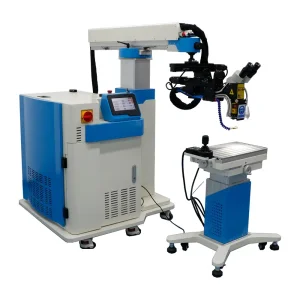
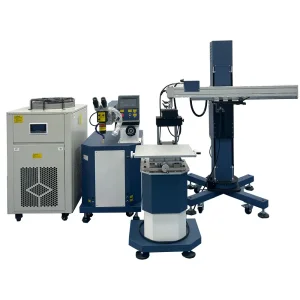
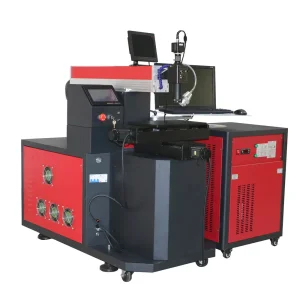
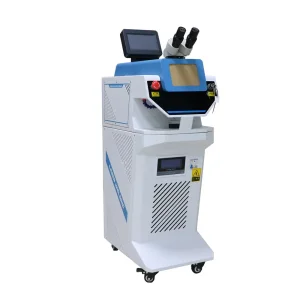


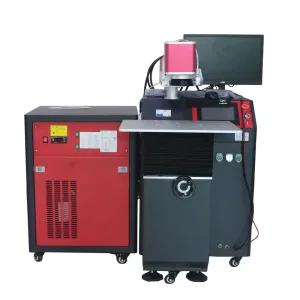

The manufacturing sectors across North America, the European Union, East Asia, and emerging industrial hubs in Southeast Asia are undergoing a fundamental transformation in thermal joining. For over seven decades, Tungsten Inert Gas (TIG/GTAW) and Metal Inert Gas (MIG/GMAW) welding have dominated metal fabrication shops. However, demographic shifts, escalating energy costs, and the relentless demand for higher metallurgical repeatability have catalyzed a rapid transition toward high-quality portable handheld fiber laser welding solutions.
Modern portable laser welders—specifically those operating within the 1064 nm to 1080 nm near-infrared fiber spectrum—concentrate intense optical energy into precise focal spots often ranging from 0.2 mm to 0.6 mm. This ultra-high energy density transforms the thermodynamic landscape of metal joining. Rather than transferring excessive conduction heat that warps workpieces and compromises structural temper, fiber laser welders operate in keyhole or conduction-limited modes that deliver deep penetration with up to an 80% reduction in heat-affected zone (HAZ) volume. For precision fabricators, this represents the total elimination of secondary post-weld grinding and straightening operations.
To evaluate a high-quality portable handheld laser welder manufacturer, industrial procurement officers and chief welding engineers must audit the core optical train. A field-ready laser system is an interconnected ecosystem of photon generation, high-purity delivery fibers, precision galvanometer wobble heads, and micro-channel thermal management.
Utilizing high-brightness, broad-area semiconductor laser diode arrays pumping ytterbium-doped active double-clad silica fiber cores. This yields beam parameter products (BPP) optimized for rapid keyhole formation while preserving a continuous wall-plug electro-optical conversion efficiency exceeding 30% to 35%.
Static focal points frequently result in joint undercut and bridge failure on imperfect seams. Integrated miniature galvo motors oscillate the beam transversely and longitudinally up to 300 Hz. Wobble geometries—including circular, helical, figure-eight, and linear sweeps—expand seam gap tolerance up to 2.5 mm.
Proper shielding gas shroud design dictates weld metallurgy. Youmir Laser designs optimized converging-diverging nozzles that deliver laminar argon or nitrogen envelopes over the molten puddle, eliminating atmospheric contamination while repelling high-velocity spatter from the sacrificial protective lens window.
| Nominal Power | Optimal Material | Single-Pass Butt Penetration | Fillet Seam Throat | Cooling Mechanism | Duty Cycle @ 40°C |
|---|---|---|---|---|---|
| 1000 Watt | Stainless Steel / Carbon Steel | Up to 3.0 mm (SS) / 2.5 mm (CS) | 2.0 mm | Integrated Closed-Loop Air/Water | 100% Continuous |
| 1500 Watt | SS / CS / Aluminum Alloys | Up to 4.0 mm (SS) / 3.5 mm (CS) / 2.5 mm (Al) | 3.0 mm | Dual-Circuit Refrigerant Chiller | 100% Continuous |
| 2000 Watt | High-Reflective Alloys (Cu, Al, Galvanized) | Up to 5.5 mm (SS) / 5.0 mm (CS) / 4.0 mm (Al) | 4.5 mm | Heavy-Duty Industrial Chiller | 100% Continuous |
| 3000 Watt | Heavy Plate & Exotic Dissimilar Joints | Up to 8.5 mm (SS) / 8.0 mm (CS) / 6.0 mm (Al) | 6.0 mm | Multi-Stage Dual Chiller Unit | 100% Continuous |
Welding metallurgy under a high-intensity laser beam differs drastically from arc welding. In traditional TIG welding, the cooling rate is relatively low, leading to coarse columnar grains that often degrade mechanical ductility and promote hot cracking in sensitive alloys. Handheld fiber laser welding introduces cooling rates exceeding 10⁴ °C/s, resulting in ultrafine cellular-dendritic microstructures.
One of the persistent headaches in automotive and HVAC fabrication is the low boiling point of zinc (907°C) compared to steel's melting temperature (1538°C). Under conventional welding, zinc violently explodes through the liquid pool, causing blowout holes and extreme porosity. With a high-quality wobble laser beam, the high oscillation velocity and variable power duty cycles create an open vapor plume escape route behind the focal spot, suppressing porosity and maintaining sacrificial zinc protection right to the edge of the weld seam.
Aluminum alloys 6061 and 6082 contain magnesium and silicon in proportions that render them highly susceptible to hot tearing during weld cooling. When utilizing a handheld fiber laser welder equipped with an automated synchronized wire feeder, filler alloys such as ER4043 (Al-Si) or ER5356 (Al-Mg) are introduced continuously into the keyhole. The dual-axis wobble homogenizes the weld pool fluid flow, altering the solidification front and preventing center-line segregation.
| Evaluation Parameter | Fiber Laser Handheld Welding | Tungsten Inert Gas (TIG) | Manual Metal Inert Gas (MIG) |
|---|---|---|---|
| Energy Input per Linear mm | Extremely Low (20-80 J/mm) | High (250-700 J/mm) | Moderate to High (180-500 J/mm) |
| Heat-Affected Zone (HAZ) | 0.1 mm to 0.4 mm | 1.5 mm to 4.0 mm | 2.0 mm to 5.5 mm |
| Sheet Distortion Risk | Virtually Zero (< 0.5 mm deviation) | Severe (Requires hydraulic flattening) | Significant (Angular distortion) |
| Operator Training Required | 1 to 2 Days | 6 to 24 Months | 2 to 6 Months |
| Shielding Gas Consumption | 12–18 L/min (Argon/Nitrogen) | 8–12 L/min (Argon) | 15–25 L/min (Ar/CO2 mix) |
| Post-Weld Processing | None (Direct pickling/polishing) | Grinding, blending, brushing | Extensive slag removal, grinding |
Precision handheld laser welders have expanded beyond small job shops into critical-path production lines in leading manufacturing nations across Germany, the United States, Japan, South Korea, and emerging regional powerhouses.
Aluminum cooling plates, battery module containment enclosures, and exhaust manifolds require gas-tight hermetic seals without burn-through. Handheld laser welders ensure consistent helium-leak-tested containment.
Stainless steel 304 and 316 air ducts, pharmaceutical sterile enclosures, and industrial cyclone dust extractors benefit from zero-spatter laser seams that harbor no microbial build-up and pass FDA hygiene inspections.
Mirror-finish stainless steel, brass balustrades, and elevator cabin walls demand perfect aesthetic presentation. Because laser welding causes no thermal back-side discoloration, downstream cosmetic rework is eliminated.
Instead of scrapping multi-ton injection molds or die-casting tooling exhibiting corner wear or micro-cracking, mobile boom-arm and handheld laser systems deposit matching tool steel wire with zero base-metal distortion.
For operations managers and procurement directorships, assessing a laser welding system requires an evaluation beyond initial capital expenditure (CapEx). When comparing the comprehensive operational expenditure (OpEx) against legacy welding stations, the economic payback curve typically breaks even in 4 to 8 months.
| Cost Driver | Traditional TIG Workstation (Annual) | 1500W-2000W Handheld Laser Station (Annual) | Net Operational Savings Impact |
|---|---|---|---|
| Direct Skilled Labor Cost | $75,000 – $95,000 (Certified TIG Artisan) | $40,000 – $55,000 (Junior / Standard Operator) | 35% – 45% Labor Cost Reduction |
| Electrical Power Utilization | $3,800 (Low-efficiency transformer arc) | $1,200 (>30% solid-state wall-plug efficiency) | 68% Direct Electricity Savings |
| Post-Weld Abrasives & Chemical Pickling | $6,500 (Grinding discs, flap wheels, paste) | $450 (Occasional sacrificial glass replacement) | 93% Consumables Reduction |
| Workpiece Thermal Scrap / Rework Rate | 3.8% (Warpage, heat discoloration, defects) | 0.2% (Repeatable, low-distortion seams) | 95% Reduction in Quality Rejection |
| Average Payback Period (ROI) | Baseline Reference | 4.2 to 6.8 Months | Rapid Capital Recovery |
As an authoritative manufacturer, Shenzhen Youmir Laser Technology Co., Ltd. continuously aligns R&D investments with real-world customer feedback. Our hardware and firmware development lifecycle projects radical leaps in portable laser joining through 2035.
Miniature high-speed CMOS sensors embedded directly within the welding torch monitor molten puddle temperature fields and keyhole stability at 1,000 frames/sec, dynamically adjusting laser power to eradicate micro-blowouts.
Pure copper reflects over 95% of standard infrared radiation at room temperature. Integrating hybrid 450 nm blue direct-diode lasers achieves 65% initial absorption, enabling spatter-free welding of pure copper busbars for EV batteries.
By replacing traditional silicon switching electronics with Gallium Nitride (GaN) power supplies and employing direct microchannel vapor-chamber torch cooling, the handheld torch weight drops below 550 grams for zero operator fatigue.
A unified interface permitting handheld guns to unclip instantly from manual operation and dock into 6-axis collaborative robotic arms via zero-point pneumatic tooling plates for instant transition to high-mix automated batch runs.
Explore our continuous fiber welding units, multi-axis motion stages, advertising channel letter welders, and precision toolroom mold restorers. Direct factory-certified pricing and global agency support available.

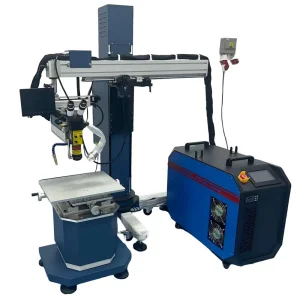


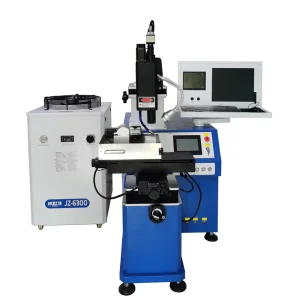
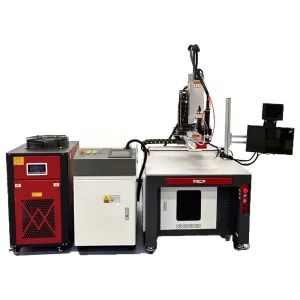
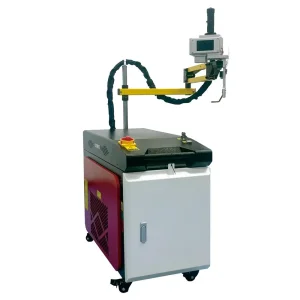

Shenzhen Youmir Laser Technology Co., Ltd. is not a white-label broker or trading entity. Founded in Shenzhen's high-tech manufacturing corridor with roots dating back to early industrial fiber laser R&D in 2010, Youmir commands an integrated footprint exceeding 5,000 square meters spanning cleanroom optical assembly, motion control firmware compilation, and automated test facilities.
Prior to committing to a machine model, clients submit actual fabrication samples to our testing laboratory. Our welding engineers generate comprehensive metallurgical reports including cross-sectional etching, tensile shear values, micro-hardness profiles, and parameter window documentation.
We empower tier-1 regional equipment distributors with private-label chassis design, multi-lingual GUI customization (English, Spanish, German, French, Portuguese, Arabic, and Russian), localized safety compliance interlocks (CE Category 3/4, FDA Class IV, ISO 11553-2), and custom PLC integration.
Industrial machinery downtime is unacceptable. Youmir backs all global deployments with 24/7 video-linked technical support, field-replaceable component stocking programs, scheduled remote firmware tuning, and overseas agency on-site commissioning.
Technical guidance compiled by Youmir's optical engineers and international application specialists to resolve technical queries prior to commercial investment.
