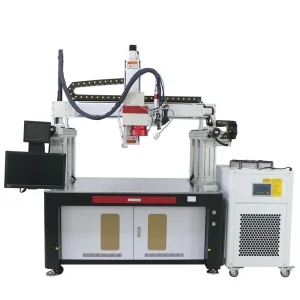
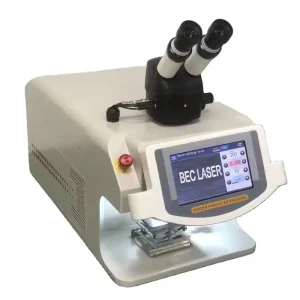
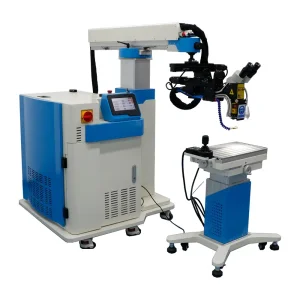
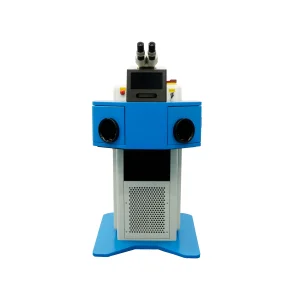
Direct factory procurement with certified process parameters, customized optical tooling, and high-peak pulse modulations.
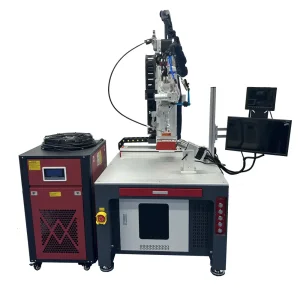
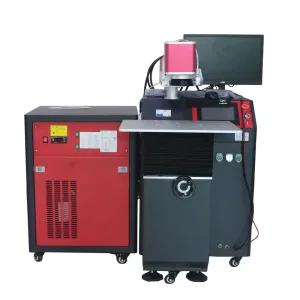
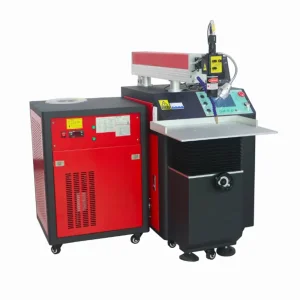
A technical white paper on peak-power modulation, melt-pool hydrodynamic equilibrium, and heat-affected zone (HAZ) mitigation across advanced alloys.
Unlike continuous-wave (CW) emission that maintains a persistent thermal baseline, Quasi-CW (QCW) and pulsed fiber lasers modulate photon emission into sharp, microsecond-duration bursts. By achieving instantaneous peak power exceeding 10x the nominal average power, the system instantly vaporizes surface oxide films and enters the keyhole welding threshold before bulk thermal conduction disperses heat into surrounding base substrates.
This pulse-shaping capability restricts the Heat-Affected Zone (HAZ) down to less than 0.08 mm, virtually eliminating macro-distortion, thermal stress cracking, and microstructural phase degradation in temper-sensitive steels and precious metals.
In high-reflectivity non-ferrous metals like copper alloys, brass, and 6000-series aluminum, continuous optical reflection can destabilize laser cavities. Shenzhen Youmir's high-quality pulsed fiber welders combine precise optical isolators with tailored pulse ramp-up profiles that maximize absorption at initial strike.
Closed-loop pulse modulation steadily controls keyhole collapse. Dynamic downward tapering of the pulse trailing edge allows molten metal to backfill without creating solidification voids, center-line shrinkage cavities, or trapped vapor inclusions, yielding hermetic seal integrity exceeding helium leak-test criteria (< 1×10⁻⁹ mbar·l/s).
For high-throughput industrial environments, pulse repetition frequencies up to 50 kHz are synchronized with digital galvanometer scan heads and 3-axis to 6-axis robotic gantries. This configuration shifts spatial beam positioning across complex 3D paths within milliseconds.
Wobble scanning kinematics (circular, sinusoidal, figure-8, and triangle patterns) disperse energy evenly across variable seam gaps up to 1.2 mm without requiring filler wire, multiplying joining efficiency while preserving joint shear strength.
How international manufacturers are transitioning from legacy TIG/MIG welding and solid-state YAG lamps to maintenance-free pulsed fiber ecosystems.
Traditional lamp-pumped Nd:YAG systems operate at wall-plug efficiencies of 2% to 4%, demanding frequent xenon lamp replacements, deionized water filtration, and massive refrigeration chillers. Pulsed fiber laser architectures achieve wall-plug electrical conversion rates exceeding 30% to 35%.
By drastically curbing thermal loss, factories reduce facility power consumption by up to 80% while eliminating flashlamp consumables, delivering return on investment (ROI) within 6 to 11 months of continuous production.
Global automotive manufacturing demands clean welds on hairpins, battery bussing, and sensor packages. Dissimilar metal joining—particularly joining electrolytic tough-pitch copper (ETP) directly to lightweight aluminum—presents severe brittle intermetallic phase risks (Al-Cu phases like CuAl₂).
Micro-controllable pulsed fiber systems with tailored high-frequency wobble beams isolate heat cycles to microseconds, freezing molten joints before large intermetallic grain boundaries coalesce. This preserves high electrical conductivity and prevents joint fatigue fractures under harsh vehicle vibrations.
In high-pressure aluminum die casting and high-cavity plastic injection molds, micro-abrasion, gate erosion, and chipping historically forced expensive mold condemnations. Pulsed fiber laser deposition enables toolrooms to deposit matching H13, P20, or S136 tool steel filler wires down to 0.15 mm diameter.
Minimal parent metal heating prevents tempering, sink marks, or dimensional shrinkage, allowing critical parting-line surfaces to be rebuilt with post-repair hand polishing alone, eliminating secondary heat-treatment cycles.
Quantitative metallurgical benchmarks compiled by Youmir Laser Application Laboratories.
| Evaluation Parameter | Pulsed Fiber Laser (QCW) | Continuous Wave (CW) Fiber | Legacy Lamp Nd:YAG | Traditional TIG / GTAW |
|---|---|---|---|---|
| Heat Affected Zone (HAZ) | Ultra-Fine (< 0.08 mm) | Moderate (0.2 – 0.5 mm) | Fine (0.1 – 0.25 mm) | Broad (> 2.0 mm) |
| Thermal Part Distortion | Virtually Zero / Negligible | Low to Controlled | Very Low | High / Warping Risk |
| Wall-Plug Efficiency | 30% – 35% | 35% – 42% | 2% – 4% | 40% – 55% (Arc Direct) |
| Maintenance Overhead | Solid-State, Zero Consumables | Zero Consumables | Frequent Flashlamp/DI Filters | Tungsten Grinding/Gas Cups |
| Dissimilar Joining Potential | Superior (Cu-Al, Brass-Steel) | Moderate (High Porosity Risk) | Good (Manual Tuning) | Extremely Poor / High Cracking |
| Operator Training Threshold | Plug & Play / CNC Programmed | Fast (1 to 2 Days) | Moderate (Optical Alignment) | High (Months to Years) |
Shenzhen Youmir Laser Technology Co., Ltd. couples in-house precision manufacturing with worldwide on-site engineering and certified safety compliance.
Exporting to over 50 nations requires comprehensive safety engineering. Every pulsed fiber system conforms strictly to:
Founded in Shenzhen with roots extending back to 2010, Youmir Laser operates proprietary optical laboratories, precision CNC machining shops, and laser beam profiling suites.
Because control hardware, beam delivery optics, and real-time firmware are coded in-house, clients work directly with senior systems engineers—avoiding middlemen, generic white-label distributors, and fragmented warranty claims.
Our global technical service commitment safeguards customer uptime with redundant tier-1 engineering channels:
Engineered setups tailored for tight tolerances, high cosmetic standards, and repeatable automated production runs.
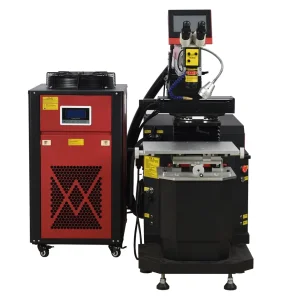
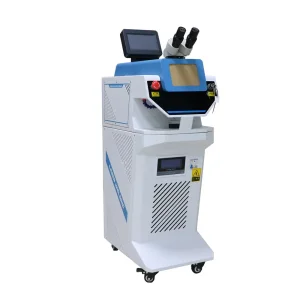
Micro-welding of platinum, 18K gold, titanium, and 925 sterling silver without removing heat-sensitive precious gemstones. High peak powers overcome high initial reflectivity of silver, providing smooth seam blending without porosity or post-fire clean-up.
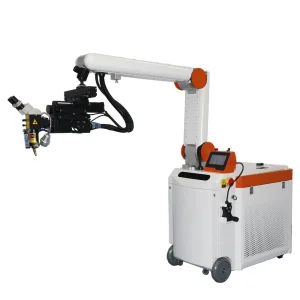
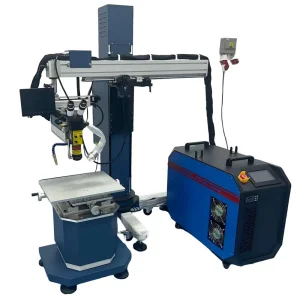
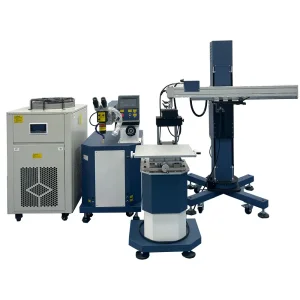
Boom-mounted and cantilever pulsed fiber configurations permit repair of 10-ton plastic injection cores and stamping dies right on the shop floor. Fine deposition along precision shut-off corners and ribs prevents sink marks and maintains structural mold integrity.
Hermetic seam sealing of aluminum prism battery cans, pouch cell tab joining, and copper-to-aluminum busbars. Rapid peak pulse cycling avoids thermal transfer into sensitive battery electrolytes, ensuring safety and compliance with UN38.3 vibration tests.
Surgical endoscopes, implantable pacemakers, and pressure transducer diaphragms demand oxide-free, sterile, leak-tight joints. Pulsed fiber delivery produces smooth, spatter-free joints that resist repeated autoclave steam sterilization cycles.
How Shenzhen Youmir Laser is evolving pulse architecture to integrate artificial intelligence, real-time sensing, and green smart manufacturing.
We are incorporating high-speed coaxial machine vision sensors and optical coherence tomography (OCT) directly into the welding head. Neural network algorithms track weld seams in real time, adjusting beam position, focus depth, and pulse energy dynamically to handle variations in part fit-up without operator intervention.
Through spectral photodiode monitoring within the delivery fiber, the system samples thermal radiation from the melt pool at 100 kHz. Any shift in thermal emission triggers microsecond corrections in pulse intensity, ensuring uniform penetration depth despite variations in surface oxides, oils, or alloy composition.
To overcome physical absorption limits on pure copper and noble metals, Youmir R&D is advancing hybrid blue/green laser (450 nm / 532 nm) and infrared fiber (1070 nm) beam combinations. Short wavelengths provide high initial absorption, while the pulsed fiber beam handles deep, smooth keyhole penetration with zero spatter.
Detailed technical answers addressing procurement, metallurgy, and equipment deployment.
Continuous-wave (CW) lasers output a sustained power level suited for high-speed seam welding of thick metals, but they generate continuous thermal conduction into adjacent structures. Pulsed and Quasi-Continuous Wave (QCW) lasers concentrate energy into microsecond bursts, achieving peak outputs up to 10–15 times higher than their average power rating. This delivers instantaneous keyhole formation with minimal cumulative heat buildup, making it ideal for thin-walled parts, heat-sensitive components, dissimilar alloys, and micro-precision repairs.
Yes. Pure copper, brass, and silver have high optical reflectivity at standard 1070 nm fiber wavelengths. However, our pulsed systems deliver high peak irradiance (> 10⁶ W/cm²) that overcomes this barrier, initiating instant keyhole vaporization where optical absorption rises from ~5% to over 60%. Combined with optical isolation protection against back-reflections, Youmir pulsed systems produce stable, spatter-free joints in conductive alloys.
Argon (99.999% high-purity) is standard for stainless steel, titanium, gold, and silver due to its chemical inertness and reliable arc/plasma suppression. For aluminum and copper, an Argon-Helium mix or pure Helium can be used to increase heat transfer and seam fluidity. Nitrogen is often chosen for austenitic stainless steel to preserve corrosion resistance, but must be avoided on titanium to prevent brittle nitride formation.
Before confirming an order or shipping equipment, our Shenzhen application lab accepts customer-provided materials and drawings. Our engineers perform weld parameter matrix studies, assess cross-section metallography, check tensile strength and helium hermetic seal integrity, and return a comprehensive testing report alongside process videos. This guarantees the delivered machine meets your target cycle times and production requirements from day one.
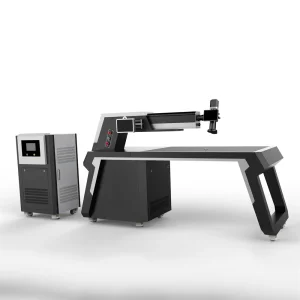
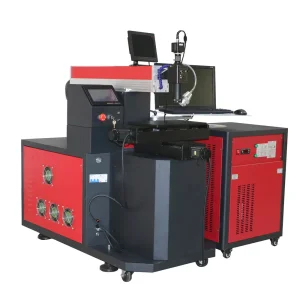
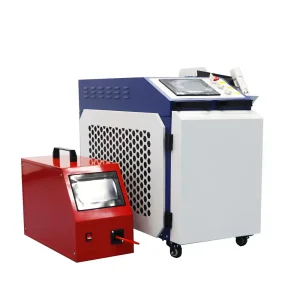
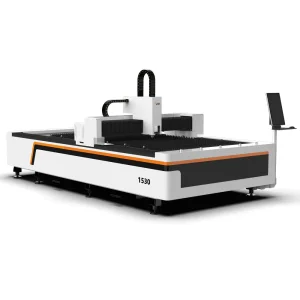
Specialized workstation configurations for tooling repair, advertising letters, precision jewelry fabrication, and continuous automated lines.