Industrial Laser Engineering Whitepaper & Sourcing Matrix

High-Quality QCW Fiber Laser Mold Welding Machine Manufacturers & Quotes

A metallurgical and operational guide to precision Quasi-Continuous Wave (QCW) fiber laser deposition, cold-weld repair, multi-axis die refurbishing, and global manufacturing procurement.

Featured High-Precision Laser Welding & Processing Machinery

Explore our flagship high-peak pulse systems, automated CNC stations, and heavy-duty boom configurations tailored for critical tool-room maintenance.

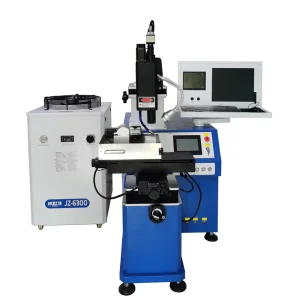
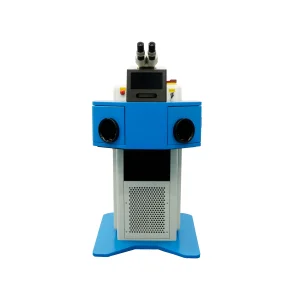
Custom Vertical jewelry welding machine Manufacturer, Manufacturers
Request Quote
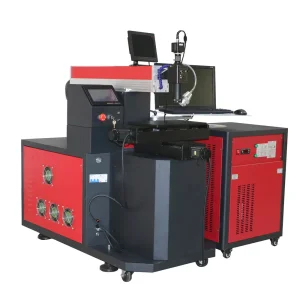
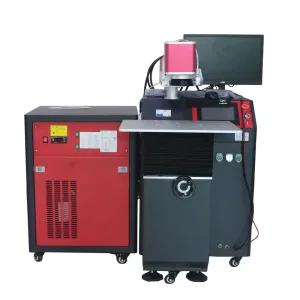
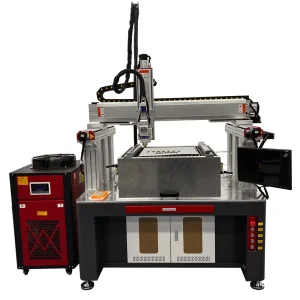
High-Quality 3 Axis Automatic Welding Machine Pricelist, Factory
View Specifications
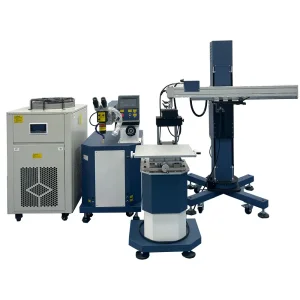
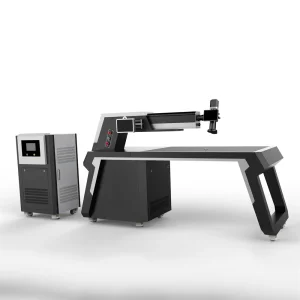
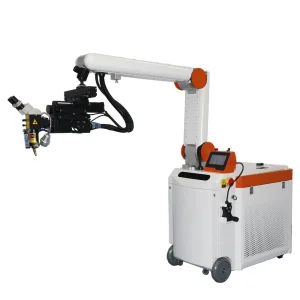
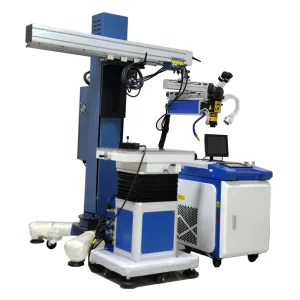
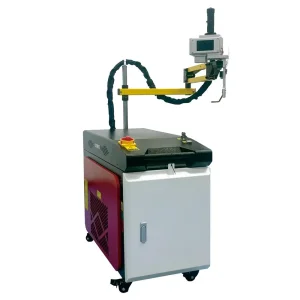
Custom Boom Mold Laser Welding Machine Manufacturers, Factory
Get Factory Price
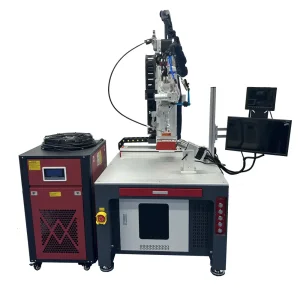
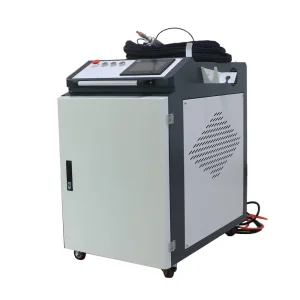
High-Quality Fiber Continuous Laser Welding Machine Manufacturers, Factories
Compare Models
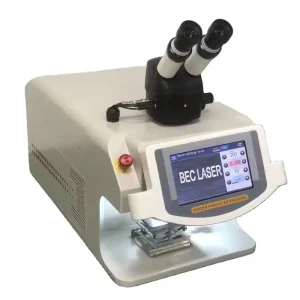
Custom QCW-Jewelry Laser Welding Machine Manufacturer, Factories
Download Catalog
Custom Integrated Boom Mold Welding Machine Manufacturer, Quotes
Direct Inquiry
High-Quality Automatic Laser Welding Machine Pricelist, Factories
Request Pricelist
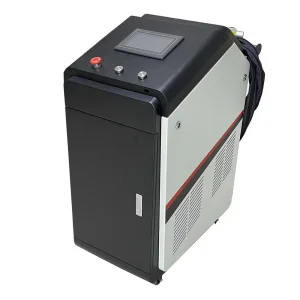
Custom Pulse Laser Cleaning Machine Manufacturer, Pricelist
Process Validation

The Thermodynamics of QCW Fiber Laser Deposition in Tool & Die Maintenance

Why modern mold fabrication plants are systematically decommissioning Nd:YAG flashlamp welders in favor of high-brightness Quasi-Continuous Wave fiber architectures.

In high-precision tooling manufacturing—encompassing plastic injection molding, high-pressure die casting, and progressive stamping dies—the cost of mold failure or edge degradation is magnified by factory downtime. Traditional micro-TIG (Tungsten Inert Gas) welding imparts excessive heat input, inducing massive Heat-Affected Zones (HAZ), microscopic thermal cracking, martensitic embrittlement, and volumetric distortion that necessitates labor-intensive re-machining and electrical discharge machining (EDM).

Quasi-Continuous Wave (QCW) fiber lasers address these physical limitations. By operating in both pulsed and continuous regimes, a QCW fiber laser can generate peak optical powers up to 10 times higher than its average power. For instance, a 150W average power QCW fiber source routinely outputs 1500W peak pulse power with millisecond-scale duration. This concentrated energy threshold pierces through high-reflectivity alloys (such as beryllium copper, aluminum, and hardened tool steels) instantly, forming a localized keyhole or molten pool while restricting heat dispersion into the parent substrate.

<0.05mm
Minimal HAZ Penetration
100,000 hrs
Pump Diode MTTF Life
35%+
Electro-Optic Efficiency
Zero
Consumable Cavity Optics

Suppression of Residual Stress

Because the laser pulse terminates in microseconds or single-digit milliseconds, the molten pool freezes before thermal saturation spreads into adjacent grain boundaries. This inhibits secondary tempering and post-weld micro-cracking across high-carbon alloy steels such as SKD11, SKD61, and NAK80.

Superior Electro-Optical Conversion

Legacy lamp-pumped Nd:YAG systems rarely achieve 2% to 3% wall-plug efficiency, consuming tens of kilowatts of electrical energy while requiring massive water chillers and frequent flashlamp and deionizing resin replacements. QCW fiber lasers deliver >30% wall-plug efficiency with virtually zero scheduled optical maintenance.

Precise Micro-Wire Deposition

The pristine beam quality (Beam Parameter Product M² < 1.2 to 2.0) allows focal spots down to 0.1mm. Technicians can deposit microscopic fill wires ranging from 0.15mm to 0.8mm with metallurgical fusion that leaves no undercut, gas porosity, or surface sink marks.

Macro Industry Engineering Solutions & Global Commercial Realities

Empowering worldwide tier-1 toolmakers, injection molders, and aerospace manufacturers to compress maintenance overhead and extend tooling lifecycles.

Automotive Precision Injection & Stamping Tooling

Modern automotive fascia, bumper molds, lighting optics, and structural body-in-white (BIW) stamping dies undergo tremendous cyclic stress. Tool replacements for multi-cavity Class-1 injection molds cost between $80,000 and $450,000 per tool set, with lead times reaching 16 weeks.

  • Cantilever & 360° Articulated Booms: Operators position the laser processing head directly into 15-ton mold bases inside the injection press, eliminating mold disassembly, crane rigging, and shop recalibration.
  • Hardness Retention: Depositing specialized H13 or Stellite filler wires achieves weld deposit hardnesses of 52-58 HRC directly without requiring post-weld furnace tempering cycles.

Medical Diagnostics & Micro-Fluidic Mold Repair

Medical consumables such as pipette tips, syringe barrels, micro-titer plates, and dialysis filter housings require optical-grade surface finishes (SPI A-1 / A-2) and microscopic parting-line tolerances where flashes greater than 5 microns cause rejection.

  • Sub-Millimeter Re-Edging: QCW fiber laser beams deposit micro-beads along knife-edge mold gates and shut-off surfaces without rounding fine razor corners or burning micro-vent pins.
  • Zero Gas Porosity: Coaxial argon shielding coupled with ultra-pure laser output eliminates micro-voids, guaranteeing zero biological entrapping cavities after mirror-polishing.

Consumer Electronics Micro-Connectors & Optics

With consumer tech driven toward miniaturization (USB Type-C connectors, camera module barrels, smartphone internal structural frames), mold inserts often feature core pins thinner than 0.5mm with tight tolerances.

  • Coaxial CCD High-Def Monitoring: Operators execute repair procedures via 100x optical magnification crosshairs, viewing molten dynamics on 4K digital interfaces in real time.
  • Beryllium-Copper Core Repair: QCW lasers break the reflectivity barrier of Ampco and CuBe alloys, reconstituting high-conductivity thermal mold cores without melting the fragile base.

High-Pressure Die-Casting (HPDC) Heat-Checking Restoration

Aluminum and magnesium alloy die casting exposes tool steel (1.2343, 1.2344, Dievar) to extreme thermal fatigue cycles, forming spider-web micro-cracking ("heat checks") across runner gates and core sliders.

  • Deep-Penetration Crack Sealing: QCW laser parameter shaping liquefies subsurface crack roots without vaporizing grain boundaries, restoring hydrostatic integrity.
  • Wear-Resistant Buffering: Enables multi-layer cladding of cobalt-base and nickel-base superalloys to shield high-erosion mold gates from molten aluminum wash.

Engineering Matrix: QCW Fiber vs. Traditional Tooling Welders

Quantitative empirical evaluation across thermodynamic, optical, operational, and financial dimensions based on 10,000 hours of continuous tool-room operation.

Performance / Optical Metric QCW Fiber Laser Welder Pulsed Nd:YAG Laser (Lamp-Pumped) Micro-TIG / Plasma Arc
Optical Wavelength 1070 nm (Fiber-guided) 1064 nm (Crystal rod) Non-optical (Electric Arc)
Peak Pulse Power Capability 1,500 W – 3,000 W (at 150W-300W avg) 6,000 W – 9,000 W (High thermal loss) N/A (Continuous thermal arc)
Minimum Focused Spot Diameter 0.05 mm – 0.20 mm 0.20 mm – 0.60 mm 0.80 mm – 2.0 mm
Heat-Affected Zone (HAZ) Negligible (< 0.05 mm) Moderate (0.20 mm – 0.40 mm) Extensive (> 1.50 mm, warping)
Wall-Plug Electrical Efficiency 30% – 38% 1.5% – 2.8% 40% – 50% (High arc heat)
Consumables & Maintenance Protective lens cover only Flashlamps, DI resin, Gold cavity, Rods Tungsten electrodes, Gas nozzles
Diode / Pumping Source MTTF > 100,000 Operating Hours 1,000 – 2,000 Hours (Flashlamp life) 50 – 100 Hours (Electrode wear)
Reflective Alloy Welding (Cu, Al) Exceptional (High initial peak coupling) Moderate to Poor (Back-reflection risk) Difficult (Requires high preheat)

Global Quality Assurance, Industrial Compliance & Factory Acceptance

Ensuring complete conformance with European CE machinery safety directives, American FDA/CDRH standards, and global electrical grid compatibility.

Class 4 Optical Interlocking

Configured with dual-channel emergency shut-off switches, safety shutter sensors, active beam enclosures, and laser-safety curtain interfaces meeting EN 60825-1 and ISO 11553-1 regulations for industrial laser machining installations.

Dual Grid & Multi-Voltage Engineering

Integrated isolated step-up/step-down magnetic stabilizers accommodating 110V/220V single-phase or 380V/480V 3-phase electrical configurations at 50Hz/60Hz, ensuring seamless commissioning in North America, the EU, Southeast Asia, and Latin America.

Rigorous FAT / SAT Protocols

Every industrial unit undergoes a 72-hour continuous beam stability burn-in test, power meter calorimetric verification, optical path alignment, and non-destructive weld penetration testing on metallurgical samples prior to export authorization.

Next-Generation Technology Roadmap (2025–2030)

Strategic advancements shaping the intelligent, autonomous trajectory of precision mold cladding and laser additive remanufacturing.

AI Optical Seam Reconstruction

Deep learning vision algorithms will automate tool edge recognition. High-speed 3D laser profilers scan damaged mold cavities, automatically calculating volumetric metal loss and generating multi-axis toolpaths with zero manual teaching.

Pyrometric Real-Time Closed Loops

Coaxial infrared sensors monitor the melt pool temperature at 10 kHz sampling rates. The system dynamically modulates laser pulse power in real time to prevent overheating near thin mold ribs and delicate cooling water channel barriers.

Hybrid Directed Energy Deposition

Convergence of QCW fiber laser heads with high-speed micro-milling spindles on unified 5-axis CNC platforms, enabling automated additive laser repair immediately followed by micro-finish milling without mold re-clamping.

Frequently Asked Questions: Technical Evaluation & Procurement

Comprehensive metallurgical and practical engineering answers addressing the core search intents of tooling plant managers and procurement specialists.

What is the metallurgical difference between QCW fiber laser welding and continuous fiber laser welding for mold repair?
Continuous Wave (CW) lasers produce constant thermal power throughout the interaction cycle, creating a wide liquid weld pool that can lead to heat sink sinkage, edge sagging, and thermal distortion on delicate mold parting lines. In contrast, Quasi-Continuous Wave (QCW) fiber lasers produce millisecond pulses with peak powers up to 10x higher than their nominal average power. This delivers high initial laser coupling that rapidly melts the wire and parent steel, instantly shutting off to allow ultra-fast quench rates without transferring residual heat into the mold core.
Which mold steels can be welded using a QCW fiber laser without pre-heating?
Pre-hardened plastic mold steels such as P20, 718, NAK80, 1.2311, and 1.2738 can be welded without pre-heating due to the micro-scale heat-affected zone of QCW pulses. Hot-work tool steels (H13, SKD61, 1.2344) and cold-work steels (D2, SKD11) can also be repaired at room temperature for fine edges and parting lines under 1.5mm width. For deep cavity repairs or heavy section builds on high-carbon steels, localized pre-heating to 150°C–200°C is recommended to mitigate martensitic shear stresses.
Can a QCW laser mold welding machine deposit wire onto Beryllium Copper (BeCu) and Aluminum molds?
Yes. Beryllium Copper and 7075 aluminum alloys possess extreme thermal conductivity and high initial reflectivity at 1070nm. Standard continuous welders fail to initiate a keyhole without overheating the part. The 1,500W to 3,000W peak optical pulse of a QCW fiber source overcomes the initial reflective barrier instantly, creating a clean molten puddle with Ampco-Trode or AlSi filler wires without thermal conduction loss.
What shielding gas should be utilized, and what are the flow rate requirements?
Industrial grade 99.999% pure Argon is the global standard for mold laser welding. The flow rate should be maintained between 8 to 15 Liters per minute (L/min) through a coaxial nozzle or trailing laminar shield. Argon protects the molten deposit from atmospheric nitrogen pickup and oxidation, ensuring mirror-polishable, porosity-free deposits. In titanium or superalloy die repairs, trailing cups are recommended.
How does the operating cost of a QCW fiber system compare to a flashlamp-pumped Nd:YAG machine?
Operating cost is reduced by approximately 80% to 90%. Lamp-pumped YAG welders consume 4 kW to 9 kW of electric power, need deionized water cooling with frequent filter/resin changes, and require flashlamp replacements every 1,000 to 2,000 hours ($150-$400 per lamp pair). A QCW fiber laser consumes less than 1.5 kW of total system power, employs air-cooling or compact chillers, and has a semiconductor pump diode lifespan exceeding 100,000 hours with no optical adjustments required.
What wire diameters are supported by QCW mold laser welders?
Depending on beam spot adjustment (0.1mm to 2.0mm), our QCW mold welding stations support filler wire diameters ranging from 0.15mm (0.006") for ultra-fine micro-pin repair up to 0.80mm (0.032") for broader edge buildup. The standard manual feeding wire diameter for precision mold toolmakers is 0.3mm to 0.5mm.

Extended Equipment Portfolio & Specialized Processing Stations

Explore our multi-axis cantilever systems, high-speed galvanometer welders, laser cutting cells, and precision surface cleaning units.

High-Quality Advertising Word Laser Welding Machine Manufacturers, Pricelist
Request Details
High-Quality Laser Cleaning Machine Manufacturer, Quotes
Inquire Now
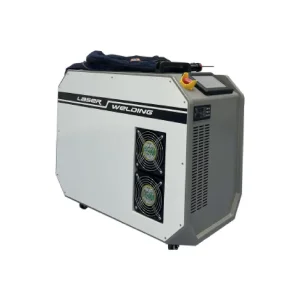
High-Quality QCW Handheld Laser Welding Machine Pricelist, Quotes
Get Factory Quote
Custom Cantilever Laser Welding Machine Pricelist, Factories
Download Specs
Custom Galvanometer Laser Welding Machine Manufacturers, Factories
Explore Galvo Tech
Custom Fiber Mold Laser Welding Machine Pricelist, Quotes
Request Proposal
High-Quality Fiber Laser Cutting Machines Factories, Quotes
Cutting Solutions
High-Quality Handheld Galvanometer Laser Welding Machine Manufacturer, Factories
Custom Engineering