Explore our certified industrial laser machines engineered in-house for selective ablation, precision micromachining, structural descaling, and high-integrity fabrication.





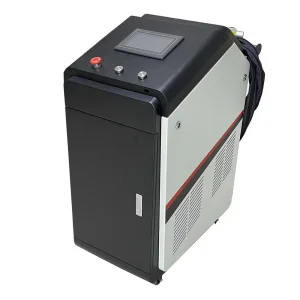


A technical examination of non-contact photonic decontamination versus legacy chemical pickling, dry-ice blasting, and abrasive mechanical grit methods.
When a high-energy nanosecond pulsed fiber laser strikes an oxidized iron layer (Fe2O3, Fe3O4), photon absorption instantly elevates the oxide layer past its vaporization threshold. This generates rapid thermal expansion and localized plasma expansion, producing high-frequency thermo-elastic acoustic shockwaves that shatter the brittle corrosion crust without exceeding the metallurgical melting threshold of the parent metal.
Because metallic alloys exhibit significantly higher thermal conductivity and optical reflectivity than metal oxides, the ablation self-terminates upon reaching the bare metal surface. The instantaneous photonic treatment alters the residual surface stress from tensile to compressive, while promoting the micro-diffusion of atmospheric oxygen into a nanoscale, uniform chromium or passive oxide barrier that substantially impedes re-oxidation.
Youmir Laser systems bridge the gap between surface preparation and downstream fabrication. In modern robotic assembly cells, our fiber cleaning heads clear mill scale, rust, and hydrocarbon lubricants at up to 45 m²/hr immediately ahead of automated laser or MIG welding torches, completely eliminating porosity, spatter, and hydrogen-induced cracking in structural welding operations.
| Evaluation Parameter | Pulsed Fiber Laser Ablation | Continuous (CW) Laser Cleaning | Grit/Sand Blasting | Chemical Acid Pickling |
|---|---|---|---|---|
| Substrate Damage / Micro-Pitting | Zero (Optical Threshold) | Low to Minor Heat Accumulation | High Surface Abrasion & Erosion | Hydrogen Embrittlement Risk |
| Secondary Hazardous Waste | None (HEPA Vacuum Captures Fume) | None (HEPA Filtration Required) | Severe Contaminated Grit Volume | Toxic Liquid Sludge / Acid Runoff |
| Operating Expense (OPEX) | < $0.90 / hr (Electricity Only) | < $1.60 / hr (Electrical Draw) | $35 - $70 / hr (Media + Disposal) | $40 - $95 / hr (Chemicals & Neutralization) |
| Selective Stripping Control | Micron-Accurate Layer Removal | Broad Sweep / High Throughput | Imprecise / High Over-blasting | Uncontrolled Immersion Bathing |
| Operator Environmental Safety | Enclosed Eyewear & Extraction | Protective Eyewear & Fume Hood | Silicosis Risk, Heavy PPE, Noise | Chemical Burn & Toxic Vapor Hazard |
Why Fortune 500 equipment operators and precision fabrication tier suppliers are accelerating capital conversion toward fiber laser surface treatment.
While the initial CAPEX of an industrial rust cleaning machine exceeds that of a conventional sandblasting pot, the true cost of ownership shifts decisively within the first 6 to 9 months of operation. By eliminating blast media purchases (garnet, aluminum oxide), compressed air utility charges, blasting helmet replacements, and hazardous waste disposal surcharges, production facilities report an average payback timeline of 180 operating shifts.
Regulatory pressures across North America, the European Union, and Asia-Pacific have made legacy descaling methods liability hazards. The EU REACH directive strictly curtails carcinogenic hexavalent chromium formation during chemical stripping, while OSHA's crystalline silica standard heavily penalizes open grit blasting. Youmir Laser cleaning systems provide a clean, zero-effluent compliance path verified for Scope 1 and Scope 2 ESG carbon accounting.
Unscheduled downtime in automated paint shops, tube mills, and injection molding lines often traces directly to inadequate surface preparation or wear induced by mechanical scrubbing. Laser ablation eliminates tooling wear: tire and composite mold life is extended up to 300% because no dimensional tolerance or vent clearance is lost. Plant managers gain predictable, repeatable cycle times backed by digital parameter storage.
Shenzhen Youmir Laser Technology Co., Ltd. delivers direct factory engineering, rigorous optical calibration, and custom turnkey OEM/ODM automation solutions.
Unlike equipment assemblers who rely on generic third-party heads, our Shenzhen engineering labs design and calibrate our own dual-axis galvanometer scanning heads, F-theta telecentric lenses, and collimated beam delivery systems to prevent thermal lensing at multi-kilowatt power levels.
Every cleaning machine undergoes 72 hours of uninterrupted optical stability and thermal stress testing inside environmentally controlled chambers. Beam quality parameters (M² factor, spot circularity, pulse jitter) are recorded and delivered with every machine dispatch dossier.
We partner with industrial equipment distributors and global machinery brands, providing tailored sheet-metal chassis styling, multilingual CNC human-machine interfaces (HMI), private label branding, and custom optical delivery configurations optimized for regional markets.
Backed by production facilities in Shenzhen, Zhongshan, and Hunan, Youmir Laser maintains a continuous stock of fiber resonators (100W–3000W), precision chillers, and CNC gantries, guaranteeing fast export turnaround and scalable volume delivery for worldwide accounts.
Specific metallurgical challenges solved across shipbuilding, aerospace de-coating, structural infrastructure, and automotive battery production.
In coastal shipyards across Southeast Asia and Northern Europe, heavy marine salt-crust oxidation on AH36 structural plate previously required harsh slurry blasting. Utilizing Youmir 3000W continuous-wave laser cleaning systems, shipwrights remove 1.5 mm dense marine corrosion down to bare metal (Sa 2.5 to Sa 3.0 visual standard) at 32 m²/hr with zero toxic wash-off into municipal harbors.
A commercial aviation maintenance, repair, and overhaul (MRO) facility required the removal of radome epoxy and polyurethane topcoats on titanium alloy wing spars without causing hydrogen embrittlement or surface roughness shifts. Our 500W pulsed MOPA fiber laser selective ablation head stripped composite and metallic surfaces layer-by-layer without micro-cracking or gauge reduction.
In high-volume electric vehicle cell-to-pack (CTP) manufacturing, residual native aluminum oxides (Al2O3) cause weld pool volatility and electrical resistance spikes. Youmir integrated 3-axis galvanometer cleaning heads ablate the insulating oxide skin on battery pack trays milliseconds prior to fiber laser seam welding, reducing joint electrical resistance to under 1.2 micro-ohms.
Comprehensive engineering certification, worldwide distributor fulfillment, and multi-tier service level agreements (SLA).
Every Youmir laser machine meets strict regional statutory safety mandates. Systems destined for North America conform to FDA CDRH Class IV / Class I enclosures and UL/CSA electrical switchgear guidelines. European deliveries carry CE compliance for the Machinery Directive 2006/42/EC, Low Voltage Directive 2014/35/EU, and EN 60825-1 laser safety standards.
Youmir maintains dedicated regional field agency partnerships across 50+ countries, including the United States, Canada, Germany, Italy, Turkey, Malaysia, Thailand, and Indonesia. Local partners maintain stock of critical wear items (fused silica protective cover windows, focus optics, flow sensors) guaranteeing under 48-hour part dispatch.
Never purchase laser processing equipment on guesswork. Youmir operates an application laboratory where international buyers send sample workpieces. Our engineers run controlled ablation trials, evaluate surface roughness (Ra) changes, record video telemetry, and supply a binding metallurgical feasibility report specifying optimal power, scan speed, and focal parameters.
How artificial intelligence, spectral feedback, and picosecond photonic engines are reshaping high-precision industrial rust and coating removal.
The next generation of Youmir automated cleaning cells integrates Laser-Induced Breakdown Spectroscopy (LIBS) optical emission sensors alongside high-speed camera arrays. By sampling the photonic plasma emission in real-time, the control system identifies the elemental chemical signature of the ablated vapor—modulating laser power, frequency, and robot scan velocity instantaneously as the underlying bare alloy is revealed.
While continuous-wave (CW) lasers provide cost-effective gross descaling for heavy plate steel, the migration toward tunable Master Oscillator Power Amplifier (MOPA) architecture allows dynamic pulse width adjustment from 2 ns to 500 ns. Shorter pulse durations eliminate heat conduction into sensitive materials, unlocking cold decontamination across thin lithium battery foils, aerospace composite skins, and precision turbine blades.
Operator fatigue represents the primary bottleneck during extended handheld cleaning shifts. Our 2026 product releases feature carbon-fiber optical housing designs reducing handheld torch weight below 750 grams. In parallel, standardized collaborative robot (cobot) mounts with modular drag-and-drop teach pendants allow shop technicians to convert manual torches into automated scanning cells in under ten minutes.
In-depth, direct answers from our factory laser specialists to assist purchasing directors, plant engineers, and import distributors.
Explore our extended catalog of high-power continuous systems, cantilever mold repair gantries, and automated multi-axis production machines.


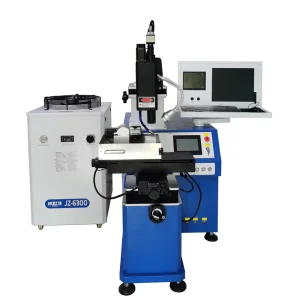





Connect directly with our Shenzhen optical laboratories. Send us your workpieces for complete metallurgical ablation testing, cycle-time telemetry verification, and factory-direct volume pricing.
