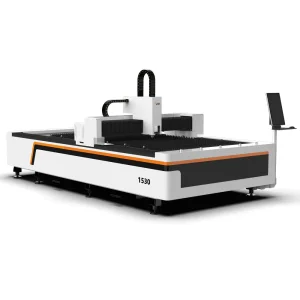
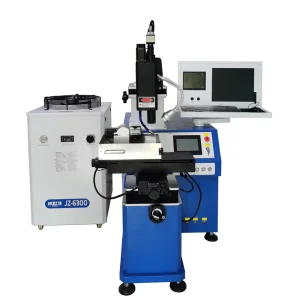
Explore our top-tier industrial optical solutions, designed for micro-accuracy, continuous metallurgical duty cycles, and adaptable multi-axis tooling.






Across modern automotive, clean energy, and aerospace manufacturing, legacy TIG and MIG thermal welding methods are being rapidly phased out. High-brightness fiber laser welders, operating at ~1070 nm wavelengths, represent a paradigm leap in metallurgical joining physics.
Fiber laser welding concentrates power densities exceeding 10⁶ W/cm², producing deep "keyhole" penetration rather than shallow surface conduction. This reduces the Heat-Affected Zone (HAZ) by over 75%, virtually eliminating thermal distortion in critical sheet metal and micro-assemblies.
Solid-state fiber systems deliver wall-plug electro-optical conversion efficiencies exceeding 35-40%, compared to only 3-5% for older Nd:YAG flashlamp platforms and 10% for CO₂ lasers. The dramatic drop in power consumption significantly lowers global factory operational costs.
Equipped with flexible single-mode or multi-mode fiber optic delivery cables, modern fiber welding heads readily integrate with 3-axis CNC gantries, multi-axis SCARA robots, and high-speed dual-axis wobble galvanometer scan heads for automated mass manufacturing.
Shenzhen Youmir Laser Technology Co., Ltd. sits at the heart of the world's most advanced photonics and mechatronics cluster in the Pearl River Delta, granting our overseas OEM/ODM partners decisive competitive advantages.
By partnering directly with domestic Tier-1 fiber laser source innovators (such as Raycus, MAX Photonics, and JPT) and controlling our own optical design and mechanical CNC machining, we eliminate layers of third-party markup, directly passing substantial margin savings to global distributors.
Unlike trading operations assembling unbranded kits, our in-house engineering team codes embedded DSP control software, optimizes galvanometer wobble beam patterns (Circle, Triangle, Line, Double-Oscillation), and engineers custom multi-lens collimating systems tailored to bespoke materials.
Our 5,000+ m² facility houses dedicated metallurgy laboratories. Overseas clients ship difficult alloys or unique geometries directly to Shenzhen, receiving micrographic cross-sections, tensile test reports, and pre-programmed process parameter windows before taking delivery.
Specification comparisons compiled by Youmir Laser application engineers showing quantified performance shifts in real production conditions.
| Evaluation Parameter | High-Precision Fiber Laser Welder | Traditional TIG (Gas Tungsten Arc) | Traditional MIG (Metal Inert Gas) |
|---|---|---|---|
| Welding Speed (Thin Sheet) | 50 – 120 mm/sec (Ultra Fast) | 10 – 25 mm/sec (Slow) | 20 – 40 mm/sec (Moderate) |
| Heat-Affected Zone (HAZ) | Extremely Narrow (< 0.5 mm) | Very Broad (Extensive Warping) | Broad (High Distortion Risk) |
| Post-Weld Polishing / Grinding | Negligible to Zero Needed | Extensive Manual Grinding | Heavy Deslagging & Grinding |
| Dissimilar Metal Capability | Excellent (e.g. Copper-to-Alloy/SS) | Extremely Difficult / High Porosity | Limited |
| Operator Training Curve | 2 to 4 Hours to Master | 6 to 18 Months Certified Training | 3 to 6 Months Experience |
| Electricity & Consumable Costs | Lowest (80%+ Energy Cut) | High Gas & Tungsten Wear | High Wire & Gas Usage |
Precision fiber joining systems are solving distinct structural engineering hurdles across key international manufacturing verticals.
Used extensively in lithium-ion battery tab welding, busbar junctions (copper-to-aluminum), and tailored automotive blank seams where joint electrical conductivity and hermetic sealing are paramount.
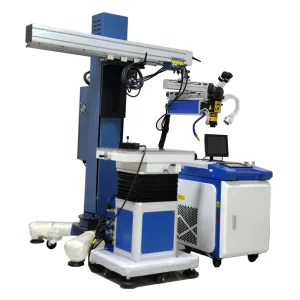
Our boom and cantilever fiber mold welders allow micro-deposition of high-hardness alloys directly onto worn tool steels (P20, H13, 718) without annealing, preserving base metal temper and saving huge tooling replacement costs.
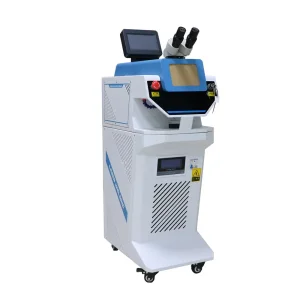
Engineered desktop spot welders deliver micro-joule pulse control for precious metals (platinum, 18K/24K gold, silver) and surgical grade titanium dental bridges without damaging embedded gemstones or sensitive circuits.
Eliminates surface sink marks on 304/316 grade stainless kitchen sinks, food processing tanks, and architectural handrails, enabling direct mirror polishing without filler wire build-up.
High-frequency beam wobble capabilities vaporize thin zinc coatings momentarily without explosive splatter, allowing clean, high-speed seams in galvanized sheet metal enclosures.
Delivers repeatable 100% radiographic-quality, pore-free orbital and rotational joints on thin-walled Inconel, Monel, and Hastelloy tubing systems.
Strategic equipment buyers evaluate capital purchases based on total lifetime cost of ownership, modularity, and evolving environmental regulations.
Contract fabricators are prioritizing hybrid machines capable of rapid tool-less changeover between fiber laser welding, laser seam cleaning, laser rust/paint stripping, and light plate cutting. Youmir's multi-process optic head leads this segment.
To conquer highly reflective pure copper and gold alloys without spatter, industrial procurement is moving toward dual-wavelength systems pairing ~450 nm blue lasers (high absorption) with 1070 nm fiber lasers (deep penetration).
Tier-1 industrial manufacturers demand Modbus, EtherCAT, and OPC UA digital interfaces. Youmir embeds comprehensive digital feedback loops, providing operators live tracking of laser power output, gas pressure, chiller temperatures, and weld seam depth verification.
Compliance with IEC 60825-1 Class 4 laser safety standards, safety dual-loop interlock contactors, automatic protective gas shutoffs, and optical beam reflection sensors are now non-negotiable procurement prerequisites for European and American import channels.
Direct technical clarifications from Youmir's optical engineers, addressing installation, maintenance, power configuration, and international shipping.
Engineered for high-volume automated manufacturing, heavy tooling repair, and multi-axis workshop fabrications.