Explore precision engineering solutions developed in our Shenzhen facilities, supporting continuous multi-shift production and custom optical configurations.



Modern heavy industry faces escalating challenges from environmental regulations, rising consumable disposal costs, and stringent surface integrity requirements. Handheld and portable laser cleaning represents a zero-contact, non-abrasive industrial leap forward.
Traditional abrasive sandblasting generates tons of silica dust, grit, and hazardous contaminated waste streams. Chemical pickling relies on hazardous hydrofluoric or nitric acids requiring expensive neutralizers. Portable laser cleaning utilizes pure photons, vaporizing contaminants into an integrated extraction filtration system with zero secondary physical media waste.
Mechanical grinding alters dimensional tolerances, induces surface pitting, and causes subsurface microfractures. Pulsed laser cleaning functions through brief nanosecond energy bursts exceeding the ablation threshold of oxides or coatings while remaining strictly beneath the thermal melting point of the parent metal, preserving precision geometries.
While upfront capital expenditure is higher than legacy sanders, operating expenditures fall by up to 88%. Powered by standard industrial electrical grids, modern fiber laser resonators operate with electro-optical conversion efficiencies exceeding 30-38%, consuming only 1.5 to 7.5 kW per operating hour without recurrent consumable expenditures.
Factory-direct quotation structures depend strictly upon laser architecture (Pulsed MOPA vs. Continuous Wave), resonator brand tiering, optical galvanometer complexity, and integrated mobile chassis engineering.
| Architecture & Optical Type | Power Rating | Pulse Energy / Width | Primary Industrial Use Case | FOB Factory Price Range (USD) |
|---|---|---|---|---|
| Backpack Pulsed Fiber (Air-Cooled) | 100W MOPA | 1.5 mJ / 10–500 ns | Precision aerospace, injection molds, historical stone, micro-electronics | $5,800 – $8,200 |
| Portable Suitcase Pulsed (Air-Cooled) | 200W MOPA | 1.8–2.0 mJ / 15–350 ns | Automotive sensors, localized weld de-oxidation, anodized layer stripping | $8,500 – $12,400 |
| High-Energy Mobile Pulsed (Water-Cooled) | 300W – 500W Pulse | 5.0–12.0 mJ / 30–250 ns | High-value tooling refurbishment, nuclear decontamination, composite bonding prep | $16,000 – $24,500 |
| Compact Handheld CW (Water-Cooled) | 1000W Continuous | Continuous / Wobble Beam | Light steel rust de-scaling, shipyard spot maintenance, structural steel weld pre-cleaning | $3,800 – $5,200 |
| Standard Mobile Handheld CW | 1500W Continuous | Continuous / Dual-Axis Wobble | Medium-to-heavy corrosion removal, boiler tubes, tank interior refurbishment | $4,600 – $6,400 |
| Heavy Industrial Handheld CW | 2000W Continuous | Continuous / High-Fluence | Heavy bridge maintenance, marine hull paint stripping, structural iron descaling | $5,800 – $7,900 |
| Maximum Fluence Dual-Chiller CW | 3000W Continuous | Continuous / Broad Scan Path | Massive pipeline mill scale stripping, shipyard dry-dock high-speed maintenance | $8,200 – $11,500 |
The optical source comprises 40%–55% of the total system bill-of-materials. IPG Photonics and JPT MOPA resonators command premiums due to tighter spectral bandwidth, near-unity beam quality (M² < 1.3), and pulse frequency configurability up to 4000 kHz, whereas Raycus and MAX provide robust cost-efficient solutions for CW continuous high-power removal.
Budget systems utilize single-axis oscillating mirrors that produce linear striations. Custom industrial handheld cleaning torches incorporate dual-axis digital galvo mirrors driven by high-speed digital DSP controllers, projecting circular, spiral, square, and raster beam profiles that avoid thermal hotspots and eliminate operator banding artifacts.
Direct OEM factory customization allows distributors to select military-grade wheeled flight cases, backpack harness ergonomics with ultralight carbon-fiber wand assemblies (sub-850g), dual-voltage universal power inverters (110V/220V), and reinforced armored fiber conduits rated for extreme job-site abrasion resistance.
From North American aerospace depots to Southeast Asian dry docks and European manufacturing plants, portable laser systems resolve localized contamination issues with micro-level precision.
Removal of degraded thermal barrier coatings, carbon deposits, and oxidation from high-nickel superalloy turbine blades without altering blade aerodynamics or root tolerances. Surface activation of carbon-fiber reinforced polymers (CFRP) prior to adhesive bonding without micro-cracking the resin matrix.
Continuous wave 2000W–3000W mobile units deployed in dockyards for high-speed ballast tank corrosion removal, pipeline weld preparation, and splash-zone chloride deposit clearing. Replaces manual pneumatic needle guns and open blast rooms inside hazardous confined spaces.
High-speed selective ablation of polyimide insulation enamels from copper hairpin conductors in electric vehicle (EV) traction drive stators. Cleans paint and electrophoretic coatings from grounding points and hem-flanges without degrading the underlying galvanized zinc protective layer.
Online cleaning of vulcanized rubber residues, plastic mold outgassing films, and release agent bake-ons without dismounting hot molds from press platens. Eliminates destructive glass-bead blasting and reduces mold maintenance cycle downtime from eight hours to forty-five minutes.
Pulsed 100W–200W backpack units tuned to low-frequency sub-nanosecond pulses to remove centuries of sulfur dioxide pollution incrustations, biological black crust, and soot from delicate limestone, marble reliefs, and bronze artifacts without surface ablation of the natural historic patina.
Remote and semi-autonomous beam delivery systems removing radioactive surface contamination layers on stainless steel canisters and control rods. The particulate ablation plume is immediately drawn into multi-stage HEPA filtration, dramatically reducing contaminated physical material bulk.
Exporting industrial laser devices requires total adherence to international optoelectronic standards. Operating a Class 4 high-fluence device demands rigorous interlock architectures and certified local support networks.
Handheld laser cleaners emit collimated and scanned near-infrared radiation (1064–1080 nm). All machines manufactured by our Shenzhen enterprise integrate dual-channel safety loops: contact sensor ground grounding, optical trigger interlocks, emergency stop circuits, remote door interlock plugs, and automated emission cut-off upon torch set-down in accordance with EN 60825-1 and FDA CDRH (21 CFR 1040.10) guidelines.
Vaporizing heavy paint, epoxy resins, and heavy metals produces sub-micron aerosols and toxic volatile organic compounds (VOCs). Integrated factory systems supply synchronized high-pressure vacuum shrouds mounted directly upon the cleaning head, ducting the plume into multi-stage HEPA (H14) and activated carbon filtration units meeting OSHA and CE clean air workplace directives.
When qualifying Chinese laser cleaner manufacturing facilities, buyers must demand full validation protocols: Class 10,000 optical dust-free cleanrooms for collimator lens integration, 72-hour continuous thermal burn-in under dynamic ambient cycling, beam profile interferometer analytics, and localized power adaptation (110V single-phase to 480V 3-phase dual frequency 50/60Hz).
Selecting the correct optical engine is critical to balancing surface integrity with industrial throughput. Understand the thermodynamic interactions between light pulses and contaminant layers.
Master Oscillator Power Amplifier (MOPA) fiber sources deliver ultra-short laser pulses (10 to 500 ns) with instantaneous peak power reaching several megawatts (MW). The thermal diffusion length is shorter than the pulse duration, resulting in instant plasma formation and microscopic optical shockwaves. The contaminant layer is stripped via acoustic mechanical vaporization with virtually zero heat conduction into the underlying metal substrate.
CW lasers emit an uninterrupted stream of high-average-power coherent photons (1000W to 3000W). Material removal relies predominantly on rapid thermal absorption, heating the contaminant until it melts, blisters, and vaporizes. While CW offers high surface area stripping speeds (up to 4× faster than pulsed systems per dollar invested), it transfers substantial thermal energy into the workpiece, requiring careful operator motion control to prevent thin sheet deformation.
The next frontier of portable laser cleaning incorporates coaxial machine-vision cameras and real-time spectroscopic sensors (LIBS) embedded within the handheld wand. The smart controller analyzes backscattered emission spectra at 10,000 samples per second, instantly modulating laser pulse energy and galvo sweep width the microsecond the contaminant layer is breached, halting laser energy emission before touching the virgin parent metal.
Critical insights provided directly by our senior optical and mechanical engineering staff to guide procurement evaluations and prevent costly deployment mismatches.
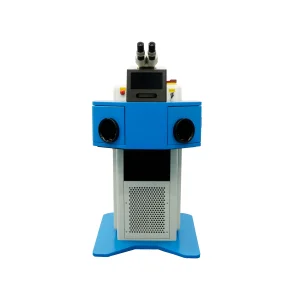
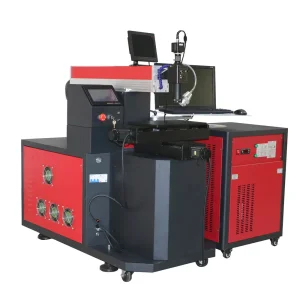
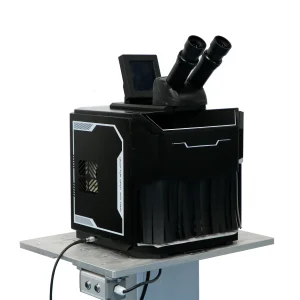
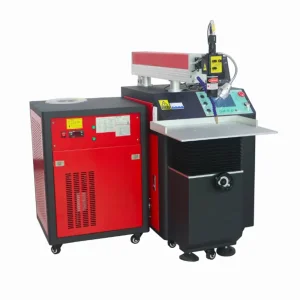
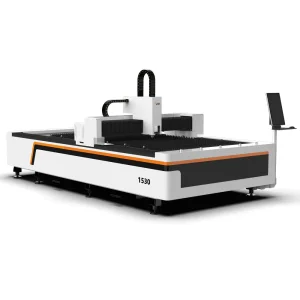
Examine our broader specialized manufacturing capabilities, extending from ultra-fine jewelry micro-welding stations to high-tonnage mold repair rigs and industrial sheet metal CNC laser cutters.




Send your raw contaminated material samples directly to our Shenzhen optical laboratories for microscopic ablation testing, cross-section SEM analysis, and full process parameter documentation prior to capital equipment commitment.
