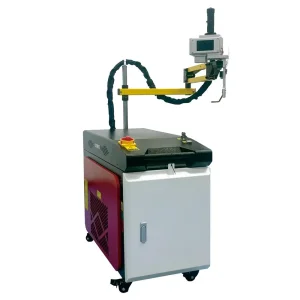
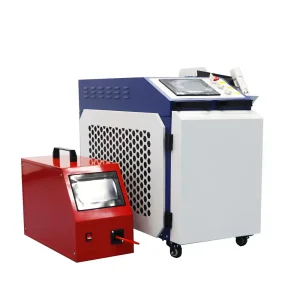
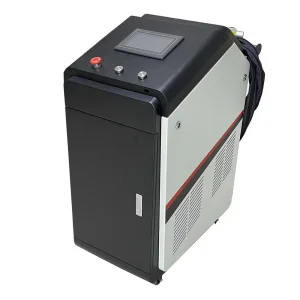
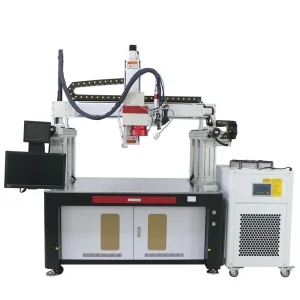
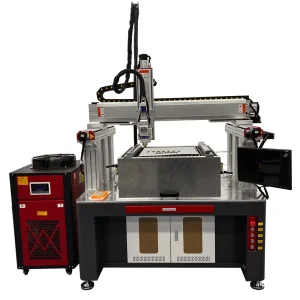
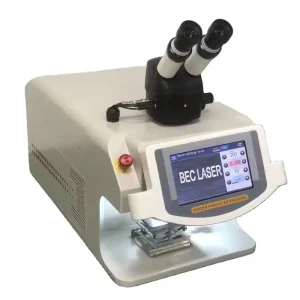
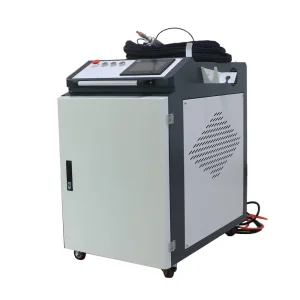
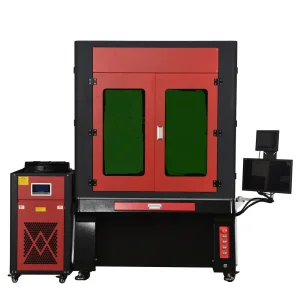
Engineered with proprietary optical assemblies, high-duty galvo scanners, and ultra-stable CW & Pulsed fiber resonators for non-destructive, zero-contact industrial surface decontamination.
Industrial surface engineering is undergoing a critical green transformation. Abrasive blasting, chemical solvents, and mechanical grinding are rapidly yielding to selective optical ablation systems.
The industrial surface cleaning equipment sector is projected to exceed USD 1.15 Billion by 2029, expanding at a compound annual growth rate (CAGR) of 8.2%. The 1000W laser class constitutes over 42% of this demand, acting as the operational sweet spot between capital expenditure, portable utility, and ablation volume per hour.
Under tightening global environmental constraints—such as EU REACH, EPA particulate emission laws, and OSHA airborne crystalline silica limits—traditional grit blasting faces severe operational liabilities. 1000W laser cleaning introduces a closed-loop, non-hazardous process requiring zero chemical neutralization or solid abrasive waste disposal.
Consuming approximately 3.2 to 4.5 kW/h of total electrical power during active cycles, an air- or water-cooled 1000W fiber cleaner dramatically slashes unit operating overhead. Facilities achieve documented payback periods of 4.8 to 8.6 months when transitioning away from dry ice blasting or high-pressure hydro-blasting systems.
Understanding the micro-scale interaction between 1064nm near-infrared photons, metallic substrates, and multi-layered oxide contaminants.
The efficiency of a 1000W laser cleaning head depends entirely on the difference in absorption coefficients between iron oxides (Fe₂O₃, Fe₃O₄, FeOOH) and the underlying bare alloy substrate (such as structural steel or aluminum). At the standard 1064nm fiber wavelength, rust layers absorb over 70% of incident radiation, whereas clean base steel reflects up to 75% once the oxide interface has peeled off.
When high-density laser energy penetrates the porous rust layer, localized temperatures surge past 1,200°C in micro-seconds. The mismatch in thermal expansion coefficients between rust (approx. 10.5 × 10⁻⁶/K) and steel (approx. 12.0 × 10⁻⁶/K) generates sheer mechanical stresses that detach scale layers from the metal base.
For trapped grease, mill scale, or primer coats, instantaneous photon absorption exceeds the material's vaporization threshold. The material instantly converts into high-pressure micro-plasma plumes. The expanding gas blows detached rust particles outward, where they are captured by a localized suction nozzle.
The system prevents substrate overheating via dynamic 2D galvo wobble scanning patterns (linear, circular, figure-eight, spiral). Beam dwell time is kept below the damage threshold of structural carbon steel or aerospace alloy. This eliminates thermal micro-cracking and maintains structural hardness.
Direct from our Shenzhen manufacturing facility. Below are verified baseline FOB pricing ranges, functional specifications, and configuration parameters across continuous (CW) and pulsed (MOPA) systems.
| System Architecture | Resonator Source | Ablation Modality | Effective Cleaning Speed | Target Substrate Applications | Estimated Factory Pricelist (FOB Shenzhen) |
|---|---|---|---|---|---|
| 1000W Continuous Wave (CW) Standard | Maxphotonics / Raycus Single-Module | High-throughput continuous beam with 2D Galvo wobble head | 12.0 – 18.0 m²/h (Light surface rust) | Shipyard steel plates, structural beams, external pipelines, storage tanks | $4,900 – $6,800 USD High Demand |
| 1000W CW Heavy-Duty Industrial | IPG Photonics / Reci Industrial | Continuous wave with dual-axis water-cooled galvo scanner | 14.0 – 22.0 m²/h (Mill scale & heavy oxidation) | Foundry cast iron, railway track refurbishment, bridge maintenance | $6,400 – $8,500 USD |
| 1000W High-Precision Pulsed (MOPA) | Youmir Proprietary / JPT MOPA Pulsed | Short-pulse duration (10–250 ns), peak power up to 500 kW | 4.5 – 8.0 m²/h (Precision substrate zero-damage) | Injection molds, aerospace turbine components, historical cultural relics | $18,500 – $26,000 USD |
| 4-in-1 Multifunction 1000W Station | Raycus / Max Multi-Mode | Quick-swap optic head: Rust Removal, Welding, Weld Seam Cleaning, Cutting | 8.0 – 14.0 m²/h (Cleaning mode) | Custom metal fabrication shops, auto body repair, mechanical maintenance | $5,200 – $7,400 USD Best Seller |
| 1000W Robotic Cell Integration | Raycus / IPG Industrial Bus Controlled | Fieldbus Profinet / EtherCAT automated continuous cleaning head | 15.0 – 25.0 m²/h (Automated closed-loop) | EV battery tray de-coating, automotive chassis welding preparation lines | $14,000 – $22,500 USD (Excl. Robot Arm) |
A standard abrasive sandblasting rig incurs recurring expenses for aluminum oxide or garnet media ($0.45–$0.90/kg), disposal fees for toxic dust, and frequent blast nozzle replacements. In contrast, a 1000W fiber laser cleaner relies solely on mains electricity and clean compressed shop air (or low-flow argon). The typical operating cost for a 1000W laser is roughly $1.15 to $1.80 per hour, delivering over 70% cumulative savings within the first 1,500 operating hours.
Youmir Laser 1000W systems are deployed across 50+ countries. Engineered to conquer challenging industrial operating environments worldwide.
Location Focus: Singapore, Rotterdam, Busan, Galveston Shipyards.
Salt spray causes aggressive rust across ship ballast tanks, hatch covers, and hull welds. Handheld 1000W units with 10-meter optical cables allow technicians to clean weld seams before non-destructive testing (NDT) without contaminating enclosed work spaces with sand.
Location Focus: Hamburg, Toulouse, Seattle Aerospace Corridors.
Removes specialized polysulfide sealants, anodized coatings, and surface corrosion from aluminum-lithium structures and landing gear wheelsets without altering base metal dimensions or causing stress concentrations.
Location Focus: Shanghai, Stuttgart, Texas Gigafactories.
Removes microscopic oxide films and residual electrolytes from prismatic aluminum cell casings and copper busbars before ultrasonic or fiber laser welding. Ensures minimal electrical contact resistance and prevents weld pore defects.
Location Focus: Middle East (Dammam, Jubail), Permian Basin.
Pre-weld and post-weld joint decontamination. Strips oxidized mill scale and heavy corrosion from seamless carbon steel line pipe, achieving the clean SA 2.5/SA 3.0 metallic finish required for anti-corrosion epoxy wrapping.
Location Focus: Dongguan, Querétaro, Bursa, Nagoya Precision Tooling.
Cleans vulcanized rubber, plastic residue, and surface oxides from delicate mold cavities. Because the laser process causes zero abrasive wear, toolmakers avoid mold corner rounding and maintain micron-level tolerances.
Location Focus: Rome, Athens, Cairo, Historic Urban Centers.
Non-abrasively strips carbon crusts, soot, and aged oxide layers from historic bronze sculptures, weathered iron gates, and stone facades without micro-pitting the underlying historic patina.
Bridging the gap between standalone handheld maintenance tools and high-volume automated manufacturing lines.
Youmir integrates lightweight cleaning heads (under 1.2 kg) onto multi-axis articulated robots. With custom PLC fieldbus modules (Profinet/Ethernet/IP), our systems maintain precise focal distance and constant surface travel speeds across complex curved components.
Clean-room and factory integration demands robust air purification. Our solutions include multi-stage HEPA filters and activated carbon systems synchronized to the laser trigger. This captures 99.97% of sub-micron metal particles and airborne dust.
For high-reliability aerospace and battery lines, Youmir integrates optional closed-loop photodiode and optical pyrometer sensors. These monitor plasma emission intensity in real-time, automatically throttling laser output or halting cleaning once raw metal is exposed.
The next decade of laser decontamination will prioritize intelligent feedback control, hybrid beam wavelengths, and ultra-portable fiber architectures.
Next-generation 1000W systems feature integrated 3D stereoscopic vision cameras directly on the galvo head. AI algorithms instantly identify rust depth, classify surface oxides, and generate optimized scan widths and focal depths on the fly.
By combining a 1064nm near-infrared continuous fiber laser with a 532nm green or 355nm ultraviolet pulse laser, hybrid heads can vaporize both heavy grease layers and microscopic sub-micron oxides in a single high-speed pass.
Advances in fiber-coupled diode pump efficiency and phase-change cooling are driving machine footprints down. True backpack 1000W units weighing under 18 kg will soon enable high-altitude wind turbine and telecom tower maintenance without heavy crane lifts.
Comprehensive engineering insights to help distributors, plant engineers, and purchasing teams specify the right laser cleaning system.
Continuous Wave (CW) lasers deliver an uninterrupted beam of photons. This makes them exceptionally fast and cost-effective for heavy steel structures, storage tanks, and pipelines where slight heat input into the base metal is completely acceptable. Pulsed (MOPA) lasers pack energy into short nanosecond bursts. This prevents heat buildup, making pulsed systems essential for precision molds, aerospace alloys, and historic artifacts where the substrate must remain completely untouched.
1000W fiber lasers are categorized as Class 4 optical systems. Operators must wear certified laser safety glasses specifically rated for the 1064nm band (OD 6+ to OD 7+). Cleaning enclosures should utilize laser-blocking safety curtains, emergency interlock circuits, and proper particulate exhaust systems with HEPA filtration to extract vaporized oxide particulates.
Unlike traditional sandblasters that burn through bags of abrasive grit daily, laser cleaners require minimal consumables. The primary wear component is the quartz protective lens in the optical head, which shields focusing lenses from hot spatter. These typically cost $8 to $15 each and last 200 to 500 working hours under normal operating conditions.
Yes. Aluminum has a high optical reflectivity at 1064nm and high thermal conductivity. By utilizing a high-frequency 2D galvo wobble scanning head and adjusting pulse duration or scan speed, the laser easily strips surface anodization, grease, or oxidation while reflecting cleanly off the base alloy.
Youmir 1000W systems utilize integrated dual-temperature industrial water chillers (such as S&A or Hanli) filled with purified water or glycol mix. The closed-loop circuit keeps the fiber core and optical head within the optimal 22°C to 26°C operating window, allowing 24/7 continuous operation even in ambient foundry heat up to 45°C.
Standard configurations ship directly from our Shenzhen plant within 7 to 10 business days, while custom OEM or robotic integration cells require 15 to 25 days. Every machine includes a 2-year warranty on the fiber laser source, 1-year coverage on all electrical assemblies, and lifetime 24/7 remote video diagnostics from our engineering team.
Explore our complete manufacturing lineup of handheld welders, automated CNC cutting platforms, high-speed galvo heads, and multi-process cleaning stations.