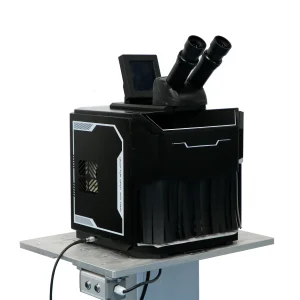
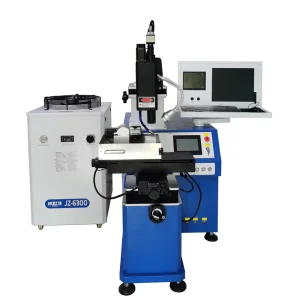
Explore our turnkey continuous and pulsed fiber laser welding machinery engineered for ultra-low thermal distortion and multi-metal joint integrity.
In modern industrial fabrication, the transition from conventional arc welding (MIG/TIG) to 2000-watt continuous-wave (CW) fiber laser welders is fundamentally an economic and metallurgical transformation.
A certified 2000W fiber laser reaches linear welding speeds of up to 50–120 mm/s on 1.0–4.5 mm stainless steel and carbon steel. This quadruples the hourly volume of traditional TIG methods while slashing thermal energy input by over 70%.
Conventional welding generates broad Heat-Affected Zones (HAZ), resulting in microstructural warpage and heavy oxidation. A 2000W laser creates concentrated, deep keyholes with minimal spatter, eliminating secondary grinding, leveling, and pickling.
TIG welding demands years of manual dexterity and specialized metallurgy training. Our intelligent 2000W wobble laser heads with digital seam tracking allow entry-level technicians to achieve certified, defect-free welds within hours of onboarding.
From electric mobility batteries to commercial aviation ducting, 2000W optical power delivers the optimal convergence of keyhole vapor pressure and melt-pool dynamics.
Enables low-porosity, high-conductivity joining of dissimilar metals (Copper C1100 to Aluminum 6061) utilizing targeted high-frequency circular wobble beam oscillations to suppress intermetallic brittle phases.
Delivers high-yield galvanic seal integrity on galvanized zinc-coated steels and ultra-high-strength boron steels (1500 MPa) without burning protective zinc coatings or causing embrittlement.
Executes deep-penetration welds on Grade 2 & Grade 5 Titanium alloys and Inconel 718 under inert ultra-pure Argon atmospheres, satisfying stringent AMS/AWS D17.1 aviation criteria.
Produces crevice-free, mirror-smooth fusion seams on AISI 304/316L stainless pressure vessels and heat exchangers, exceeding FDA and EHEDG sanitary sanitary guidelines straight from the nozzle.
| Metal Alloy & Grade | Material Thickness | Welding Speed (mm/s) | Shielding Gas Strategy | Joint Tensile Yield |
|---|---|---|---|---|
| Austenitic Stainless (304 / 316L) | 1.0 mm – 5.0 mm | 35 – 110 mm/s | Pure Argon / N2 (15-20 L/min) | > 98% Base Metal Yield |
| Carbon Steel (Q235B / S275JR) | 1.0 mm – 4.5 mm | 40 – 120 mm/s | Argon / 5% CO2 Blend | 100% Parent Metal Equiv. |
| Structural Aluminum (5052 / 6061) | 1.0 mm – 3.5 mm | 25 – 80 mm/s | Pure Argon 99.999% | > 92% Base (Filler Dependent) |
| Commercial Pure Brass (H62 / CuZn40) | 0.8 mm – 2.5 mm | 20 – 60 mm/s | Pure Nitrogen (Anti-Oxidation) | > 94% Base Metal Integrity |
| Galvanized Sheet Steel (DX51D) | 0.8 mm – 3.0 mm | 45 – 95 mm/s | Argon with Pre-Vent Wobble | Zero Delamination / Spatter Free |
Discover how our in-house optical laboratories in Shenzhen are engineering high-brightness fiber delivery, real-time closed-loop monitoring, and cobot interoperability.
Next-generation 2000W architectures integrate coaxial center and ring core optical configurations. By splitting energy between a dense central keyhole beam and an outer stabilizing ring, high-reflectivity copper and aluminum welds experience zero spatter and void formation.
Integrated photodiodes and spectrometer feedback monitor real-time plasma plume illumination, keyhole depth oscillations, and thermal back-reflections at 10 kHz rates. Faults like root humping, drop-through, or blowholes are flagged instantly by neural network inference.
Direct fieldbus architecture (EtherCAT, PROFINET, Modbus TCP) turns handheld 2000W welders into lightweight robot-mounted end effectors. Full digital parameter handshaking allows rapid recipe changes across multi-axis automated lines.
A rigorous examination of regional demands, infrastructure readiness, and competitive advantages driving the worldwide rollout of industrial fiber laser welding equipment.
Across the United States and Canada, severe shortages of certified welding personnel have driven dramatic adoption of 2000W handheld systems. Production plants report amortizing the equipment cost within 3.5 months through scrap reduction and rapid operator training.
Under strict EU Ecodesign directives and rising electrical kWh tariffs, high-efficiency fiber lasers replacing 30-kVA TIG generators offer notable carbon-footprint benefits. Compliance hinges on dual interlock safety and Category 4 PL-e protective systems.
Led by Vietnam, Thailand, Malaysia, and Indonesia, regional manufacturers serving automotive and consumer hardware OEMs leverage 2000W multi-shift continuous-duty systems to handle round-the-clock sheet-metal assembly contracts.
Shenzhen Youmir Laser Technology Co., Ltd. builds international regulatory compliance and optical precision into every layer of our laser system assembly.
Every system incorporates hardware-level safety architectures: dual-circuit interlocks, ground contact loops requiring gun-to-workpiece electrical closure before beam emission, key switches, and emergency stops compliant with ISO 13849-1 and IEC 60825-1 standards.
Before shipment, our application laboratories conduct metallurgical cross-sectioning, tensile pull tests, and leak integrity evaluations on your exact production samples, returning parameter cards and process documentation.
Supported by our overseas distributor ecosystem and regional technical centers, we provide 24/7 remote diagnostics, rapid air dispatch of replacement protective lenses and nozzles, and on-site commissioning across 50+ countries.
In-depth technical answers addressing operational mechanics, consumables management, power requirements, and system configuration.
Explore our heavy-duty cantilever systems, high-speed galvanometer scanners, and continuous production fiber machines.