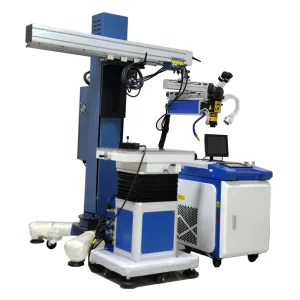
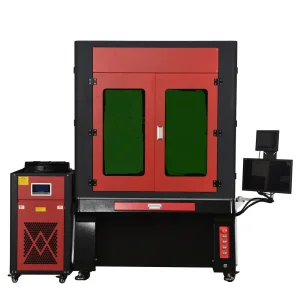
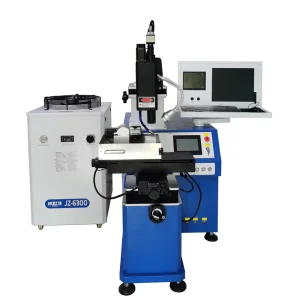
Factory-calibrated fiber optical welders, mold deposition units, and robotic galvanometer systems engineered specifically for flawless metal joints, zero-blackening seams, and accelerated signage fabrication workflows.
Modern visual branding demands razor-thin stroke widths, mirror-finish reflective stainless steels, architectural bronze, and coated alloys that fail completely under conventional TIG or argon arc thermal shock. Channel letter laser welding resolves these manufacturing bottlenecks permanently.
Traditional argon arc welding introduces immense thermal energy into sheet metal returns and face trims, causing severe warping, burnt oxidation coats, and discolored zones. Our fiber laser welding concentrates energy into a microscopic 0.1–0.3 mm spot, generating instant keyhole fusion without boiling adjacent surfaces.
Architectural signage increasingly combines divergent thermal conductors. Our advanced optical pulse modulation and beam oscillation (wobble) technology enables structural welding of high-reflectivity alloys and dissimilar metals that were previously considered impossible in billboard production.
Illuminated 3D channel letters possess complex internal cavities, deep letter returns (up to 200 mm), and narrow interior return radiuses. Utilizing telescopic 360-degree rotating booms, high-definition CCD crosshair cameras, and elongated focal objectives, operators execute rapid interior tacking effortlessly.
From North American metropolitan facade retrofits to mega-mall architectural retail programs across EMEA and APAC, signmakers face escalating skilled labor shortages and tighter environmental air regulations.
Faced with an acute shortage of certified TIG welders and surging shop hourly rates exceeding $75/hr, American sign fabricators are transitioning en masse to turnkey fiber laser welders. Novice technicians can achieve master-level structural joints on UL48-compliant electric sign enclosures within 48 hours of hands-on training, yielding immediate labor cost reductions of over 60%.
Stringent CE Machinery Directives and occupational safety laws surrounding toxic hexavalent chromium welding fumes have made traditional open-arc welding on stainless steel prohibitively costly. Laser welding sign workstations utilize enclosed local exhaust scavenging, minimal shielding gas consumption, and ultra-low noise levels to meet EU workplace health mandates.
Rapid high-density urban infrastructure, luxury retail flagships, and massive transit hubs across Dubai, Singapore, Riyadh, and Tokyo require exceptionally high-aspect-ratio monument signs and 3D liquid acrylic stainless steel letters that must endure scorching desert heat and humid maritime climates without corrosion or seam failure.
Industrial commercial sign shops are modernizing from archaic lead-soldering and hot-glue potting techniques to fiber laser fabrication, allowing them to compete for high-margin global corporate identity (CI) rollouts for banks, automotive dealerships, and multinational hospitality brands.
Empirical production data derived from 1.2 mm 304 Stainless Steel Channel Letter return-to-face perimeter welding over 100 continuous meters.
| Evaluation Parameter | Fiber Laser Channel Welder | High-Frequency TIG Welder | Traditional Acid Soldering |
|---|---|---|---|
| Welding Velocity | 15 – 35 mm/second | 3 – 8 mm/second | 5 – 10 mm/second |
| Thermal Distortion (Warpage) | Imperceptible (< 0.05 mm deflection) | Severe buckle on <1.5mm sheets | Moderate (localized buckling) |
| Heat Affected Zone (HAZ) | 0.15 – 0.35 mm width | 3.5 – 6.0 mm width | 10.0 – 25.0 mm spread |
| Surface Discoloration (Oxidation) | Zero (clean silver seam under Argon/N2) | Heavy blue/black slag formation | Corrosive white acid salt crystallization |
| Tensile Seam Strength | ≥ 520 MPa (Parent metal integrity) | 420 – 480 MPa | 120 – 180 MPa (Prone to shearing) |
| Post-Processing Requirements | Instant clean (No grinding needed) | Aggressive grinding, flap-wheeling, buffing | Neutralization wash, scraping, sanding |
| Operator Training Curve | 1 to 2 Working Days | 6 to 12 Months | 3 to 6 Months |
| Consumable / Electricity Cost | Low (80% wall-plug electrical efficiency) | High (Tungsten rods, gas, high amperage) | High (Acid pastes, solder bars, iron tips) |
Whether constructing micro-stroke jewelry letters or hurricane-rated exterior high-rise pylons, our channel letter welding series delivers targeted thermal stability across high-difficulty production formats.
Halo-illuminated signs require hermetically clean back returns that throw pristine light patterns onto building facades without shadowing caused by ugly internal weld blobs. Our pulsed laser heads produce micro-scale, flat fillet joints on 0.8–1.5 mm stainless steel coils that seat flush against acrylic light diffusers with zero light leakage.
Liquid resin channel letters rely on leak-proof welded containment basins. If any micro-pinholes or undercut flaws exist, corrosive resin escapes, ruining electrical components. High-frequency continuous laser fusion guarantees 100% watertight seams on mirror-gold, rose-gold, and brushed titanium alloys without puncturing the face foil.
Oversized monolithic structures and museum wayfinding totems exceed 3 meters in height, demanding heavy-duty structural rigidity against lateral wind pressures. Using our high-power continuous fiber lasers (1500W–3000W), internal structural ribbing, mounting studs, and heavy aluminum backplates are welded at breakneck speed.
Boutique retail interior displays require intricate script lettering with stroke widths as tight as 3 mm to 5 mm. Conventional welding torches physically cannot fit inside the hollow backing without burning the fragile sidewalls. Our 0.2 mm microscopic laser spot with extended needle nozzles reaches into ultra-tight crevices easily.
Investing in industrial photonics capital equipment demands unyielding regulatory compliance, rock-solid optical warranty, and immediate localized spare-part supply lines.
Every channel letter laser welding station manufactured at our factory undergoes rigorous 72-hour full-load thermal stress testing and electromagnetic compatibility (EMC) verification before global dispatch.
We maintain authorized distribution partners, optical spare depots, and technical field service liaisons in key markets including the United States, Germany, Poland, Malaysia, and the United Arab Emirates.
Operator well-being is integral to our architectural equipment design. Our machines are built with active circuit interlocks, laser safety shutter shields, and targeted fume extraction ports to ensure a safe shop floor.
As sign-making transitions from manual artisanal craft to high-throughput smart factory automation, our engineering laboratory is developing next-generation optical guidance and automated tracking architectures.
Eliminates strict gap tolerances by rapidly swirling the focal spot at frequencies up to 300 Hz. Gaps up to 1.5 mm caused by imperfect CNC bender notches are bridged completely without filler wire, maintaining flawless tensile bond strength.
High-speed optical sensors automatically capture vector contours of complex Chinese, Arabic, and custom serif fonts directly from DXF layout imports, driving continuous 3D galvanometer sweeps without manual jigging or tracking.
Lightweight, human-safe articulated collaborative robots combined with high-precision fiber delivery heads allow 24/7 unassisted perimeter seam welding on monumental architectural signs up to 4 meters across.
Closed-loop coaxial photodiodes sample weld pool emissions at 10 kHz, automatically modulating laser peak wattage to completely prevent burn-through on ultra-thin 0.5 mm alloy sheet returns during sudden directional radius changes.
Engineering answers to critical procurement, electrical compatibility, and process configuration queries commonly evaluated by signage workshop owners and industrial purchasers.
Complementary laser cleaning workstations, 3-axis automated CNC gantries, high-throughput continuous weld beds, and precision mold tools to outfit your complete sign and metalcraft factory.
Connect with our Shenzhen optical and mechanical engineering team for tailored application consultation, parameter development, and wholesale manufacturer pricing.