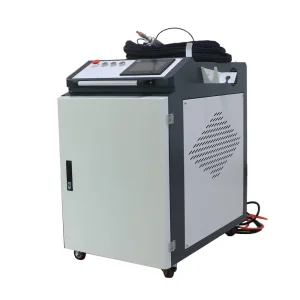
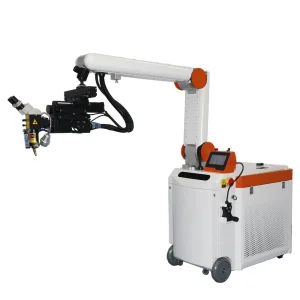
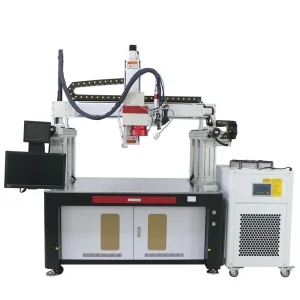
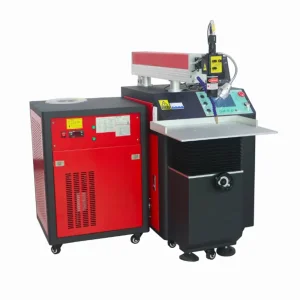
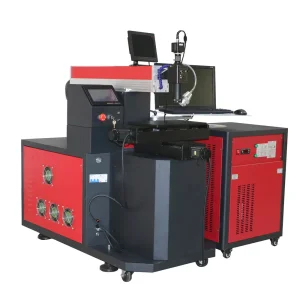
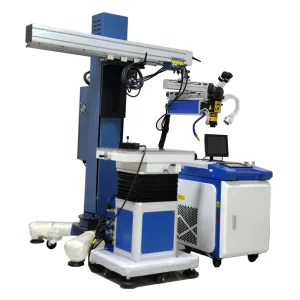
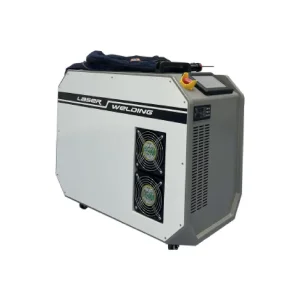
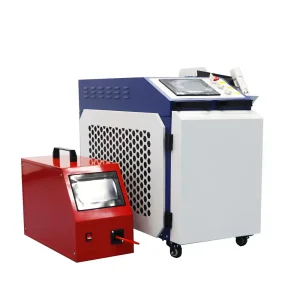
Browse our certified continuous laser cleaning systems, multi-axis automation platforms, and dual-function fiber laser equipment engineered directly for severe industrial duty cycles.
Modern heavy manufacturing, civil refurbishment, and marine engineering are experiencing an irreversible paradigm shift away from hazardous chemical stripping and abrasive sandblasting toward photonic continuous-wave (CW) ablation.
Traditional grit blasting generates tons of contaminated media requiring hazardous waste disposal. Continuous laser cleaning transforms coatings and oxides directly into fine particulates captured by closed-loop HEPA filtration, satisfying stringent ISO 14001 and EPA emissions standards.
Continuous-wave (CW) fiber laser architecture delivers the lowest investment cost per continuous kilowatt. When combined with automated linear or 2D galvanometer heads, CW systems ablate thick rust and industrial epoxies at up to 5x the areal velocity of equivalent pulsed lasers.
Unlike chemical leaching, CW laser cleaning creates steep thermal gradients at the contaminant-substrate interface. Thermal mismatch induces rapid mechanical delamination and vaporization of non-metallic layers, leaving virgin parent metal prepped for immediate weld or coating adhesion.
Selecting between continuous-wave (CW) and pulsed fiber laser technology requires matching process thermodynamics to substrate metallurgy, heat tolerance, and required production cadence.
| Evaluation Parameter | CW Continuous Laser Cleaning (1kW–3kW) | Pulsed Laser Cleaning (100W–1000W) | Traditional Dry Grit Blasting |
|---|---|---|---|
| Primary Removal Mechanism | Thermal vaporization & thermo-elastic stress fracturing | Micro-plasma shockwave & photochemical ablation | Mechanical kinetic impact & abrasion |
| Areal Throughput Speed | 15.0 – 45.0 m²/h (High speed) | 1.5 – 8.0 m²/h (Precision speed) | 8.0 – 18.0 m²/h (Labour dependent) |
| Substrate Heat Input (HAZ) | Controlled thermal conduction (>3mm thickness recommended) | Cold ablation / negligible thermal accumulation | None (Work-hardening distortion risk) |
| Best Target Applications | Structural steel, hull descaling, oil pipeline de-coating | Precision injection molds, aerospace composites, sensors | Rough outdoor foundry castings |
| Operating Consumables | Clean dry air / optical lens protection only | Lens protection / clean dry air only | Grit media, blast nozzles, air filtration filters |
| Capital Investment (Capex) | Extremely cost-effective ($ / Watt) | High precision premium ($ / Watt) | Moderate machine / High logistical maintenance |
Global deployment requires rigorous adherence to regional occupational safety standards, electrical certifications, and rapid technical deployment networks across major industrial corridors.
Continuous laser power exceeding 1kW requires fail-safe operation. All systems integrate dual-channel safety loops, work-piece contact interlocks, automated beam shutters, and Class 4 interlock relays to protect operators and facility personnel from stray emissions.
Our power systems and laser delivery cabinets are certified to European CE-LVD/EMC directives, registered with US FDA CDRH accession numbers, and configured with universal transformers for 220V single-phase or 380V/480V 3-phase regional grids.
Equipped with integrated IoT monitoring modules, our service engineers perform remote diagnostic telemetry, optical health checks, and firmware optimization. Rapid-dispatch wear items (protective windows, nozzles) ship directly from regional partner hubs.
Continuous laser cleaning systems demonstrate proven return-on-investment across diverse harsh industrial environments where high square-meter stripping speed is paramount.
Stripping salt-corroded heavy scale, barnacles, and marine grade epoxy primers from structural ship hulls, ballast tanks, and dock gantries at rates exceeding 25 m²/hour.
Instant removal of mill scale and black oxide before longitudinal pipe welding, as well as heat-tint removal after stainless steel arc-welding, without manual grinding disks.
In-situ removal of bitumen coatings, heavy paraffin buildup, and stress-corrosion cracking precursors from live oil pipeline junctions and storage tank perimeter walls.
Selective paint stripping and rust remediation from railway wheelsets, bogie assemblies, and steel bridge superstructures without geometric or dimensional mass loss.
Continuous laser cleaning is advancing from manual handheld torches into AI-driven, multi-sensor closed-loop robotic manufacturing cells.
Next-generation cleaning heads incorporate Laser-Induced Breakdown Spectroscopy (LIBS). By analyzing the optical emission spectrum of the ablated vapor plume in milliseconds, the system automatically detects when parent metal is reached, dynamically moderating laser power to prevent heat saturation.
Moving beyond basic spiral scan lines, smart galvanometer heads now support configurable multi-vector scan patterns (rings, crosses, snow, and dynamic line fields). High-speed oscillation up to 30,000 rpm guarantees uniform photon density and minimizes localized thermal spots.
Full digital fieldbus synchronization (Profinet, EtherCAT) enables seamless pairing with industrial robots (KUKA, ABB, Fanuc) or automated crawler gantries, allowing 24/7 uncrewed operations inside hazardous enclosed ship hulls, storage tanks, and radioactive decontamination environments.
Direct technical clarification from laser application engineers regarding continuous laser cleaning parameters, safety regulations, and quotes.
Browse our companion series of multi-axis automatic laser welders, QCW pulsed repair units, and specialty precision laser tools engineered to the same exacting standards.