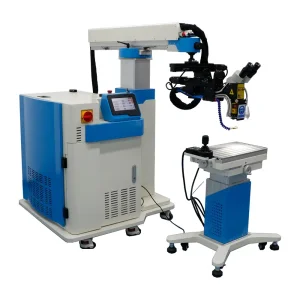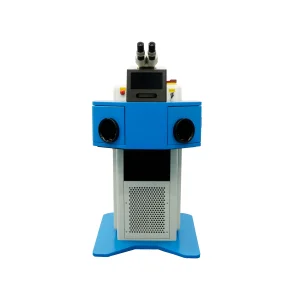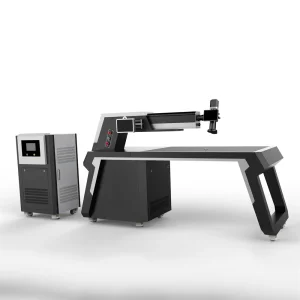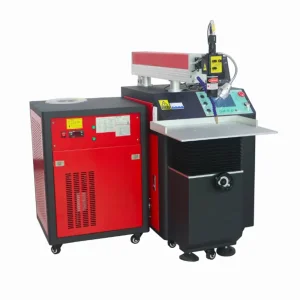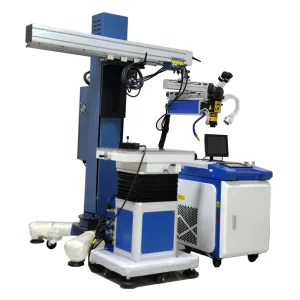
Explore our heavy-duty cantilever systems, pulsed micro-welders, and fiber transmission platforms engineered for high-precision cavity restoration.
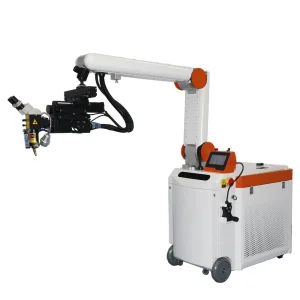
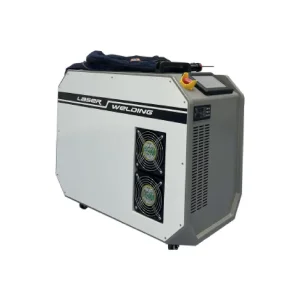
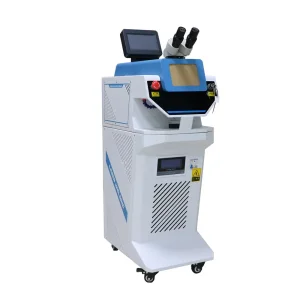
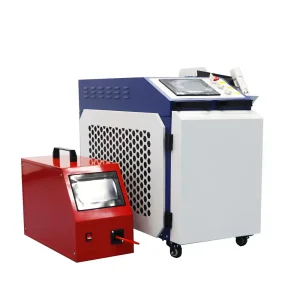



The transition from traditional TIG repair toward quasi-continuous-wave (QCW) and high-brightness continuous-wave (CW) fiber laser micro-cladding across global tooling hubs.
Injection molds, stamping dies, and high-pressure die-casting (HPDC) tooling represent immense capital investments ranging from $20,000 to over $500,000 per die set. When parting lines degrade or gate areas wash out, remanufacturing a replacement block causes 6 to 14 weeks of complete production stoppage. Modern factory floors deploy fiber mold repair welding systems directly alongside press lines, dropping refurbishment cycles from days to under four hours.
Traditional arc welding methods (TIG/MIG) saturate tool steel blocks with uncontrolled thermal energy, leading to base-metal warping, micro-cracking, and annealed soft spots that require complete stress-relieving and EDM post-machining. Fiber laser repair introduces an energy density surpassing 10^6 W/cm², producing instantaneous localized fusion with an ultra-narrow Heat-Affected Zone (HAZ < 0.15 mm). This retains core hardness without macro-distortion.
Global tooling applications rely on exotic, pre-hardened, and hot-work alloy chemistries including AISI H13, 1.2344, P20, S136 ESR stainless, NAK80, and Beryllium-Copper alloys. High-spec fiber mold welding machine factories provide synchronized micro-wire feeding and variable pulse duration control, enabling defect-free metallurgical bonding with hardness retention between 52 and 60 HRC directly in the deposited track.
Quantitative empirical comparison detailing thermal input, HAZ propagation, wire compatibility, and post-machining requirements.
| Performance Dimension | Fiber Laser Mold Repair (CW/QCW) | Flashlamp Nd:YAG Laser | Precision Micro-TIG Welding |
|---|---|---|---|
| Heat-Affected Zone (HAZ) | 0.05 mm – 0.15 mm (Negligible) | 0.20 mm – 0.40 mm (Moderate) | 1.5 mm – 3.5 mm (Severe distortion risk) |
| Electro-Optical Efficiency | 35% – 42% (Low utility draw) | 2% – 4% (Demands 5kW+ chillers) | 60% – 75% (Direct arc discharge) |
| Deposition Precision / Spot Size | 0.15 mm – 1.8 mm (Adjustable wobble) | 0.20 mm – 2.0 mm (Fixed optical train) | > 2.5 mm (High operator dependent) |
| Optical Maintenance Interval | > 100,000 Hours (Solid-state diode modules) | 1,000 Hours (Lamp replacement required) | Consumable tungsten electrodes & nozzles |
| Post-Weld Finishing Requirements | Mirror-polishing or direct chemical etching | Light grinding & manual spotting | Heavy CNC milling, re-hardening & EDM |
| Substrate Structural Integrity | Zero micro-fissuring; grain structure intact | Stable for small repairs; thermal drift | High residual tensile stress; prone to cracking |
Shenzhen Youmir Laser Technology Co., Ltd. operates state-of-the-art optoelectronic cleanrooms, motion stage assembly facilities, and process metallurgy laboratories.
Pioneering fiber optics, CNC stages, and closed-loop control.
Class-10,000 optical cleanrooms and multi-axis assembly bays.
Global export standard with CE, FDA, and ISO certifications.
Precision tools running across automotive, 3C, and medical tooling.
Targeted solutions engineered for specific failure modes across diversified precision manufacturing ecosystems.
Precision lens surfaces, automotive light guides, and cosmetic dash panels demand class-A mold finishes. Parting line flash, slide galling, or ejector pin galling can ruin million-shot cycles. Fiber mold welders utilize wire diameters as small as 0.15 mm (SKD61, NAK80, 718H) to rebuild worn shut-offs without causing sink marks or requiring re-texturing of neighboring cavity textures.
Die-casting dies for aluminum engine blocks, EV motor housings, and magnesium electronics experience extreme thermal fatigue (heat checking), molten metal erosion, and cavity edge breakdown. Fiber cantilever laser welders restore thermal shock-resistant hot work steels (AISI H13, DIEVAR, 1.2367) directly inside the production machine or on crane beds.
Punching and progressive shear dies (D2, DC53, Caldie, cemented carbide interfaces) suffer chipped shearing profiles and spalling under shock loadings. Our QCW laser repair systems deposit identical-hardness metallurgies directly along razor-sharp trim edges, removing the need to discard high-precision multi-stage progressive tooling suites.
Beyond isolated desktop welders: how advanced machine builders incorporate boom cranes, CNC multi-axis manipulation, and intelligent vision systems.
Heavy tooling weighing from 5 to 50 metric tons cannot be loaded onto standard workbenches. Heavy-duty cantilever booms extend the laser delivery head up to 2.5 meters outward, rotating 360° to access deep draw pockets on shop floors.
Integrated 3, 4, or 5-axis interpolated motion platforms track complex 3D contoured split-lines. G-code programmable tool paths allow precision automated wire deposition with micron-level track step-over consistency.
Precision micro-stepper cold wire feed units deliver wire diameters from 0.2 mm to 1.2 mm without hesitation, automatically coordinating wire advance rates with laser pulsed frequencies to prevent balling or void formation.
Stereoscopic microscopes combined with high-definition cross-hair CCD video monitors protect operator vision while magnifying microscopic repair zones by up to 20x for zero-defect wire positioning on sharp radii.
Next-generation innovations reshaping industrial die restoration from 2026 through 2030.
Immediate integration of onboard optical non-contact metrology. High-speed blue light line scanners digitize the damaged cavity edge in real time, compare deviations against native CAD files, and autonomously generate optimized laser toolpaths for wire micro-cladding without manual jogging.
Closed-loop real-time infrared thermal cameras monitor melt-pool temperature dynamics at kHz sampling frequencies. By modulating laser diode pump energy within microseconds, the machine maintains homogenous phase transformation, completely suppressing hot cracking in crack-sensitive tool steels.
Bridging the operational spectrum between precision wire micro-welding and high-speed multi-kilowatt additive powder deposition. Operators can rebuild massive sheared sections with high-yield powder metallurgy before finishing fine edge details with ultra-precise wire laser optics.
Essential guidance on metallurgy parameters, cooling setups, operator qualification, and OEM support.
Continuous-wave systems, jewelry micro-welders, open gantry frames, and high-speed galvanometer platforms directly manufactured by our Shenzhen factory.