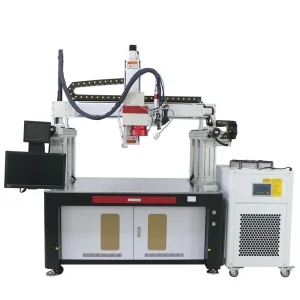
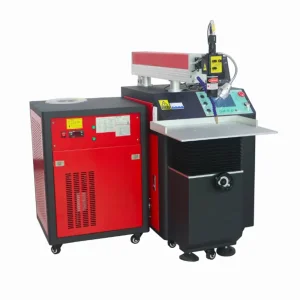
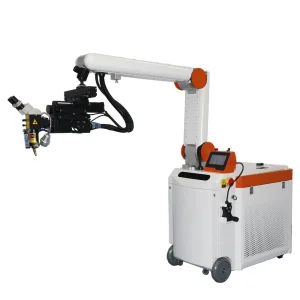
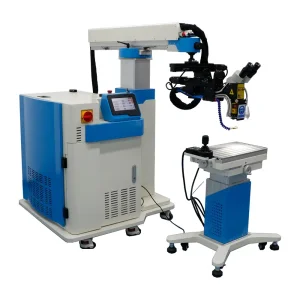
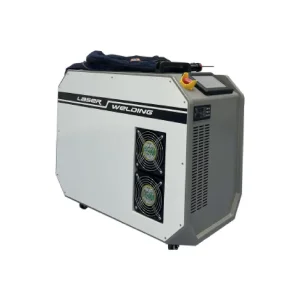
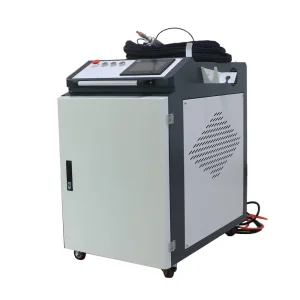
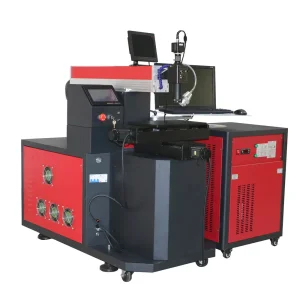
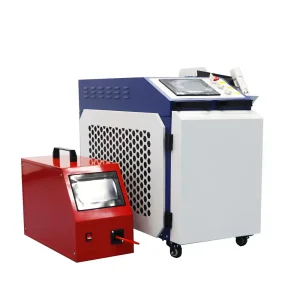
Explore our flagship continuous-wave, cantilever, and galvanometer fiber laser welding units engineered in Shenzhen for tight tolerances, high joint integrity, and zero thermal distortion.
From automotive gigafactories to precision workshop fabrication, the transition from conventional TIG/MIG arcs to high-brightness continuous-wave (CW) and quasi-continuous wave (QCW) fiber lasers is fundamentally reshaping modern production metallurgy.
Conventional electric arc processes distribute thermal energy broadly, introducing substantial residual stress, angular distortion, and extensive metallurgical phase alterations in thin sheet metals. Fiber lasers concentrate 1064nm photonic flux into spot diameters as fine as 50 to 150 microns. This intense power density (exceeding 10^6 W/cm²) instantly vaporizes metal to establish a stable "keyhole," enabling high aspect-ratio welds with minimal parent-metal heat inputs.
Historical fiber laser welding suffered from strict tolerance penalties where gaps over 0.2mm caused burn-through or lack of fusion. Modern dual-axis galvanometer oscillation ("wobble") heads dynamically steer the beam across high-frequency circular, figure-eight, sinusoidal, and triangle paths up to 5mm width. This dynamic optical bridge accommodates uneven edge preparation, fills broader joint gaps, and agitates the melt pool to suppress gas porosity.
While capital expenditure for fiber welding systems was once reserved for premier tier-one automotive assembly lines, solid-state pump diode yield improvements have driven equipment amortization to under 12 months. Fabricators achieve a 35% electrical electro-optical conversion efficiency (compared to 3% for lamp-pumped Nd:YAG and 20% for CO2), eliminating continuous consumable electrodes, grinding discs, and high rework waste.
| Evaluation Parameter | Fiber Laser Welding (Continuous/Wobble) | Gas Tungsten Arc (TIG / GTAW) | Gas Metal Arc (MIG / GMAW) |
|---|---|---|---|
| Welding Velocity (1.5mm 304 SS) | 15 - 60 mm/sec (Rapid, low heat cycle) | 3 - 8 mm/sec (Operator limited) | 8 - 15 mm/sec (Risk of burn-through) |
| Heat Affected Zone (HAZ) | Extremely Narrow (<0.2mm), no warpage | Broad (>2.5mm), severe thermal deformation | Wide (>3.5mm), metallurgical softening |
| Post-Process Polishing & Grinding | Virtually Zero; smooth decorative seam | Mandatory mechanical leveling and pickling | Heavy mechanical grinding & spatter removal |
| Operator Training Requirement | 1 to 3 days (Preset parameter recipes) | Months to years (Certified artisan hand skills) | Weeks to months (Angle/wire feed balance) |
| Shielding Gas Consumption | Low (10-15 L/min pure Argon or Nitrogen) | Medium to High (15-25 L/min Argon) | High (20-30 L/min Ar/CO2 blends) |
Shenzhen Youmir Laser Technology Co., Ltd. sits at the heart of the Guangdong-Hong Kong-Macao Greater Bay Area, the world's most concentrated optical and precision mechanical cluster. Here is how that translates to tangible procurement value for international buyers.
Unlike machine assemblers that rely on fragmented third-party boards, our Guangming District engineering labs architect collimating lenses, galvanometer mirror drivers, and embedded DSP controllers in-house, ensuring synchronized pulse modulation and zero beam jitter.
The Pearl River Delta's concentrated supplier ecosystem allows Youmir Laser to source aerospace-grade aviation aluminum bodies, high-purity fused silica optics, and industrial dual-circuit water chillers within an hour's radius, shortening custom lead times to 7–12 days.
Every fiber source and handheld optical head undergoes 72 hours of uninterrupted full-load power testing, ambient temperature stress cycling (0°C to 45°C), optical spectrometer beam profiling, and high-pressure water chiller leak assessments prior to wooden crate crating.
We provide end-to-end turnkey OEM/ODM services for machinery distributors and brand owners in Europe and North America, including sheet metal chassis customization, tailored multi-language HMI interfaces, private label branding, and UL/CSA/CE wiring standards.
Laser welding is not a one-size-fits-all process. Understanding metallurgical dynamics and joint geometry dictates whether your facility requires continuous handheld CW, quasi-continuous QCW, or high-speed galvanometer automation.
Dissimilar metal joining between high-conductivity copper and aluminum poses significant intermetallic cracking risks. Our galvanometer continuous welders employ specialized beam oscillation algorithms and 1064nm wavelength absorption profiling to produce spatter-free, hermetically sealed welds across prismatic cells, cylindrical 4680 battery tabs, and pack-level power busbars.
High-tonnage injection molds and metal stamping dies undergo severe wear along critical cavity parting lines. Integrated boom and cantilever laser welders allow operators to execute microscopic micro-wire deposition directly on machine beds without annealing or warping pre-hardened H13, P20, or S136 tool steels, saving thousands in machining downtime.
In stainless steel food processing machinery, sanitary piping, HVAC ducting, and architectural elevator panels, aesthetics are paramount. Handheld fiber welders provide clean, silver-bead corners that completely remove the need for aggressive chemical pickling pastes or labor-intensive disc grinding, cutting finishing time by 75%.
Precision QCW desktop systems emit millisecond pulses with microscopic spot sizes below 0.2mm. Goldsmiths and medical dental technicians execute seamless clasp welds, porosity filling, and prong retipping on yellow gold, 925 sterling silver, titanium, and platinum without removing heat-sensitive precious stones or acrylic dentures.
High-frequency pulse shaping enables hermetic sealing of microwave relay casings, radar waveguide assemblies, and titanium sensor capsules. The precise localized energy footprint protects delicate internal semiconductor circuitry and ceramic feedthroughs from destructive thermal shock.
Automated 3-axis CNC welding platforms integrated with dual-drive rotary chucks execute continuous high-velocity longitudinal and circumferential seams on thin-walled bellows, sensor housings, and medical hypodermic tube fittings with 100% helium leak test compliance.
The industrial laser sector is advancing beyond raw kilowatt escalation. Next-generation systems focus on thermal efficiency, smart vision integration, hybrid kinematics, and process convergence.
Traditional water-cooled 1500W to 2000W welders require heavy compressor chillers, pushing unit mass over 120kg. Next-gen systems integrate phase-change vapor chambers and high-efficiency heat pipes. This drops machine footprints by 65% and reduces weight to under 40kg, enabling true back-of-the-truck field maintenance mobility.
Fully autonomous robotic laser cells now integrate structured-laser triangulation cameras. AI vision models detect weld seams in 3D space, calculate gap disparities in real time, and adjust laser power, wobble width, and robot velocity on-the-fly, compensating for imperfect sheet stamping tolerances without human intervention.
Workshops are adopting agile heads capable of executing laser welding, continuous weld seam cleaning, rust/oxide laser stripping, and sheet metal cutting via rapid toolless nozzle swaps and firmware recipe toggles. This cuts equipment acquisition costs while multiplying shop-floor versatility.
Review our empirical penetration benchmarks across core industrial alloys. Factor in duty cycles, wire feed integration, and grid standards prior to finalizing OEM procurement tenders.
| Nominal Power | Stainless Steel (304/316) | Carbon Mild Steel (Q235) | Aluminum Alloy (5052/6061) | Brass & Copper Alloys | Recommended Industrial Scope |
|---|---|---|---|---|---|
| 1000 Watt CW | Up to 3.0 mm | Up to 2.5 mm | Up to 1.5 mm | Up to 1.2 mm | Kitchenware, sheet brackets, thin electronics casing |
| 1500 Watt CW | Up to 4.5 mm | Up to 4.0 mm | Up to 3.0 mm | Up to 2.0 mm | General fabrication, HVAC, electrical cabinets, furniture |
| 2000 Watt CW | Up to 6.0 mm | Up to 5.5 mm | Up to 4.5 mm | Up to 3.0 mm | Automotive frames, pressure tanks, structural piping |
| 3000 Watt CW | Up to 8.5 mm | Up to 8.0 mm | Up to 6.5 mm | Up to 4.5 mm | Heavy shipbuilding, mining equipment, pressure vessels |
For gaps exceeding 0.5mm, verify that your machine integrates a high-torque dual-drive motorized wire feeder with programmable auto-retraction. This prevents wire jamming during high-amperage strikes and maintains uniform bead geometry across stainless, mild steel, and aluminum filler wires.
1000W to 1500W systems typically run on single-phase 220V ±10% 50/60Hz supplies, while 2000W and 3000W fiber systems demand 3-phase 380V or require custom step-up transformers for North American 480V installations. Verify CE, UL, and CSA electrical cabinet grounding certifications before shipping.
Gas selection impacts both metallurgical properties and running costs. Use 99.999% pure Argon for titanium and aluminum to avoid oxidation. Pure Nitrogen provides cost-effective, bright weld aesthetics on stainless steel, while carbon steels accept economical Ar/CO2 mixes with minimal splatter.
Get expert, straightforward answers from our lead application engineers on optics, safety, warranties, maintenance schedules, and material limitations.
Explore our automated 3-axis CNC welding tables, precision jewelry repair workstations, mold restoration heads, and eco-friendly laser cleaning units.
Contact our Shenzhen engineering headquarters directly. Share your CAD drawings, material alloys, and target daily production output to receive an empirical parameter recipe, ROI calculation model, and comprehensive quotation within 8 hours.