Direct manufacturer-grade systems engineered for precision mold maintenance, delicate precious-metal jewelry restoration, high-volume automated line integration, and dynamic industrial sheet metal joining.
Over the last decade, advanced metal manufacturing has experienced a permanent metallurgical transformation. Traditional Tungsten Inert Gas (TIG) and Metal Inert Gas (MIG) arc welding processes are being systematically phased out across high-precision and production-intensive environments.
At the heart of solid-state fiber laser welding (operating at a fundamental wavelength of 1070 nm ±10 nm) is focused radiant power density exceeding 106 W/cm2. While traditional arc welding relies on slow thermal conduction that dissipates excessive heat throughout surrounding bulk metal, focused laser energy instantly vaporizes an ultra-narrow capillary—known as a keyhole.
This vaporized cavity traps optical photons through multiple internal reflections, yielding near-total absorption. The resulting fusion channel boasts an aspect ratio (depth-to-width) surpassing 5:1 to 10:1. The thermal energy required is a mere fraction of arc processes, slashing the Heat-Affected Zone (HAZ) by up to 85% and virtually eliminating component micro-warping, metallurgical embrittlement, and post-weld straightening grinding operations.
From a financial and operational standpoint, modern handheld and automated continuous-wave (CW) fiber welders deliver a step-change in line speed. On 1.0 mm to 3.0 mm austenitic 304/316 stainless steel, a 1500W to 2000W fiber laser welder achieves travel speeds ranging between 30 mm/s and 120 mm/s—translating to 3 to 5 times the throughput of high-end pulsed TIG setups.
Furthermore, the steep learning curve traditionally associated with manual GTAW certification (often requiring months of rigorous training) is compressed into days. An operator equipped with an ergonomically balanced dual-wobble handheld welding head can execute structural, hermetically sealed, aesthetically flawless fillet and butt welds within 48 hours of onboarding.
Years In-House Photonics R&D
Industrial Units Deployed
Export Destination Nations
First-Pass QA Verification
Direct factory FOB reference pricing, standard optical configurations, maximum single-pass penetration, and recommended fabrication applications for overseas industrial buyers and distributor partners.
| System Model & Architecture | Laser Source Power | Max Penetration (SS / CS / Al) | Typical Applications | FOB Factory Price Range (USD) |
|---|---|---|---|---|
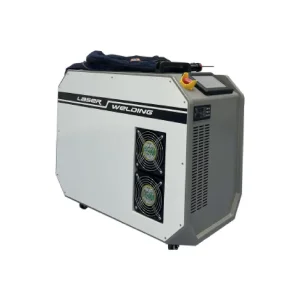
| Compact Handheld Fiber Welder Dual-wobble motor, integrated wire feeder |
1000 W CW | SS: 3.0 mm | CS: 2.5 mm | Al: 1.5 mm | HVAC ducting, kitchen equipment, architectural metal | $3,800 – $4,800 |
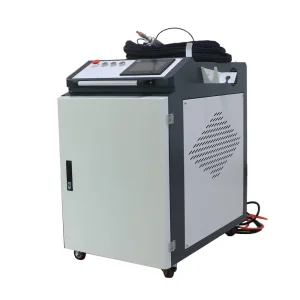
| Standard Production Handheld Welder Water-cooled 14-core fiber, auto gas delay |
1500 W CW | SS: 4.0 mm | CS: 3.5 mm | Al: 2.5 mm | Commercial furniture, light chassis, electrical cabinets | $4,600 – $5,900 |
| Heavy-Gauge Handheld Fiber Welder High-peak duty, 10m armoring, dual wire |
2000 W CW | SS: 5.5 mm | CS: 5.0 mm | Al: 4.0 mm | Pressure vessels, automotive brackets, marine trailers | $6,200 – $7,800 |
| High-Power Continuous Deep Welder Dual-temperature chiller, 50μm core |
3000 W CW | SS: 8.5 mm | CS: 8.0 mm | Al: 6.5 mm | Heavy fabrication, structural machinery, transport tankers | $9,200 – $11,800 |
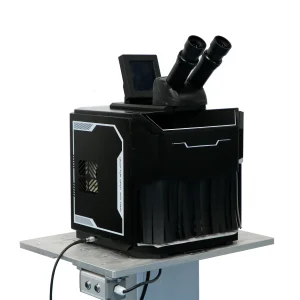
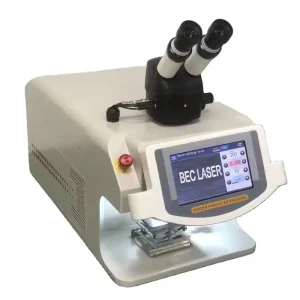
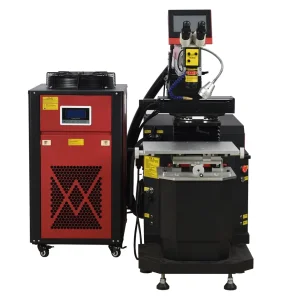
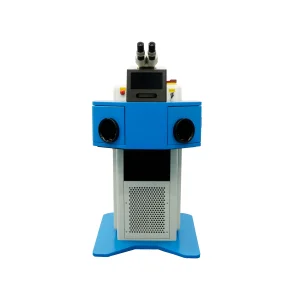
| Precision Micro Jewelry Laser Welder 10x stereo microscope, touch screen display |
60 W – 200 W QCW / YAG | Precious Metals: 0.1 mm – 1.2 mm spot | Gold, silver, platinum, titanium dental prosthetics | $2,900 – $4,500 |
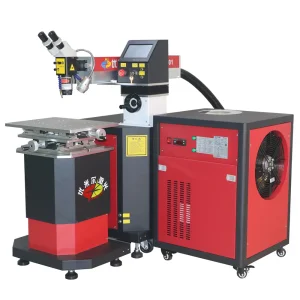
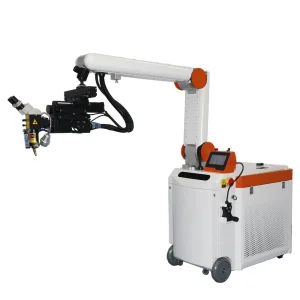
| Integrated Boom Mold Repair Welder 360° rotating cantilever arm, precision joy-stick |
300 W – 500 W Fiber / YAG | Tool Steel: Depth up to 3.0 mm deposit | Injection molds, die-casting repairs, stamping dies | $6,800 – $9,600 |
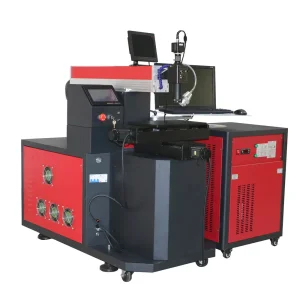
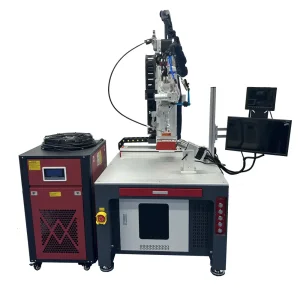
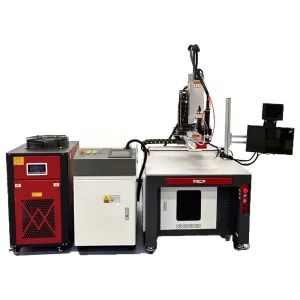
| 3-Axis / 4-Axis CNC Automated Welder Programmable gantry, servo drives, vision seam |
1500 W – 3000 W CW | Programmed Path: Continuous seam or spot | Sensors, EV battery busbars, aerospace bellows | $14,500 – $28,000 |
As precision metallurgy demands escalate across electrified transportation, micro-electronics, and subsea infrastructure, our Shenzhen R&D center actively pioneers four defining pillars in laser beam delivery and process automation.
By splitting the laser power dynamically between a high-intensity center core and an independent concentric outer ring, ARM beam architecture pre-heats and post-anneals the melt pool concurrently. This eliminates spatter completely when joining pure oxygen-free copper (C10100) and structurally demanding aerospace aluminum alloys without external flux.
Pure copper reflects over 95% of conventional infrared laser energy at room temperature. Integrating high-power visible Blue laser diodes (450 nm) boosts room-temperature absorptivity into copper to over 65%. Once liquid phase is reached, the primary 1070 nm fiber laser maintains deep penetration at ultra-low operational wattage with zero keyhole instability.
Optical Coherence Tomography (OCT) operating coaxially through the processing head samples weld topography at 50 kHz. Integrated edge-AI algorithms continuously adjust focal offset, wobble frequency, and wire feed speed in real time, guaranteeing 100% penetration consistency despite joint gap variations, sheet mismatch, or mechanical fixturing tolerances.
Laser joining solutions tailored to specialized material behaviors, regulatory compliance standards, and high-duty production environments worldwide.
Hermetic cell-to-pack seal joining, prismatic battery can-to-cap seam welding, and zero-resistance copper/aluminum busbar interconnects with zero internal thermal degradation to battery electrolyte chemistry.
Ultralight structural joining of titanium (Ti-6Al-4V), Inconel 718, and thin-wall honeycomb heat exchangers, strictly adhering to AMS, AWS D17.1, and NADCAP aerospace fusion specifications.
In-situ micro-welding repair of expensive plastic injection molds, extrusion dies, and forging tools directly inside presses, saving up to 85% tool replacement cost and preventing weeks of downtime.
Bio-compatible joining of surgical endoscopes, pacemaker titanium housings, orthodontic appliances, and high-carat precious gold/platinum luxury jewelry without gemstone dislodgement or thermal discoloration.
Shenzhen's hyper-dense optoelectronics and automation cluster empowers our manufacturing ecosystem with unparalleled component sourcing velocity, rigorous quality assurance, and superior economic efficiencies.
Operating within the Greater Bay Area photonics corridor allows Shenzhen Youmir Laser Technology Co., Ltd. to leverage completely localized supply chains for 98% of machine subsystems. From laser crystal growth and high-purity fused silica optics to precision CNC wire feeding housings, our supply ecosystem eliminates transcontinental component bottlenecks.
By circumventing multi-tiered overseas distributors, import broker markups, and third-party branding overheads, our clients gain access to tier-1 industrial fiber equipment at 40% to 60% lower initial capital expenditure compared to Western equivalents—without sacrificing single-mode beam stability or component longevity.
Every single laser welding machine that leaves our factory floor is subjected to non-negotiable stress protocols. Rather than spot-checking assembled units, our internal quality standard mandates a continuous 72-hour full-load thermal burn-in under elevated ambient temperatures.
Laser sources are analyzed via high-resolution beam profilers to confirm beam parameter product (BPP) compliance, while fiber optic output interfaces (QBH/QD) are checked for back-reflection damage vulnerability using precision optical power meters.
Navigating international laser safety frameworks and ensuring zero-downtime operations through comprehensive certifications, on-site field training, and rapid spare-parts distribution.
Industrial fiber lasers belong to Class 4 Laser Radiation classifications under global safety guidelines. Youmir equipment is meticulously engineered to comply with strict international regulatory codes, enabling smooth customs clearance and OSHA/EU workplace safety compliance.
Investing in overseas machinery requires absolute certainty regarding after-sales support. We provide an end-to-end service architecture uniting live cloud diagnostics with regional localized hubs.
When issuing a Request for Proposal (RFP) for industrial laser welding equipment, corporate procurement departments should benchmark suppliers against these definitive engineering parameters.
Specify the exact optical fiber core diameter. A 50 μm core delivers intense power density suited for deep-penetration keyhole welding on thin-to-medium sheet, while a 100 μm or 150 μm core offers broader heat distribution beneficial for wide-gap tolerance and bridging filler wire.
Incorporate specifications for dual-path gas solenoids capable of automated pre-flow (0.5–1.0s) and post-flow (1.5–3.0s) shielding. Ensure coaxial or trailing shield nozzles accommodate pure Argon for stainless/titanium and Nitrogen for high-speed carbon steel joining without oxidation.
Demand certified 100% duty cycle operation at 40°C ambient temperatures. Industrial systems must integrate dual-circuit closed-loop water chillers (one circuit for the fiber source, the second for the optical delivery head) with automated deionizing resin filters and flow-rate fail-safes.
Authoritative technical answers addressing machine selection, material feasibility, international logistics, and long-term service agreements.
We engineer, manufacture, and export handheld and CNC multi-axis fiber laser welding machines, high-peak YAG laser welders, pulsed and continuous (CW) laser cleaning systems, fiber laser sheet/tube cutters, articulated boom mold repair welders, benchtop jewelry laser micro-welders, and genuine optical wear consumables.
Yes. We invite overseas buyers to air-courier real production samples to our Shenzhen application laboratory. Our photonics application engineers execute cross-section welding or cleaning trials, providing high-definition video documentation, metallographic etching reports, and recommended parameter matrices free of charge.
As an industrial benchmark: 1000 W handles light fabrication up to 3.0 mm stainless steel; 1500 W is the versatile global standard for mixed manufacturing up to 4.0 mm stainless and 2.5 mm aluminum; while 2000 W to 3000 W units are selected for heavy structural alloys up to 8.0 mm requiring wire-feed seam bridging.
Pulsed laser cleaning emits brief, gigawatt-level peak pulses with virtually zero thermal accumulation, making it mandatory for high-precision injection molds, aerospace composites, and heritage restoration without damaging the substrate. Continuous (CW) laser cleaners offer massive area throughput at economical price points for heavy oxide, scale, and marine structural rust removal.
Yes. We provide complete industrial OEM/ODM programs, including custom sheet-metal exterior styling, RAL color coding, branded multi-lingual touch HMI software, custom wire-feed brackets, and full integration into robotic or gantry manufacturing workcells.
Every overseas purchaser receives round-the-clock technical coverage (24/7/365) via direct engineer video consultation, remote cloud PLC telemetry, rapid DHL express consumable dispatch, and available on-site commissioning and training through our overseas agency partners.
Yes. Utilizing dual-wobble beam oscillating heads (programmable circle, triangle, line, and figure-eight patterns up to 5.0 mm wobble width) alongside high-peak fiber power densities breaks the high-reflectivity barrier. Argon shielding prevents molten bath oxidation, producing sound joints in C11000 copper and C26000 brass.
Laser welding eliminates expensive electrodes and flux. The recurring consumables consist of protective quartz cover slides ($2–$5 each, lasting 40–120 hours depending on clean gas maintenance), copper gas nozzles ($4–$8 each), and shielding gas (Argon or Nitrogen at 12–18 L/min). Total consumable overhead typically averages under $1.50 per operational hour.
Explore our full line of galvanometer-driven handheld welders, heavy toolroom cantilever repair systems, advertising letter fabricators, and high-frequency pulsed jewelry units.
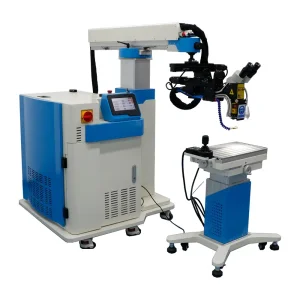

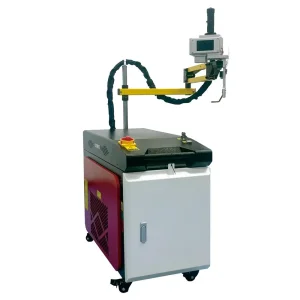
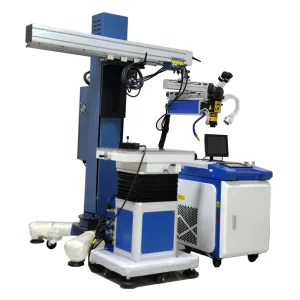
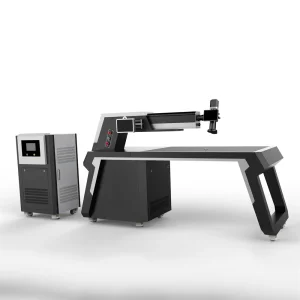
Submit your design drawings, sheet-metal alloy parameters, or mold specifications. Our Shenzhen application laboratory will provide custom welding penetration test videos, metallographic reports, and transparent factory direct CIF/DDP quotes within 24 hours.
