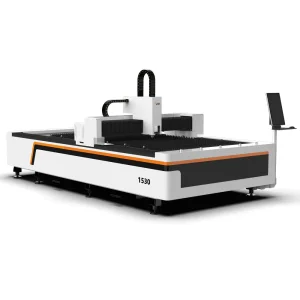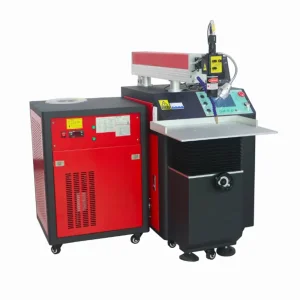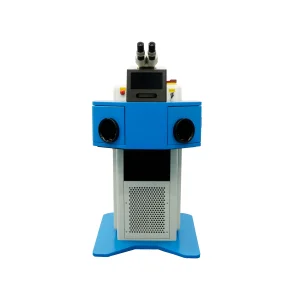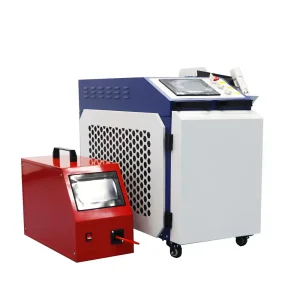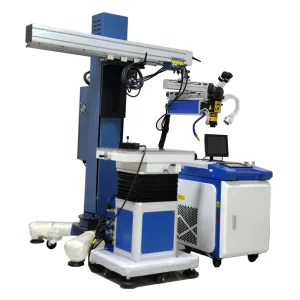
Direct equipment specs and instant quote routes for specialized fiber mold, jewelry, and handheld laser configurations built in accordance with ISO9001 and CE directives.


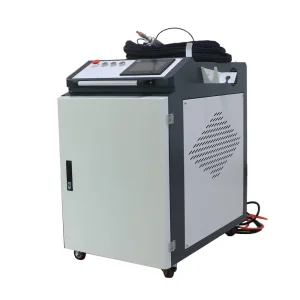
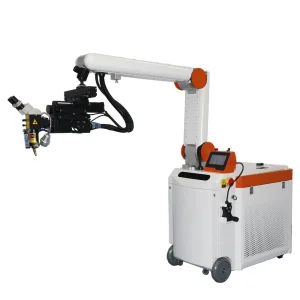


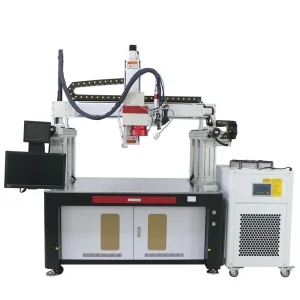
Miniaturized laser welding setups (Mini Laser Welding Machines) represent a generational leap over legacy TIG (Tungsten Inert Gas), MIG, and bulky flashlamp-pumped solid-state architectures. This shift delivers low-heat-affected zone processing with micron precision across critical industrial assembly sectors.
By using quasi-continuous wave (QCW) and single-mode fiber delivery systems, miniature laser welders achieve power densities exceeding 106 W/cm2 at focal points under 50 micrometers. This concentrated energy permits deep keyhole welding with minimal thermal side diffusion, safeguarding fragile electronic components or thin cosmetic foils.
Modern mini continuous and pulsed laser systems exhibit wall-plug electro-optical efficiencies upward of 35%–42%, contrasting with the 2%–5% common in traditional flashlamp YAG machinery. Operational electricity expenditures shrink by over 70%, accompanied by maintenance intervals for optical diodes that exceed 100,000 operational hours.
Equipped with dual-axis galvanometer motorized oscillation inside compact, handheld or benchtop heads, mini welders generate adjustable seam geometries including spiral, triangular, circular, and figure-eight patterns. This dynamic mechanical bridging mitigates loose fit-up margins up to 1.5mm without requiring heavy filler-wire feeds.
| Performance Metrics | High-Precision Mini Fiber Welder | Micro-TIG / Plasma Setup | Conventional Flashlamp YAG |
|---|---|---|---|
| Heat Affected Zone (HAZ) | 0.05 mm – 0.20 mm (Negligible Distortion) | 1.20 mm – 3.50 mm (High Warpage) | 0.40 mm – 0.85 mm (Moderate Thermal Strain) |
| Travel / Deposition Velocity | Up to 120 mm/s (4x–10x baseline) | 10 mm – 25 mm/s (Labor-Paced) | 15 mm – 35 mm/s (Pulse Restricted) |
| Operator Training Requirement | 2–4 Hours (Preset UI, Micro-Joy) | 6–18 Months (Certified Weld Craftsman) | 1–2 Months (Complex Beam Alignments) |
| Wall-Plug Power Conversion | 35% – 42% | 15% – 20% | 2% – 4% (Severe Cooling Requirements) |
| Chiller Integration Volume | Built-in Air-Cooled or Integrated Compact Unit | External Water Recirculators | Bulky Dual-Circuit Industrial Chiller |
Engineered for agile integration on factory floors, precision toolrooms, and cleanrooms without structural infrastructure overhauls.
Micro-welding of platinum, 18k/24k gold, and fine sterling silver. Designed to complete prong re-tipping, bezel repairs, and porosity reduction directly adjacent to heat-sensitive emeralds, rubies, or synthetic gems without scorching the mountings.
Deposition welding on hardened tooling steels (NAK80, H13, SKD11, P20). Repair parting lines, flash-worn gate cutoffs, and fine parting edges in toolrooms without pre-heating bulky dies or generating internal structural anneal cycles.
Joining copper to aluminum tab assemblies and prismatic battery busbar packs. Precise thermal input windows prevent cell separator degradation while yielding intermetallic joint resistance figures below 25 micro-ohms per seam.
Hermetic closure of titanium grade-5 surgical graspers, cannulas, and catheter guidewires. Delivers smooth, autogenous, crevice-free seams compliant with autoclave sterilization and bio-compatibility mandates.
How North American, European, and Asia-Pacific manufacturing hubs integrate compact laser setups to alleviate skilled manual labor shortages and rising regulatory hurdles.
Facing high-cost fabrication labor, small-to-medium enterprises throughout the US and Canada deploy mini handheld systems to onboard new operators in days rather than years. This enables domestic shops to retain thin-gauge stainless kitchenware and architectural trim contracts otherwise lost to overseas pressure.
European Union directives regarding factory energy efficiency (CBAM considerations) encourage shops to decommission 15kW transformer welders in favor of 1.5kW–3kW smart-cycling fiber platforms, minimizing thermal pollution and shop electrical footprints.
Developing supply lines in Vietnam, Mexico, and Brazil utilize ruggedized compact laser setups to outfit high-mix automotive prototyping runs, precision furniture joints, and agricultural equipment repair without cleanroom environment overheads.
Why partnering directly with Shenzhen Youmir Laser Technology delivers faster production velocity, verified component provenance, and flexible OEM design alternatives.
Within Shenzhen's high-tech corridor (Guangming District), Youmir couples sub-micron optical lens crafting, proprietary DSP board flashing, and chassis sheet metal stamping inside one connected ecosystem, trimming lead times on bespoke orders to under 10 business days.
Unlike third-party shell integrators, each mini laser machine undergoes 72 hours of uninterrupted burn-in testing under fluctuating thermal conditions (10°C to 45°C ambient), documenting beam circularity, polarization purity, and chiller line pressure prior to factory egress.
Procuring directly removes regional distributor markups, supplying factories with comprehensive spare arrays (protective cover slides, focusing quartzes, copper nozzle geometries) at direct factory BOM price tiers.
Mini laser platforms are evolving into integrated cyber-physical nodes, combining machine-vision QA, adaptive parameter adjustment, and compact solid-state chillers.
Embedded coaxial vision modules combined with lightweight machine learning inference units analyze plasma plume optical signatures in real time. Systems alter energy outputs and pulse frequencies dynamically to halt blow-through defects along variable gaps.
For high-reflectivity copper and gold processing, integrating 450nm (blue) and 515nm (green) wavelengths with standard 1064nm infrared fiber sources enables spatter-free, keyhole micro-seams without absorption instabilities.
Eliminating conventional compressors and closed water loops, phase-change thermo-electric assemblies reduce unit footprints by 45%, shedding machine mass to under 38kg for seamless field transport.
Class 4 laser safety compliance, interlock verification, and round-the-clock remote diagnosis designed for multinational factory operations.
Every mini laser console features two-channel electrical loop contacts, continuous casing ground continuity tracking, and dynamic capacitive work-clamp continuity detection. The laser cannot trigger unless the nozzle achieves physical substrate contact inside the electrical circuit.
Export models are supplied with factory certification packages including optical attenuation OD6+ protective goggles (1064nm tuned), external e-stop interlocks, keyed master controls, and bilingual hazard notification plaques conforming to EN 60825-1.
Our multilingual application engineering group in Shenzhen coordinates remote video diagnostics, telemetry-based firmware adjustments, and sample weld metallographic examinations via digital micro-imaging within 24 hours.
Direct answers to core inquiries from machine operators, manufacturing supervisors, and procurement leads.
Full catalog of enclosed automatic CNC welding machines, pulse cleaners, fiber cutting benches, and jewelry workstations with direct factory pricelists.