Engineered for high-integrity metallurgical bonding, microscopic heat-affected zones (HAZ), and uncompromising surface hardness matching across complex tooling alloys.
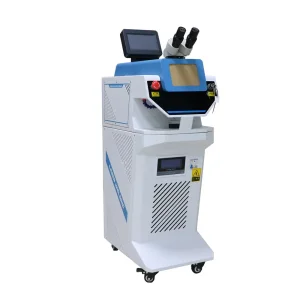

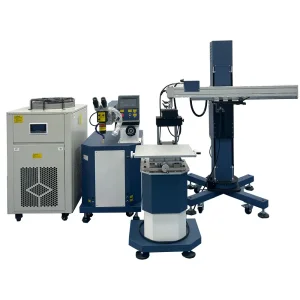
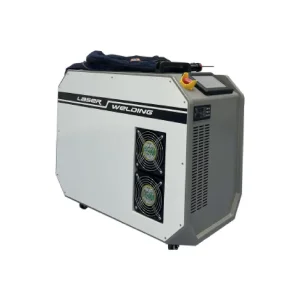

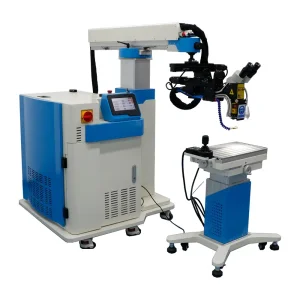


Analyzing the paradigm shift from mechanical tool replacement to ultra-low heat input laser additive remanufacturing across modern manufacturing hubs.
In high-tonnage stamping, progressive stamping dies, multi-cavity plastic injection tooling, and high-pressure die-casting (HPDC), mould sets represent immense capital assets ranging from $20,000 to over $650,000 per die set. During high-cycle production, tooling suffers from continuous thermal fatigue, cyclic impact, parting-line erosion, flash leakage, and localized abrasive spalling. Historically, industrial facilities faced a destructive trade-off: traditional Tungsten Inert Gas (TIG) or submerged arc welding introduces massive thermal mass, creating a broad Heat Affected Zone (HAZ) exceeding 1.8mm. This thermal influx induces severe mechanical warping, internal residual stress concentrations, and thermal embrittlement, often transforming high-hardness tool steels (such as AISI H13, DIN 1.2344, SKD61, and NAK80) into brittle martensite prone to premature stress cracking.
The contemporary global tooling sector has universally turned to precision laser mould welding machines as the non-negotiable benchmark for asset remanufacturing. By leveraging coherent laser photon beams (concentrated spot sizes between 0.15mm and 2.0mm), laser mould repair achieves instantaneous melting and solid-state fusion with microscopic HAZ profiles (under 0.15mm). Toolroom managers avoid destructive preheating cycles, mitigate annealing of surrounding critical cooling channels, and preserve mirror-polished Class-A surfaces, yielding a 92% reduction in secondary CNC contour machining or EDM sinker discharge steps.
Rigorous metallurgical comparison of fusion characteristics, thermal distortion, micro-hardness gradients, and secondary processing overheads.
| Evaluation Parameter | Pulsed Nd:YAG Laser | Continuous / QCW Fiber Laser | Micro-TIG Welding | Submerged Arc / Standard MIG |
|---|---|---|---|---|
| Thermal Input / Heat-Affected Zone (HAZ) | Minimal (0.05 - 0.15 mm) | Extremely Low (0.08 - 0.20 mm) | Moderate (0.80 - 1.80 mm) | Excessive (> 3.0 mm) |
| Preheating Requirement (Tool Steels) | Zero preheating for 95% of alloys | Zero preheating (ambient repair) | Mandatory 250°C - 450°C | Mandatory 350°C - 500°C |
| Deposition Precision & Spot Control | 0.15 mm - 1.5 mm (Stereomicroscope) | 0.20 mm - 2.5 mm (Wobble Beam) | 1.0 mm - 3.5 mm (Handheld) | > 4.0 mm (Gross weld pool) |
| Microhardness Boundary Gradient | Steep, seamless dendritic bond | Uniform equiaxed grain solidification | Gradual, wide softening zone | Brittle martensitic transition band |
| Post-Repair EDM / Polishing Needs | Light hand stone / 1000# polish | Direct micro-milling / bench finish | Extensive re-EDM & heavy milling | Complete surface stress relieving & re-machining |
| Thin-Wall & Sharp-Edge Capability | Exceptional (Edges <0.2mm) | Superior (Edges <0.3mm) | High edge burnout risk | Impossible (Destructive collapse) |
Metallurgical Engineering Insight: When depositing high-carbon tool steels such as DC53 or cold-work die steels (Cr12MoV), conventional welding techniques induce micro-cracking at the fusion line due to carbide precipitation along primary austenite boundaries. Industrial-grade laser mould welding machines utilize high peak pulse energy (up to 15 kW peak) with narrow pulse durations (0.5ms to 20ms). This promotes ultra-fast solidification cooling rates (10^4 to 10^6 K/s), generating extremely refined dendritic microstructures that arrest crack propagation and preserve parent material yield strength.
How Shenzhen and the Greater Bay Area’s integrated photonics ecosystem delivers world-class industrial laser machinery with unmatched responsiveness.
Leading Chinese laser manufacturers integrate in-house precision optical design, beam-collimating assemblies, proprietary DSP control software, and closed-loop dual-temperature chillers. Vertical integration eliminates 35% of intermediate supplier markups, directing capital straight into optical grade dielectric coatings, premium Nd:YAG crystals, and long-life pump cavities.
Situated in the heart of Shenzhen’s advanced photonics cluster, machine frame fabrication, precision granite bases, motorized cantilever booms, and customized multi-axis CNC tables are fabricated within a 48-hour procurement radius. This enables rapid configuration changes, custom reach booms, and bespoke clamping fixtures at fraction of European lead times.
Quality reliability is maintained through rigorous industrial validation: continuous 72-hour full-pulse-power test cycles, high-temperature environmental thermal chamber testing for chillers, vibration isolation verification on optical paths, and optical power meter beam stability monitoring ensure zero drift upon export delivery.
Direct deployment examples where high-performance mould laser welding delivers immediate ROI on demanding production floors.
Heavy trim lines, drawing dies, and flanging tools built from hardened Cr12MoV, Caldie, or Carmo suffer continuous edge chipping during Class-A skin stamping. Using cantilever boom welders with 360-degree articulating heads, operators perform in-press or toolroom deposition without dismantling the 15-ton die block, saving up to 48 hours of press downtime.
Consumer electronic and medical device enclosures demand zero flash tolerances. Parting line erosion on pre-hardened steels (NAK80, 718H, Stavax S136) is seamlessly restored using 0.2mm - 0.4mm wire deposition. Pulsed laser parameters guarantee no sink marks, zero pinhole porosity, and flawless diamond-compound mirror polishability.
Aluminum engine blocks and structural EV battery tray casting dies fabricated from premium DIN 1.2343/1.2344 (H13) undergo severe thermal shock cracking (heat checking) and molten aluminum washout. Laser deposition using matching cobalt-base or special hot-work filler alloys creates a resilient wear barrier that triples tool life.
When design engineering alters bottle geometry, seal ribbing, or neck threads in blow moulds (often aluminum 7075 or beryllium copper), CNC laser welders allow localized metal build-up without degrading the thermal conductivity or metallurgical temper of adjacent water cooling channels.
Turbine blade forging dies and sheet hydroforming mandrels exposed to nickel-alloy titanium pressures require nickel-superalloy (Inconel 625/718) laser cladding. Laser precision confines deposit thickness to within 0.1mm of nominal shape, drastically minimizing subsequent 5-axis hard milling cycles.
Micro-tooling components, punch inserts, and progressive cutting edges operating in tungsten carbide or high-vanadium powder metallurgy steels (CPM 10V) utilize galvanometer-guided micro-pulsed laser heads to reconstruct sub-millimeter radii with zero thermal micro-fracturing.
The transition from manual stereomicroscope alignment to intelligent, vision-guided, multi-axis automated laser deposition.
Next-generation mould welding stations integrate in-line 3D laser line scanning. The system digitizes the damaged or chipped tool cavity geometry, automatically compares it with the CAD master model, calculates missing volume, and generates multi-layer robotic toolpaths for automated wire or powder feeding.
Moving beyond static beam spots, high-frequency galvo-driven wobble heads oscillate the laser beam in circular, elliptical, or figure-8 patterns up to 1000 Hz. This oscillation stirs the molten pool, breaks dendrite grain structures, degasses trapped hydrogen, and eliminates micro-porosity in critical mold repairs.
While flashlamp Nd:YAG lasers remain the workhorse for manual spot repair due to peak power elasticity, Quasi-Continuous Wave (QCW) and direct continuous-wave fiber lasers are capturing significant market share. QCW delivers identical peak pulse energy with 30%+ wall-plug electrical efficiency and 100,000-hour diode life, eliminating routine flashlamp replacements.
Essential criteria procurement directors and plant engineers must define prior to issuing a mould laser welder purchase order.
| Evaluation Domain | Critical Engineering Specification | Factory Recommendation / Benchmark |
|---|---|---|
| Laser Power & Peak Threshold | Pulse Energy (Joules), Peak Pulse Power (kW), Average Power (Watts) | For general toolroom dies: ≥300W - 400W Nd:YAG (90J - 110J pulse energy). For heavy cladding: ≥1500W - 2000W continuous fiber. |
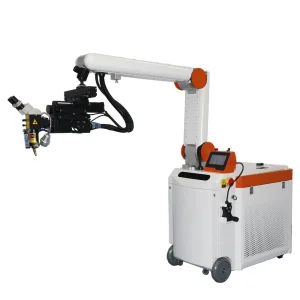
| Mechanical Reach & Motion Arm | Cantilever boom stroke, 360° rotational freedom, motorized Z-axis | Boom reach ≥1300mm to 1600mm for large dies; pneumatic locking mechanisms with micro-fine vernier adjustment knobs. |
| Optics & Observation | Microscope magnification, crosshair reticle, high-speed LCD shutter | Leica or customized 10x-15x stereomicroscope with synchronous anti-glare liquid crystal protective shutter (response <1ms). |
| Cooling System Architecture | Dual-circuit water chilling capacity, temperature stability index | Compressor refrigeration with ±0.5°C PID precision; dedicated laser cavity circuit and independent optics circuit. |
| Wire Feeder Synchronization | Motorized stepper control, wire diameter capability, feed stepping | Automated feeder supporting 0.2mm to 1.2mm wire, synchronized pulse delay, anti-stick retraction mechanics. |
| Compliance & Electrical Standard | CE Machinery Directive, FDA CDRH Class 4, regional voltage matching | Factory configured transformer: 380V 3-phase, 220V single/split-phase 50/60Hz, emergency interlock circuits. |
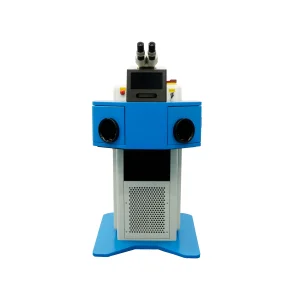
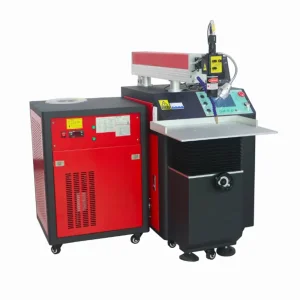
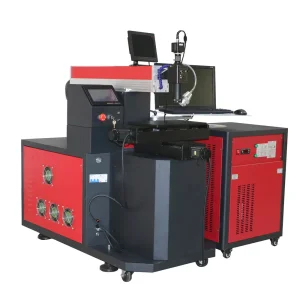
Complete your production line setup with cantilever, continuous-wave, galvanometer, and open-bed laser equipment engineered in Shenzhen.




In-depth responses from our application engineers addressing tool steel metallurgy, machine configuration, and operational longevity.
The choice depends on work piece geometry and deposition volume. Pulsed Nd:YAG lasers excel in fine manual repair of injection mould cavities, narrow parting lines, and razor-sharp edges where ultra-low heat input and high instantaneous peak pulse power (up to 15 kW) are critical to prevent sink marks. Fiber laser systems (Continuous or QCW) deliver higher average power, higher electrical wall-plug efficiency (30% vs 3%), and superior stability for high-volume automated deposition, stamping die overlays, and large cladding repairs.
Yes. When the filler wire metallurgical composition closely matches the parent tool steel (such as depositing SKD61, NAK80, or Stavax S136 wire), the laser-solidified deposit features an extremely dense, equiaxed dendritic microstructure free from slag and microscopic pinholes. It can be EDM processed, diamond polished up to #14,000 grit for mirror finishes, chemical photo-etched for texture matching, or gas-nitrided without visible boundary demarcation lines.
In over 95% of standard mould repair tasks, preheating is not required. Because laser pulse duration is measured in milliseconds and spot sizes are concentrated (0.2 - 1.5mm), total thermal energy transferred to the mould core is negligible. The surrounding mass of the die block acts as an immediate natural heat sink. Preheating (150°C - 200°C) is only recommended for crack-sensitive, high-tungsten hot-work steels or when welding deep, constrained keyway slots.
High-purity Argon (minimum 99.999% industrial grade) is the global standard. Argon effectively displaces atmospheric oxygen and nitrogen, preventing oxidation crusts and maintaining puddle fluidity. For titanium alloys or high-reflectivity beryllium copper tooling, an Argon-Helium mix (75% Ar / 25% He) or pure Helium can be utilized to increase energy coupling depth and suppress vapor plume interference.
In pulsed Nd:YAG systems, the primary consumable is the Xenon flashlamp, rated for 3 to 8 million pulses (approximately 12 to 24 months of standard toolroom operation). Protective cover slides protecting the objective focus lens should be cleaned regularly and replaced every 3 to 6 months. Deionized water filters and deionization resin cartridges in the water chiller require annual replacement to maintain cavity resistivity.
Youmir Laser backs all mould welding machines with a comprehensive 24-month manufacturer warranty covering core laser sources, optics, and chillers. We provide 24/7 video-linked technical diagnosis, overnight dispatch of replacement components through international air hubs, and on-site engineering commissioning with local distribution and agency partners throughout Europe, North America, Southeast Asia, and the Middle East.
