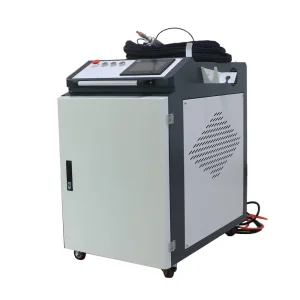
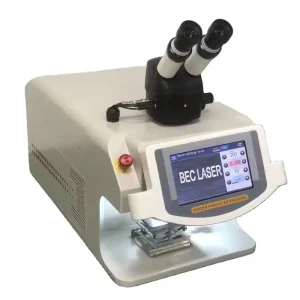
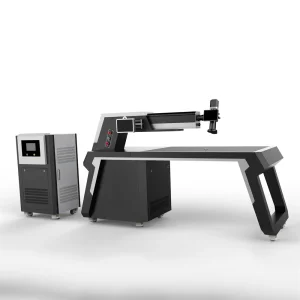
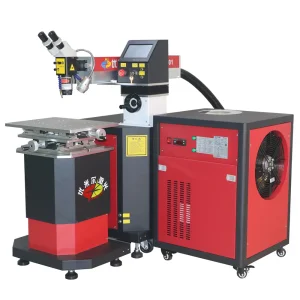
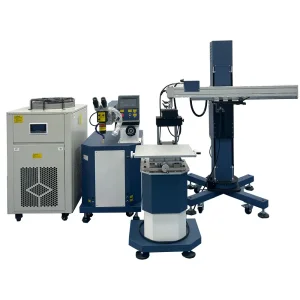
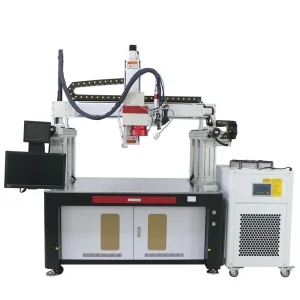
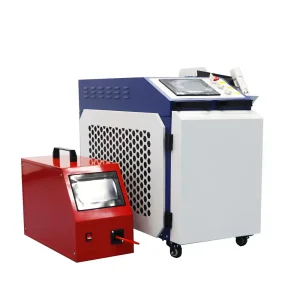
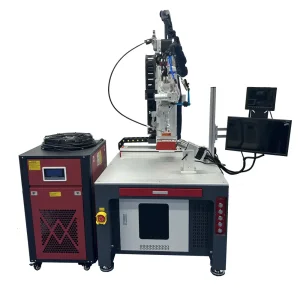
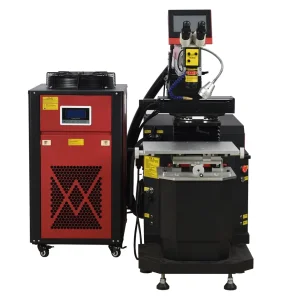
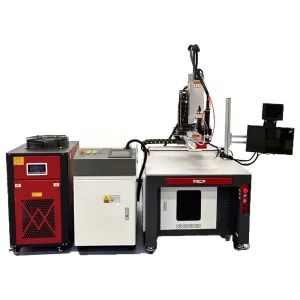
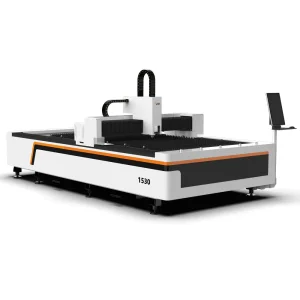
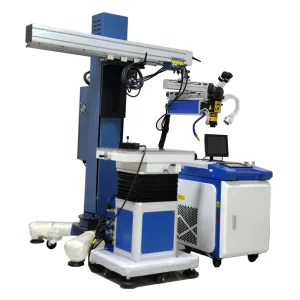
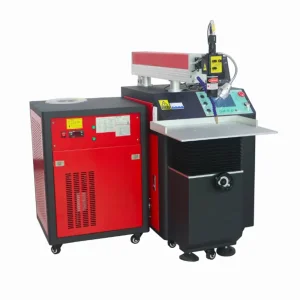
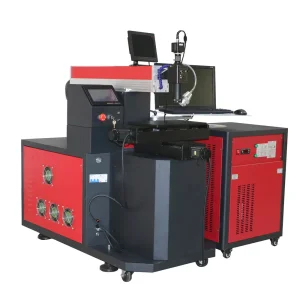
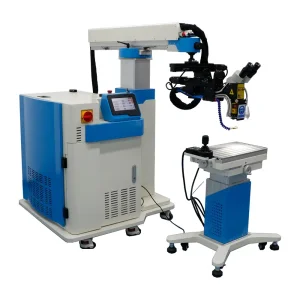
Explore our core engineering configurations engineered for high-throughput tube manufacturing, precision mold tooling, and industrial surface processing.
Custom laser tube welding machine manufacturing represents a monumental shift away from classical tungsten inert gas (TIG) and high-frequency induction joining, delivering low heat-affected zones (HAZ) and superior hydrostatic integrity.
Automotive OEMs require continuous circumferential and longitudinal tube welds that withstand severe hydroforming post-processing. Precision fiber laser heads deliver uniform metallurgical grain structure across austenitic stainless steels, titanium alloys, and dual-phase sheet metals without thermal stress cracking.
Manufacturing thin-walled copper, brass, and aluminum condenser tubes demands extremely concentrated laser spot profiles. Using oscillating wobble heads, our automated systems seal hermetic tubing configurations with zero porosity, eliminating refrigerant leakage under high pressure cycles.
For pharmaceutical liquid delivery and food-grade dairy pipes, root-pass inner smoothness is mandatory. Our optical setups achieve Ra < 0.4 µm interior weld bead finishes, preventing bacterial settlement and satisfying stringent ASME BPE and 3-A Sanitary Standards without secondary pickling.
A rigorous comparative analysis showing why global tube mills and pipe fabricators are upgrading from TIG and High-Frequency induction to fiber laser welding lines.
| Evaluation Parameter | Continuous Fiber Laser Welding | High-Frequency (HF) Induction | Traditional TIG / GTAW |
|---|---|---|---|
| Line Welding Velocity | 15.0 - 45.0 m/min (Ultra-High) | 10.0 - 30.0 m/min (High) | 1.0 - 3.5 m/min (Slow) |
| Heat Affected Zone (HAZ) | Minimal (< 0.3 mm), negligible distortion | Broad, creates heavy localized softening | Extensive thermal spread, high warpage |
| Filler Wire Requirement | Autogenous (Zero wire for gap < 0.1mm) | Solid state pressure upset forge | Mandatory consumable rod/wire |
| Wall Thickness Flexibility | 0.15 mm to 8.0 mm precision envelope | Limited to > 0.8 mm nominal gauge | Difficulty controlling < 0.6 mm burn-through |
| Post-Weld Processing | Near-flush bead, minimal dressing | Requires heavy OD/ID scarfer tooling | Laborious mechanical grinding & polishing |
Headquartered in Guangming District, Shenzhen, Youmir Laser leverages the world’s most concentrated optoelectronics and automation cluster, ensuring rapid equipment iteration, unmatched cost-efficiency, and verified supply stability.
Direct integration of domestic ultra-reliable fiber engines, precision cutting nozzles, water chillers, and proprietary optical paths within a 20km industrial radius.
Rapid prototyping from customized clamping mandrels, rotary chuck chucking mechanics, to bespoke automated roll-forming line docking.
Dedicated mechanical CNC machining bays, class 10,000 optical dust-free cleanrooms, and automated continuous test lines.
Certified export compliance packaging and logistics direct from Shenzhen port to Europe, North America, Southeast Asia, and Latin America.
The progression of customized tube manufacturing machines relies on deep integration with real-time process monitoring, machine vision, and intelligent laser beam manipulation.
Micro-misalignments during continuous roll forming compromise structural weld joints. Next-generation systems feature high-speed CMOS visual sensors and structured-light triangulation to alter galvanometric positioning dynamically at 10 kHz refresh rates.
Managing volatile melt pools in highly reflective metals such as pure copper and 6000-series aluminum requires split-power fiber architecture. Core-and-ring laser beams preheat the seam edge with a secondary envelope while the core creates deep-keyhole penetration, eliminating spatter.
To comply with critical aerospace and energy pipe certifications, machines capture reflected optical wavelengths, infrared thermal radiation, and plasma emission spectra. Any deviation logs a defect timestamp without halting roll-forming output.
Purchasing an industrial custom laser machine involves long-term operational assurance. We eliminate import barriers through rigorous international engineering certifications and localized field readiness.
All enclosures, automated feed doors, and laser heads comply with Class 1 laser safety standards (EN 60825-1). Systems incorporate redundant interlocks, emergency stop loops, and optical safety glass windows certified for 1064nm - 1080nm radiation protection.
We design custom power cabinets configured natively for North American 480V/208V 60Hz 3-phase, European 400V 50Hz, or single-phase residential grids. Industrial bus architectures support Profinet, EtherCAT, and DeviceNet protocols for seamless SCADA connectivity.
Engineers communicate directly with your maintenance crew. Using encrypted VPN remote assistance modules built into our CNC consoles, we diagnose optical drive faults, adjust wobble profiles, and push firmware upgrades without delay.
Authoritative technical answers to assist procurement managers, tooling engineers, and operations directors in making informed investments.
Because fiber laser welding operates with a highly concentrated beam diameter (typically 50 µm to 200 µm), fit-up tolerances are critical. The recommended edge gap should be less than 5% to 8% of the metal wall thickness. Where slight edge variations occur, we configure oscillating dual-axis wobble optical heads or integrated cold filler wire feeders to bridge gaps up to 0.5 mm reliably.
Oxidation on sanitary and automotive exhaust tubing is prevented using dedicated internal argon purge mandrels or trailing shields. Our customized machines synchronize internal gas delivery with the external protective flow (typically 99.999% pure Argon or Argon-Helium blends), ensuring full shielding until the weld bead solidifies below discoloration threshold temperatures.
Yes. We regularly build custom systems for joined copper-to-aluminum transitions in refrigeration circuits or stainless-to-carbon steel exhaust fittings. By tailoring laser power modulation, adjusting beam offset towards the more reflective metal, and utilizing sub-millisecond pulse timing, our systems prevent brittle intermetallic compound (IMC) formation.
Before confirming any machine quote, clients send sample tubes or profile sections directly to our Shenzhen application laboratory. Our engineers run parametric test matrices across power, speed, wobble amplitudes, and shielding gases, returning metallographic cross-sections, tensile test reports, and process videos for full technical confidence.
Expand production capabilities with our modular CNC, multi-axis, and heavy-duty industrial laser welders and cutters.