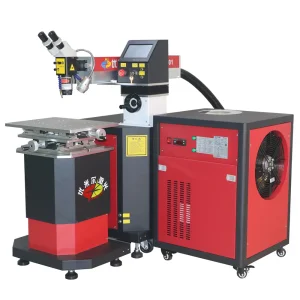
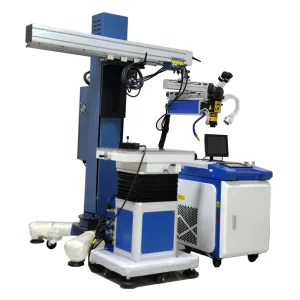
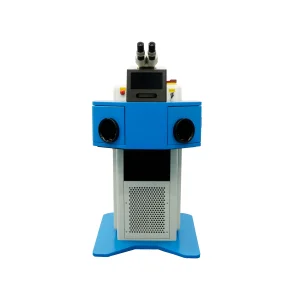
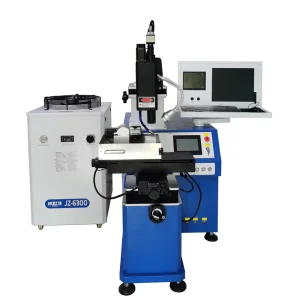
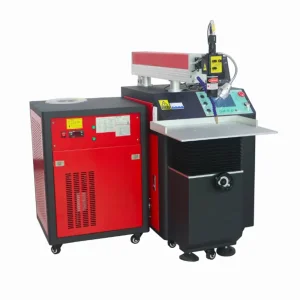
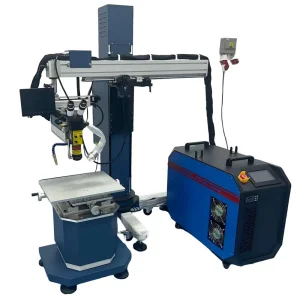
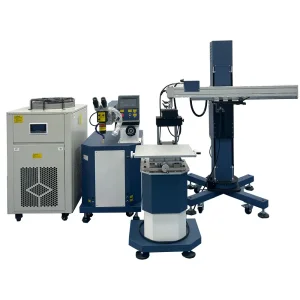
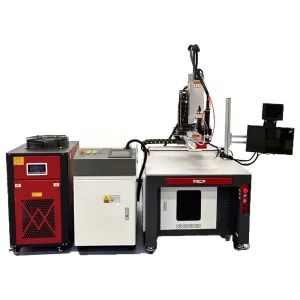
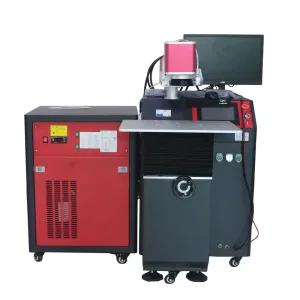
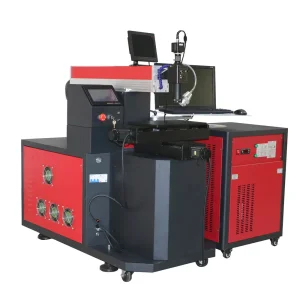
Explore high-performance mold repair systems, continuous fiber welders, automated 3-axis CNC workstations, and heavy-duty sheet cutters certified for worldwide export.
Transitioning from mechanical contact soldering to non-contact photonic thermal deposition across 3C consumer electronics, electric vehicles, and high-density semiconductor interconnects.
As smartphones, wearable IoT sensors, and high-resolution camera modules (CCM) push circuit density beyond classical boundaries, traditional contact soldering irons face terminal bottlenecks: mechanical tip erosion, electrostatic discharge (ESD) hazard, and uncontrollable solder bridging. Modern laser soldering utilizes concentrated photons to transfer thermal energy exclusively to the pad and pin, eliminating collateral thermal degradation of adjacent sensitive polymers.
Automotive tier-1 suppliers are standardizing on diode laser soldering for battery management systems (BMS), radar flex cables, and oxygen sensors. The requirement for zero flux residue, traceable temperature logs for every solder joint, and consistent Intermetallic Compound (IMC) layer thickness (optimally between 1.5μm and 3.0μm) makes automated laser wire-feed soldering an indispensable core process in automated production lines.
In microwave communications, optical transceivers, and hermetic packages, lead-free fluxless bonding is paramount. High-stability diode lasers operating at 915nm and 976nm with coaxial nitrogen shielding enable precise Au80Sn20 eutectic solder preform reflow at 280°C–320°C without oxidizing micro-pads or introducing voiding percentages exceeding military IPC Class 3 standards.
Understanding factory-level pricing structures, configuration tiers, and Total Cost of Ownership (TCO) variables when importing from premier Chinese manufacturing hubs.
| System Architecture Tier | Laser Source & Power | Motion & Optical Control | Primary Industrial Use Case | Typical FOB Price (USD) |
|---|---|---|---|---|
| Benchtop Semiautomatic Wire-Feed | 50W - 100W Fiber-Coupled Diode (915/976nm) | 3-Axis Cartesian (X-Y-Z), CCD Alignment, Spot Size 0.3-1.2mm | PCB rework, micro-coaxial wire harnesses, relay contacts | $8,500 – $14,500 |
| Closed-Loop Thermal Diode Station | 100W - 200W Diode with Dual Coaxial Pyrometer | 4-Axis Motion (X-Y-Z-R), Auto Wire Feeder (0.2-1.0mm), 2000Hz Feedback | Automotive sensors, medical catheters, smart meters | $15,000 – $26,000 |
| Galvo Scanning Laser Soldering Workcell | 150W - 300W Diode / Quasi-CW Fiber Laser | High-Speed Galvo Scanner (1500mm/s), Coaxial Visual Recognition (Mark Point) | FPC connector multi-pin batch soldering, solar shingled tabs | $28,000 – $45,000 |
| Solder Ball Jetting (SBJ) Ultra-Precision | Pulsed Infrared Nd:YAG or Special Diode Emitter | Nitrogen Jet Micro-Droplet Ejection (Balls: 50μm - 760μm), Linear Encoders | Wafer level packaging, camera VCM, MEMS, disk drive sliders | $55,000 – $92,000 |
| Full In-Line SMEMA SMT Production Cell | Dual-Beam 100W Diode or Blue Laser (450nm) | SMEMA automated conveyor, automated nozzle cleaning, multi-camera AOI | High-volume automotive electronics, EV inverter controller assembly | $42,000 – $78,000 |
While upfront equipment expenditure for a laser soldering machine is 3× to 5× higher than conventional robotic soldering irons, the ongoing operating expenditure (OPEX) drops by over 65% annually. Laser systems eliminate frequent soldering iron tip replacements ($30-$80 each, wearing out every 1-3 weeks under lead-free conditions), avoid mechanical calibration downtime, and slash reject rates from 2.5% to under 0.08%.
Export quotes differ based on four hardware choices: 1. Laser Source Brand (Domestic Raycus/Max vs. Coherent/LIMO); 2. Pyrometer Loop Speed (500Hz basic sensor vs. 2000Hz high-speed dual-wavelength pyrometer); 3. Solder Delivery Technique (pneumatic push wire feeder vs. high-precision stepper motor with anti-tin-burst cutting blade); 4. Vision Software (static crosshair vs. AI-powered dynamic edge tracking).
Laser soldering machines feature non-contact architecture, meaning zero contact tip degradation. Typical routine consumables are limited to: 1. Optical Protective Windows ($15-$30, replaced every 3-6 months depending on flux venting quality); 2. Wire Feed Nozzles ($20-$40, lasting over 12 months); 3. Nitrogen gas supply for oxidation-free joints (consumption approx. 3-8 L/min during active laser exposure).
The internal physics behind precision laser micro-soldering: avoiding substrate delamination, tin spatter, and thermal runaway through closed-loop optical feedback.
Unlike traditional open-loop lasers where laser power is emitted constantly regardless of pad heat sink variance, high-end laser soldering features a coaxial infrared pyrometer. Sampling the target temperature at 1,000 Hz to 5,000 Hz, the digital signal processor dynamically modulates the diode laser's pulse width (PWM) within milliseconds. If a thermal threshold is reached, power throttles down instantly, preventing FR4 PCB scorched holes and pad lifting.
A high-resolution industrial CCD camera shares the identical optical path with the processing laser beam via dichroic beam splitters. This coaxial alignment ensures zero parallax error. Advanced machine vision algorithms locate solder pads, register Fiducial marks, correct angular offsets on flexible FPC circuits in under 20 milliseconds, and verify wire tip entry vectors before triggering the optical cycle.
Flux spatter and solder balls are primary causes of electrical short circuits. High-reliability wire feed systems feature an integrated solder wire perforation mechanism. Tiny mechanical cutter wheels puncture micro-slits along the solder wire's core before reaching the melt pool. When heated by the laser, flux vaporization gases vent smoothly through the perforations rather than exploding outward into tin splatter.
Near-infrared lasers (915nm-1064nm) face an optical hurdle: bare copper and gold reflect 85%-92% of infrared energy at room temperature, necessitating high initial burst energy. The latest technological roadmap integrates 450nm blue diode lasers. Copper absorbs over 65% of blue laser photons directly, yielding hyper-stable thermal ramp-up without explosive overheating, lowering energy usage by 80%.
Where mechanical soldering irons and reflow ovens fail: addressing thermal-sensitive packaging, tight clearances, and high-frequency RF transmission integrity.
Modern smart devices pack multi-layer flexible printed circuits (FPCs) into waterproof enclosures. When connecting 0.3mm-pitch FPC tails to rigid motherboard gold fingers, heat conduction must not warp the adjacent thermoplastic structural frames.
Solution: A 976nm 100W diode laser system utilizing a 0.4mm focused beam spot and 150ms localized dwell times. Intermetallic layer thickness stabilizes at 2.1μm Cu6Sn5, providing superior shear strength exceeding 18.5 MPa without adhesive melt-back.
Flexible video endoscopes contain micro-coaxial cable bundles with AWG 42 to AWG 48 gauges (single conductors thinner than a human hair). Solder bridges or insulation thermal degradation result in signal noise and discarded endoscopic catheters.
Solution: Ultra-fine automated wire feeding with 0.15mm Sn96.5Ag3.0Cu0.5 wire, combined with coaxial pyrometric closed-loop thermal regulation at 240°C. Solder joints are created in 0.35 seconds per channel, guaranteeing 100% electrical yield and zero shield melt.
77GHz millimeter-wave ADAS radar units demand zero ionic contamination from flux residue and superior fatigue life under extreme vibration (-40°C to +125°C thermal cycling per ISO 16750 standards).
Solution: In-line automated 4-axis laser soldering cell paired with preformed solder rings and nitrogen purge cover. By eliminating liquid flux entirely, the production line avoids downstream ultrasonic washing procedures, saving tens of thousands in factory floor space.
How global buyers can verify manufacturing rigor, optical bench assembly, and burn-in protocols before releasing procurement funds.
Shenzhen Youmir Laser Technology Co., Ltd. (founded 2012, laser engineering team roots dating to 2010) develops optical assemblies, embedded motion control software, and mechanical gantry fixtures internally. Buyers deal directly with factory optical engineers rather than trading intermediaries, facilitating custom laser spot geometries, unique focal lengths, and custom SMEMA automation interfaces.
Laser diode fiber-coupling modules, galvo scanning mirrors, and dichroic beam-splitting assemblies are constructed within Class 10,000 cleanroom environments. This prevents microscopic airborne dust and aerosol hydrocarbons from depositing on high-power laser coatings, eliminating thermal lensing and optical degradation over long production lifespans.
Every machine shipped overseas completes a mandatory 72-hour thermal stress test. Closed-loop infrared pyrometers undergo calibrated blackbody furnace verification at 150°C, 250°C, and 350°C to confirm measurement linearity within ±1.5°C before final packaging in moisture-sealed sea-freight wooden crates.
Authoritative answers from Youmir Laser application engineers to critical questions encountered by production directors, quality managers, and international sourcing executives.
Laser welding is a fusion process where both parent base metals (e.g., stainless steel, titanium, aluminum) are directly melted together at temperatures typically exceeding 1,400°C. In contrast, laser soldering is a brazing/soldering thermal process: the parent metal pads (copper, gold, nickel) do not melt. The laser beam selectively melts a filler alloy (e.g., SAC305, Sn-Bi, Au-Sn) at temperatures between 140°C and 320°C, forming a micro-metallurgical Intermetallic Compound (IMC) bond without altering the structural crystal lattice of the component substrate.
Traditional systems that rely on timer-based laser emission risk burning the PCB if thermal dissipation changes across parts. Youmir laser soldering stations incorporate a high-speed coaxial pyrometer that captures thermal infrared emissions directly along the laser axis at 2,000 samples per second. When the sensed pad temperature reaches the programmed liquidus threshold (e.g., 235°C for lead-free solder), the digital PID controller instantaneously scales back laser power output in real time, sustaining the exact target temperature throughout wire feeding regardless of trace thickness variances.
Yes. The system's multi-stage thermal recipe software permits programming tailored heating profiles: Stage 1 (Preheat & Flux Activation), Stage 2 (Wire Melting), Stage 3 (IMC Reflow & Wetting), and Stage 4 (Controlled Annealing). Common standard lead-free alloys like SAC305 (liquidus 217°C) run seamlessly. For heat-fragile components, low-temperature Sn42Bi58 or Sn42Bi57Ag1 alloys (melting at 138°C) are processed without thermally shocking internal silicon dies or cracking ceramic substrates.
Tin spatter is generated when flux rosin trapped within solid solder wire boils violently and bursts. Youmir avoids this through three engineering controls: 1. Solder Wire Micro-Notching: The automated feeding mechanism perforates the wire casing prior to feeding, releasing trapped moisture and volatiles; 2. Gradual Preheating: Laser energy activates flux gently before reaching melting temperature; 3. Coaxial Inert Gas Shielding: Nitrogen flow clears the optical path and establishes a neutral envelope, improving wetting speed and eliminating micro-beads.
Because laser soldering is completely non-contact, there are zero soldering iron tips to clean, re-tin, or replace. Maintenance routines consist solely of: 1. Daily inspection of the protective quartz cover slide (clean with isopropyl alcohol if flux residue is present; replace if pitted); 2. Occasional cleaning of the wire feed guide nozzle; 3. Routine checks of the closed-loop chiller or thermocooler fluid levels. Consumable costs generally remain under $150–$300 annually per production shift.
Yes. Shenzhen Youmir Laser maintains a dedicated application testing laboratory. Prospective clients can air-freight sample PCBs, flex circuits, sensors, or wire assemblies to our Shenzhen headquarters. Our laser application engineers conduct comprehensive soldering trials, formulate optimal laser recipes, record microscopic high-speed videos, perform cross-sectional metallographic shear analysis, and provide a full engineering verification report before any capital investment is made.
Explore open-frame welders, boom mold repair units, handheld continuous fiber platforms, and high-speed galvanometer systems engineered for high duty-cycle manufacturing.
Consult directly with Shenzhen Youmir Laser Technology engineers for sample micro-soldering trials, formal FOB/CIF quotations, custom automation line integration, and complete technical specifications.